Macgi
Where you buy wholesale clothing often determines more than your cost per piece. It affects whether the size M you sold last month fits the same as the size M from the next batch, how many items arrive with loose seams, how fast you can restock a bestseller, and how many customers return products because the garment did not match the listing.
A small shop usually cannot compete only on price with large retailers. The more realistic advantage is consistency, speed, a clear point of view, and a fit and quality level customers learn to trust. That starts with how you source.
Build a sourcing plan around cash and return risk
Before contacting suppliers, work out the unit cost you can actually afford. This keeps you from buying too much stock that only looks profitable on paper.
Use a simple margin test:
- Choose a realistic retail price for your shop, not a hopeful one.
- Subtract payment processing fees, marketplace fees if you sell on a platform, delivery or packaging, marketing spend, and a return provision.
- Subtract the profit you need.
- The remaining amount is your maximum landed cost per piece.
For example, if you plan to sell a dress for $40, and you want to keep 60% gross margin before overhead, your landed cost target is around $16 per piece. That $16 must include the supplier price, shipping, import duties if any, and the cost of a few defective units you cannot sell. This is a worked example, not a benchmark.
You should also accept that a cheaper supplier is not cheaper if 5 pieces in a 50-piece order are unsellable and another 10 come back because the sizing is off. Track that from the first order.
Five sourcing options for a small clothing shop
Many small shops find suppliers through local market visits, trade groups on Facebook or Zalo, and referrals from other store owners. But the right source depends on your cash, order size, and how much quality control you can handle.
Local wholesale markets
Local markets are often the easiest first supplier for a small shop. You can see and touch the fabric, compare sizes, and buy small quantities without committing to a full production run. Many market sellers allow mixed-size packs or a starter bag if you ask.
The downside is that many other shops buy from the same suppliers, so the styles may not be unique. Quality can vary between batches, and you usually have fewer written guarantees. When buying locally, take photos of the exact items you chose, record the supplier’s stall or shop code, and ask whether the same batch can be reordered later.
Small factories and workshops
Working with a factory or small workshop makes sense once you have repeat styles or a large enough order. You can choose fabric, colors, labels, and sometimes adjust the size grading. The unit price is lower than a wholesaler, but the minimum order quantity is usually higher, lead times are longer, and you carry more responsibility for quality control.
A serious issue with a 200-piece production run can wipe out the profit from the rest of the order. If you go this route, always order a pre-production sample first, approve it in writing, and keep one sealed reference sample at the workshop and one at your shop.
Importers and wholesale agents
Importers and agents buy stock from factories overseas and hold it in a warehouse or showroom. They are useful when you want styles that are not common in your local market but you do not want to manage international shipping, customs paperwork, or a factory relationship yourself.
You pay a higher unit cost for that convenience. Ask the importer for current stock, reorder availability, and whether the same item will still be cut from the same fabric if you reorder in 60 days. If they cannot confirm that, treat every order as a new product for quality and measurement purposes.
Own production or made-to-order
If you already have a strong customer base and a clear style, producing your own designs locally can give you better control over fit and quality. You can make small batches, adjust sizing from customer feedback, and avoid selling the same dress as everyone else.
The trade-off is time and experience. You need a clear size chart, a sewing spec or a well-measured reference garment, and someone who can inspect each batch. Own production is not automatically better quality; it is only more controllable if you have the process for it.
Consignment
Under consignment, the supplier or designer lets you display stock and you pay only after it sells. This reduces upfront cash risk, which is attractive for a new shop.
Consignment margins are usually lower, and you need a clear contract covering lost or damaged items, sale pricing, returns, and how long unsold stock can stay in your shop. Do not treat it as free inventory; treat it as borrowed stock that must be tracked carefully.
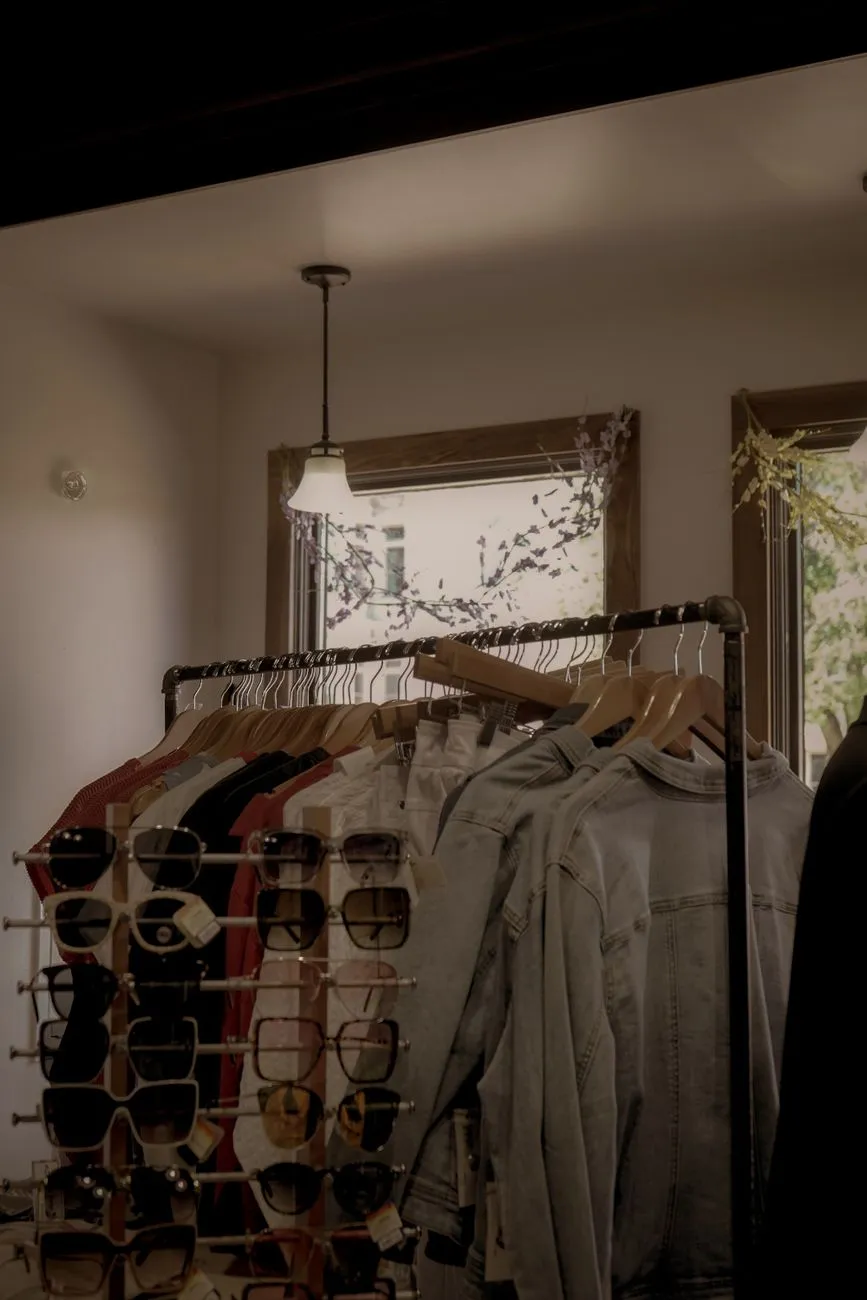 Photo: Noora / Pexels
How to check quality and sizing consistency before buying
Sizing consistency matters more than a supplier’s style range. If a customer buys size M twice and the second one fits a full size smaller, you lose trust even if the dress itself is beautiful.
Before placing a regular order:
- Ask for the supplier’s size chart, then measure the actual garment flat and compare both. Use a consistent method: bust, waist, hip, length, shoulder, sleeve length.
- Order the same style in two or three sizes, not just the size you would wear.
- Measure every received piece in the first trial order. If the same size varies by more than a small tolerance, the supplier may not have stable grading.
- Check seam allowance, straight stitching, buttonholes, zips, and fabric stretch.
- Wash or steam one sample if the fabric is delicate. Some fabrics shrink or change shape after washing.
- Smell the garment. Musty, chemical, or fuel-like smells are hard to remove and often signal storage problems.
If you need a repeatable measurement method, see How to measure clothes for a size chart: flat garment guide. That will also help you create a size guide for your product pages later.
Minimum orders, samples, and negotiation scripts
Minimum order quantity, or MOQ, is usually the first obstacle for a small shop. Factories may quote 100 or 200 pieces per style, while a local wholesaler may allow 6 or 12 mixed pieces. The number is not fixed; it is a negotiation starting point.
You can often ask for a starter pack:
- 12 pieces mixed across sizes and colors
- a sample order before the main production run
- a lower first MOQ with a higher unit price
- a reorder discount if the trial batch sells well
- a deposit only on the sample, not the full order
Use exact wording when asking. Avoid vague requests like “Can you do less?” Instead say:
- “Could we start with a 12-piece trial order in these four sizes, and place a larger reorder within two weeks if the fit is consistent?”
- “Can you send a pre-production sample in size M before we approve the bulk order? We will pay the sample cost and shipping separately.”
- “What is your defect policy? If more than 5% of a batch is unsellable, do you refund or replace those pieces?”
Ask for the answer in writing. A supplier that will not confirm defect terms before payment may be even less helpful after payment.
 Photo: Liza Summer / Pexels
Supplier red flags and simple scam checks
Wholesale fraud is not always dramatic. Many small shops lose money to avoidable problems: a supplier sends good samples but poor bulk, swaps fabric after approval, disappears after full prepayment, or ships a different color.
Red flags to take seriously:
- The supplier only has polished stock photos and no live video of the actual goods.
- They push for 100% prepayment before you have seen a sample.
- They refuse to provide a business registration or a verifiable address.
- They cannot name the fabric composition or garment measurements.
- They offer prices that are far below other suppliers for the same item.
- They are defensive when you ask for a sample or video call.
Before paying a new supplier, do this:
- Start with a small paid sample or small trial order.
- Request a live video call showing the goods, not saved videos.
- Ask for a photo with today’s date and your shop name in the frame.
- Pay the smallest deposit you can negotiate, not the full amount.
- Use a traceable payment method.
- Keep the supplier’s ID, address, phone number, and full chat history.
- Write a short order confirmation: item code, color, size breakdown, price, deposit, delivery date, defect policy.
Laws on trade, consumer protection, import duties, and tax registration differ by country and change over time. If you are selling in Vietnam or importing into Vietnam, check current official government sources for business license, VAT, and customs rules instead of relying on a supplier’s explanation.
Record supplier data and list sourced stock on your platform
When you find a reliable supplier, build a small buying sheet so every item arrives with the data you need for your website.
Record at least:
- Supplier name and order date
- Supplier item code or SKU
- Fabric composition and care instructions
- Garment measurements by size
- Fit notes, such as “runs small, model wears M”
- Color name and batch number
- Your own product SKU
This makes the product listing faster and reduces mistakes later.
If you use Shopify, you can create a product and add size and color options as variants. You can also import many products with a CSV file from the product admin. Keep the supplier code in the SKU or a tag so you can reorder quickly.
On WooCommerce, use the product editor to add attributes like size and color, then create variations. You can add a note or custom field for supplier code and fit comments. If you are using a product import tool, prepare the same fields in your spreadsheet before uploading.
If you sell on Haravan or Sapo, the same principle applies in the platform admin: set up size and color attributes, use the product description for fabric and care notes, and keep supplier codes in the SKU field. Both platforms are common Vietnamese store systems, but the exact menu names can change, so look for product import or variant settings in your admin.
Take your own product photos whenever possible. Supplier photos may look polished, but they may not show the actual color, fabric weight, or fit. If you need help with accurate apparel photography, see How to photograph clothes to sell online: full checklist.
What to measure after the first order
After you sell the first batch, track which supplier problems show up in customer behavior.
Useful metrics for a small shop:
- Defect rate: number of unsellable or returned items divided by total pieces ordered. For example, if you order 40 pieces and 3 are defective, that is 7.5% of the batch.
- Size exchange rate: number of size exchanges for a style divided by orders for that style. For example, if a style receives 40 orders and 6 come back for a size exchange, that is a 15% size exchange rate.
- Return reason “not as shown” or “quality issue” by supplier.
- Sell-through in 30 days: pieces sold divided by pieces received.
- Reorder lead time: how many days from reorder to stock arrival.
A supplier that looks cheap but has a 10% defect rate and a long return conversation may cost more than a slightly higher-priced supplier that sends consistent stock.
If you run your store on Shopify, WooCommerce, Haravan, or Sapo, use tags, note fields, or order comments to mark the supplier on returns. That makes it easier to build a simple monthly view without complicated software.
For more on managing returns without damaging customer trust, see Returns management process for online stores: 9 steps.
Once the stock is photographed and listed, one of the biggest remaining doubts for online shoppers is whether the garment will suit their body. A virtual try-on button on product pages lets shoppers judge the look on themselves before buying. Macgi’s widget works with your existing product photos and sits next to Add to cart on Shopify, WooCommerce, Haravan, Sapo, or a custom site. If you want to reduce the “will this look good on me?” hesitation, you can try Macgi’s free beta.
FAQ: Wholesale clothing sourcing for small shops
Should I start with local wholesale or import directly?
Start local for speed and cash control. You can inspect stock, buy small quantities, and learn what your customers actually buy. Move to importers or factories only when you have repeat styles, stable demand, and a clear reason to order larger volumes.
How many pieces should a first order be?
There is no universal number. Choose the smallest order that lets you test sizes and quality without running out after a few days. A 12-piece mixed-size trial order is often enough for a new style, but the right number depends on your store size and supplier terms.
How do I know if a supplier’s size chart is accurate?
Do not rely on the printed chart alone. Ask for a flat garment measurement and compare it with the chart. Order two or three sizes, measure the actual garments when they arrive, and check whether the difference between sizes is consistent.
Can I use supplier photos on my website?
Only if the supplier gives you permission, and even then supplier photos may misrepresent the real garment. Your own photos, with the actual color and fit, usually convert better and reduce “not as described” returns.
What should I do if a trial order has quality problems?
Stop before reordering. Contact the supplier with photos and measurements, ask for replacement or refund according to the defect policy, and do not place a larger order until the problem is solved. If the supplier ignores you, treat it as a signal to find another source.