Macgi
An hourglass body shape is one where your shoulders and hips are close in width and your waist is clearly smaller than both. If that sounds like you, the styling goal is simple: work with the shape instead of covering it. The advice below focuses on defining the waist, choosing fitted cuts and the right jeans, handling a softer tummy, and avoiding the pieces that can blur your proportions.
How to tell if you have an hourglass body shape
You don’t need a perfect measuring tape. Stand straight in front of a mirror in close-fitting clothes and check three things:
- Shoulders and hips look similar in width. The line between the outer edges of your shoulders is about the same as the widest part of your hips.
- Your waist is clearly smaller than both. The narrowest point is obvious even without a belt.
- Your bust and hips are balanced. From the front, neither your upper nor lower half dominates.
If your hips are clearly wider than your shoulders and waist, you may be closer to a what to wear for a pear body shape. If you want to measure and compare all three points properly, the step-by-step guide in how to dress for your body type helps. Many people sit between two shapes, so treat these as styling hints rather than rigid boxes.
A straight-on full-body photo can be more useful than a mirror because you see your overall proportions without zooming in on one zone. That is also the kind of photo you can use later if you want to preview outfits on yourself.
The core rule: define the waist, don’t hide it
Hourglass styling is mostly about keeping the waist visible. You already have balance between shoulders and hips. When you wear something that hides the waist, the eye sees one wider column, which can make the whole body look less defined. When you show the waist, the natural proportions do the work.
The easiest ways to define the waist:
- Choose dresses with wrap fronts, seaming, darts, shirring, or belts at the narrowest point.
- Tuck tops into high-waisted bottoms, or use a half-tuck for a more relaxed look.
- Use cropped jackets and tops that end at or just above the natural waist.
- Add a thin or medium belt over dresses, blazers, or long layers when the garment itself lacks shape.
- Prefer stretch or bias-cut fabrics that follow the body rather than stiff clothes that stand away from it.
You do not need to squeeze everything in. Definition means the eye can find your waist, not that your clothes feel tight.
A practical way to test this on your own shape is to use Macgi’s AI try-on in your phone browser. Upload or take one full-body photo, try a top, a top with trousers, or a dress, and you’ll get a preview in about 15–40 seconds. The AI keeps your face, body shape, skin tone, pose and background and changes only the clothes—no body editing. Your photo is used only for your own try-on images, never posted, shared, used for ads or AI training; the temporary copy sent to the AI is deleted within 24 hours. Try-on images are AI previews, so still check the store’s size chart before you buy.
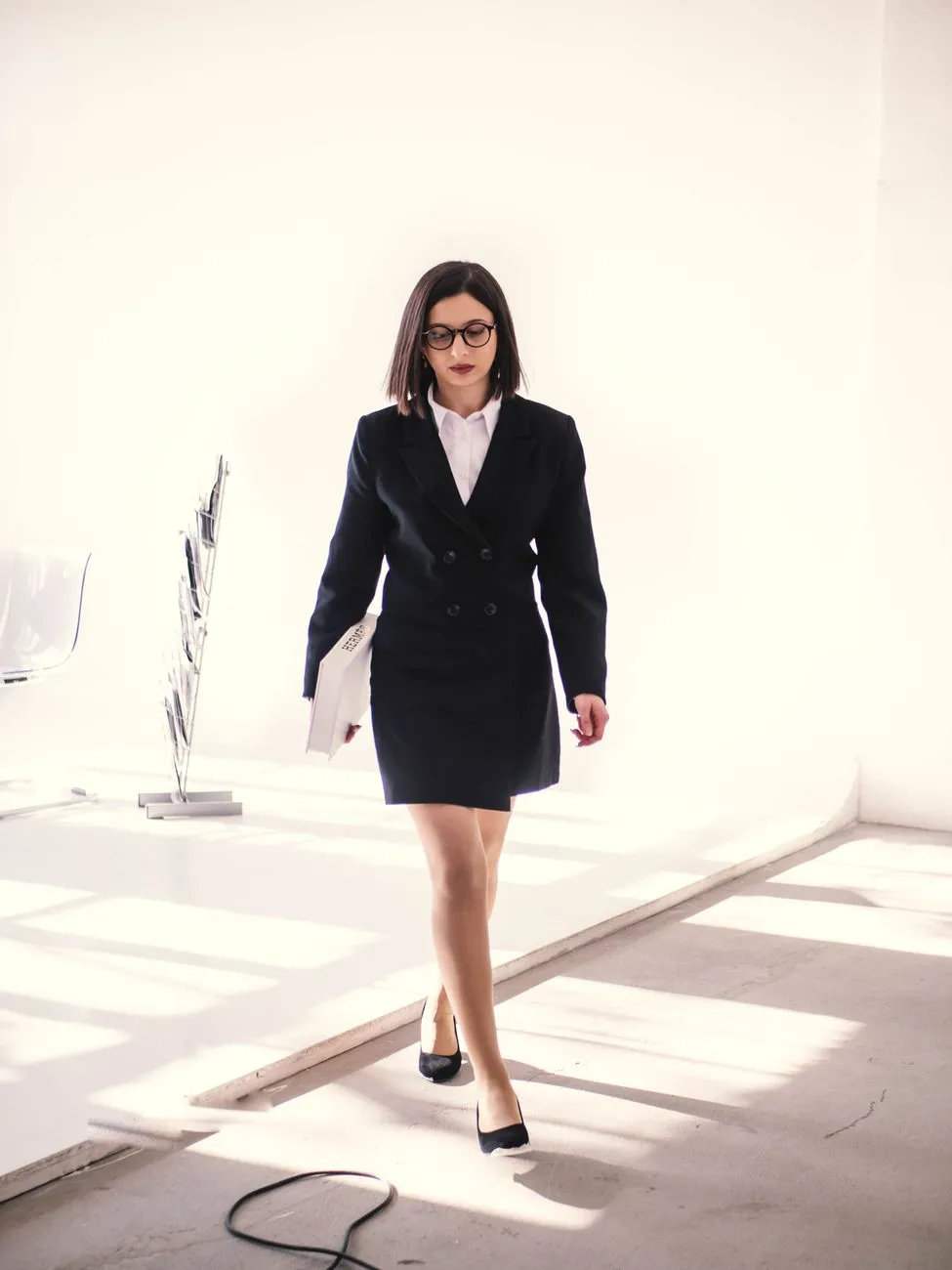
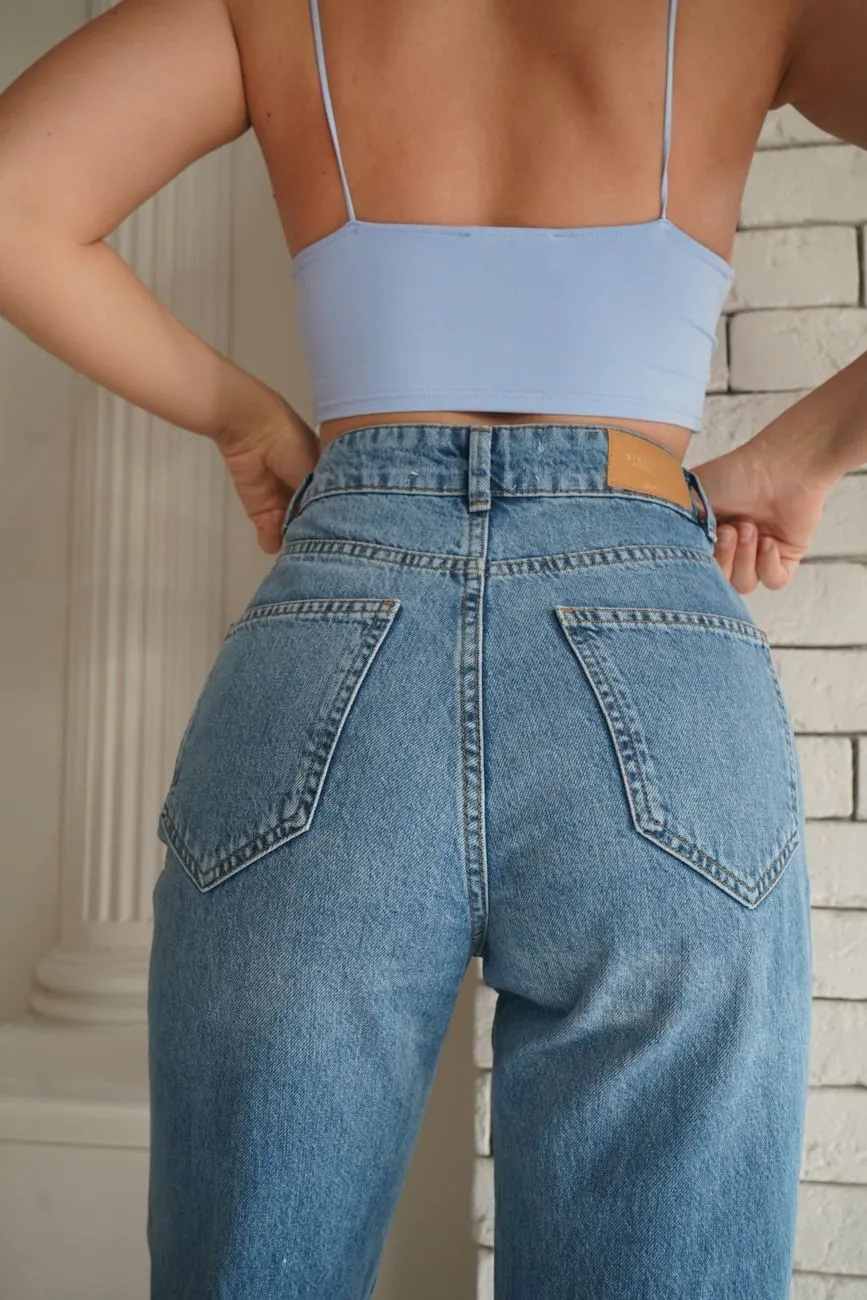 Photo: Наталья Маркина / Pexels
15 waist-defining outfit formulas
These are starting points, not rules. Swap shoes, bags, and colours to match your climate and life.
Dresses that do the waist work
- Printed wrap dress + low block-heel sandals. The wrap creates a V-neck and an adjustable waist. A knee or midi length keeps it easy.
- Solid jersey wrap midi + pointed-toe flats. A clean version for the office or dinner. The diagonal wrap line draws the eye to the middle.
- Fit-and-flare dress with a waist seam + ballet flats. The bodice is fitted, the skirt skims the hips, and the seam sits at the narrowest point.
- Ruched midi dress + heeled sandals. Ruching at the sides or centre front follows your curve without requiring a belt.
- Belted shirt dress + knee-high boots. The belt marks the waist; the shirt dress adds a relaxed vertical line.
Tops, jeans and trousers
- High-rise straight jeans + fitted square-neck top + slim belt + loafers. A simple, repeatable formula. The high rise holds the waist; the straight leg balances the hip.
- Wide-leg trousers + wrap top + heeled sandals. A fluid top and a high waist keep the silhouette long.
- Flare jeans + tucked fine-knit sweater + pointed ankle boots. The flare mirrors the shoulder line and the high waist shows your centre.
- Tapered ankle trousers + peplum top + pumps. The peplum adds a little shape at the waist, then the trousers narrow below the knee.
- High-rise cropped wide-leg jeans + fitted ribbed tee tucked in + clean sneakers. Casual, but the proportions still work because the waist is defined.
Skirts
- Pencil skirt + slim tucked top + single-button blazer + pumps. The pencil follows the hip and thigh; the blazer can be left open so the waist stays visible.
- A-line midi skirt + fitted tee + waist belt + low-profile sneakers. An A-line gives movement, but the fitted top and belt keep the hourglass line.
- Slip skirt + fitted ribbed top + cropped jacket + ankle boots. The cropped jacket ends near the waist so it doesn’t hide your middle.
- Pleated midi skirt + front-tucked fine knit + loafers. A front tuck gives a soft waist cue without adding bulk.
- High-waist denim midi skirt + tie-front blouse + flat sandals. The tie-front creates a natural waist mark; the denim adds some structure.
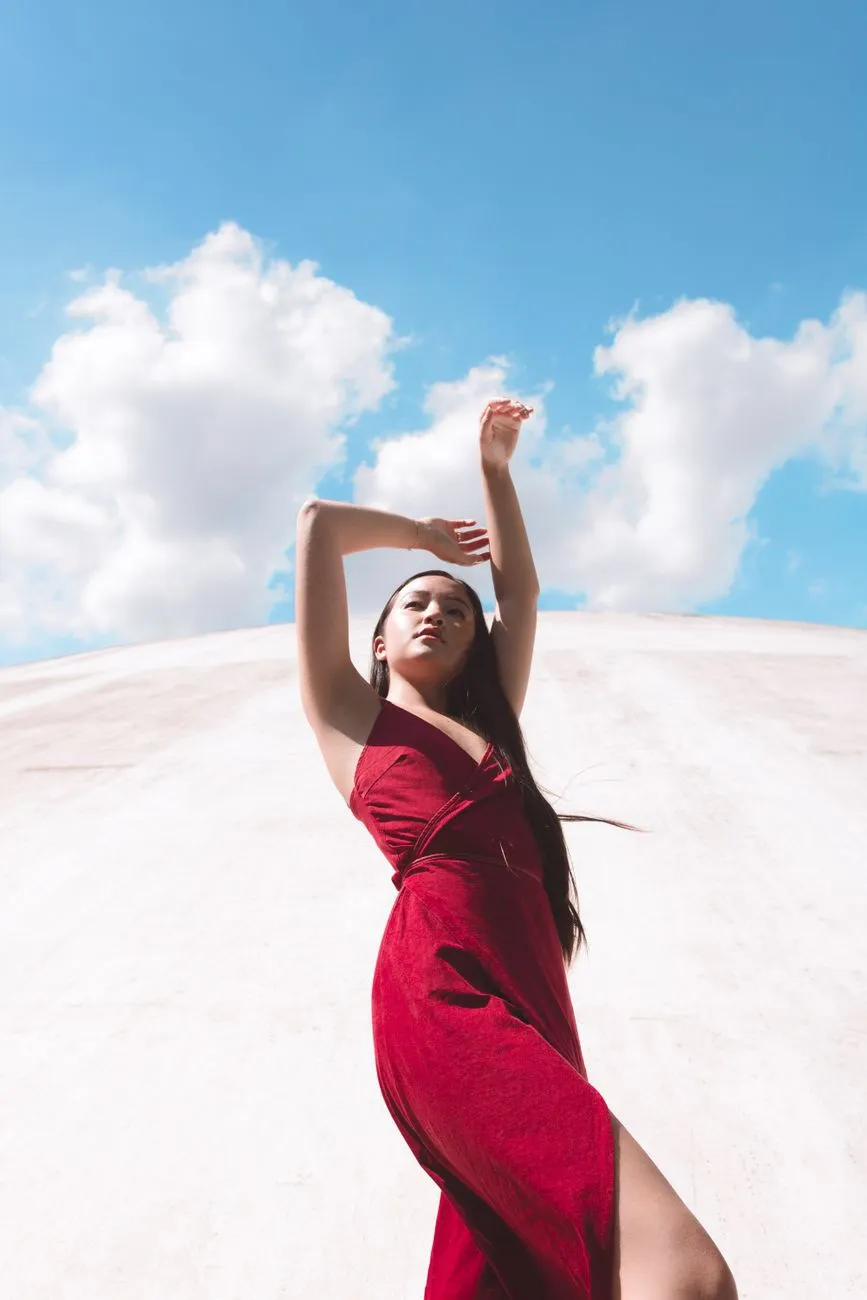
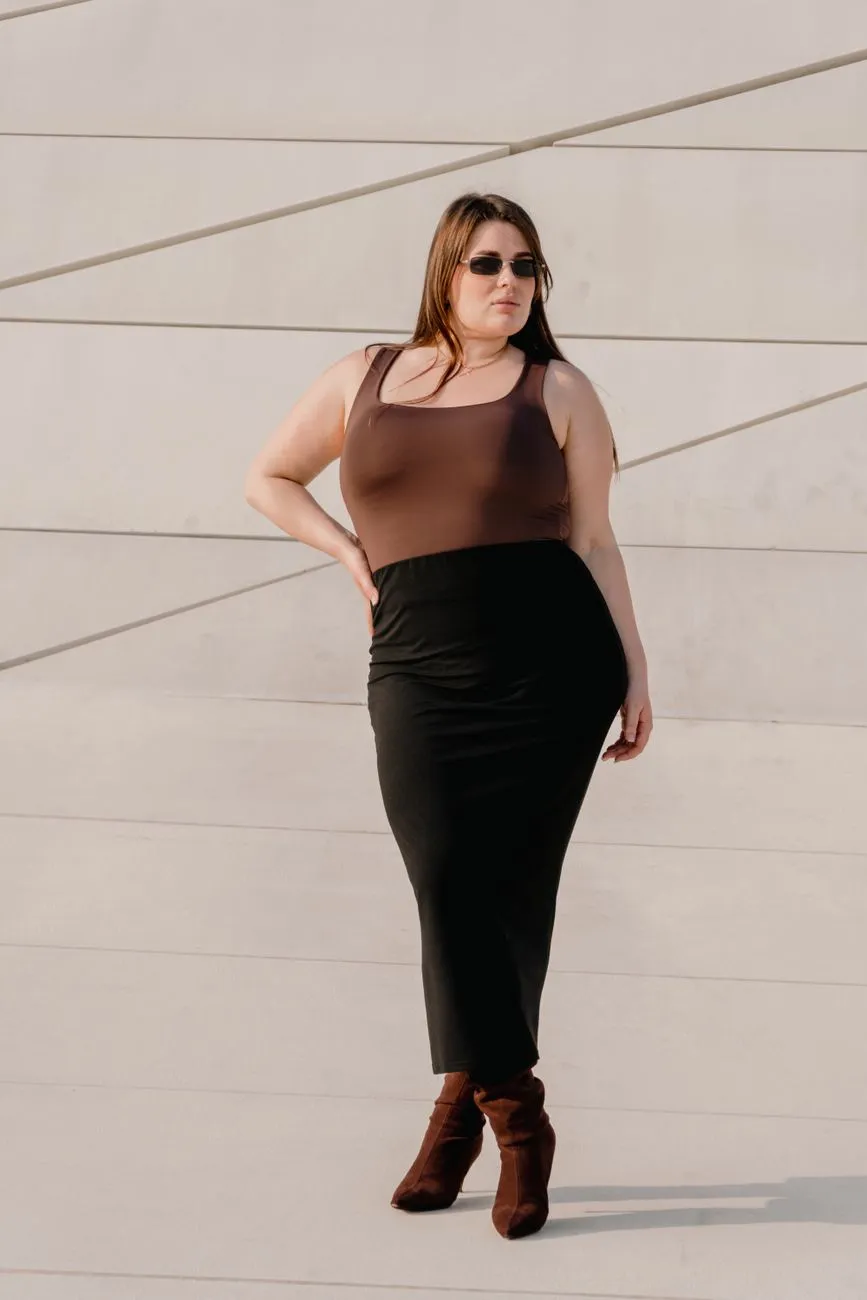 Photo: Zulfugar Karimov / Pexels
Whichever formula you start with, you can preview it on yourself using Macgi’s AI try-on to see the silhouette in seconds. Because it keeps your shape and only changes the clothes, it’s useful for comparing a wrap dress against a belted shirt dress, for example.
Jeans and trousers that do the work
For an hourglass, trousers usually fit best when they sit at or just below the natural waist. That means high-rise or mid-rise styles tend to do more for waist definition than very low-rise cuts, which can cut across the hips and shorten the torso. If you want to emphasise your waist, start there.
Cuts to look for:
- Straight-leg jeans with some stretch: they follow the hip without adding volume, then fall straight from the knee.
- Bootcut and flare jeans: the slight opening at the hem balances the hip and can make the leg line look longer, especially with a heel.
- Wide-leg and palazzo trousers: these work if the waistband fits closely and the fabric drapes rather than bulks out. A high-rise pair with a fitted or tucked top is one of the simplest hourglass uniforms.
- Tapered or slim trousers: good for creating a clean line under longer tops; choose a flat front if you want the waist to stay smooth.
One common fit issue is a waistband that gaps at the back because the hip needs more room than the waistband allows. If you have this, look for trousers with a slightly contoured waistband, a hidden side zip, or a fabric with enough stretch. A tailor can take in the centre-back waist of pants you already own. For more on cuts that accommodate a fuller hip and tummy without losing shape, best pants for plus-size has useful specifics.
Avoid very stiff, non-stretch bottoms if they fit the hip but leave a big gap at the waist: that’s a fit problem, not a body problem.
What to avoid and how to adjust it
The pieces below are not “bad.” They just need a little more thought on an hourglass because they can blur the waistline. You might want to avoid them when your goal is a defined waist, or adjust them with the fix suggested.
Boxy shift dresses and oversized tops
A straight shift or a very oversized top falls from the shoulders, so it hides the waist and can make the whole body read wider. If you love the look, add a thin belt, a half-tuck, or choose a cropped version that ends above the hip.
Very low-rise bottoms
Low-rise jeans and trousers sit below the natural waist, so they usually shorten the torso and cut across the fullest part of the hip. If you prefer low-rise, balance it with a shorter or fitted top, but high-rise will give you a stronger waist line.
Stiff, tailored pieces with no give
A jacket or dress that is sharply pressed but has no stretch can gape at the bust or pull at the hip even when it fits the waist. Look for princess seams, side zips, jersey, ponte, or bias cuts, which follow curves more easily.
Thick, heavy belts over a short waist
Belts can be helpful, but if your torso is shorter between the ribs and hips, a very thick belt can cover the whole waist and make the area look busy. A thin or medium belt often works better. If you have a fuller tummy, you may prefer no tight belt at all and instead rely on a dress’s built-in waist seam or wrap.
High-neck, wide, shapeless outerwear
A roomy, straight-cut coat or puffer can work in cold weather, but when it’s closed it hides everything. If you want to keep the hourglass visible, choose a coat with a fabric belt, back waist tab, or wear it open over a fitted inner layer.
Hourglass with a tummy: same rule, softer lines
You can have an hourglass silhouette and also carry softness around the stomach. That is very common. The goal is the same—let the waist lead—but the method can be gentler.
Instead of a tight cinch, use soft definition:
- Draped wrap dresses and surplice tops cross over the middle without pressing flat.
- Ruched or side-shirred dresses help the fabric skim rather than cling.
- High-waist bottoms with a wide, flat waistband can sit smoothly above or just below the fullest part of the stomach; avoid a waistband that digs in or rolls.
- Princess-seamed dresses and jackets create vertical shaping without a belt.
- Open longline layers, such as a soft blazer or cardigan, draw the eye up and down, while the top underneath keeps the waist visible.
If you want extra smoothing, choose a brief, high-waisted smoothing layer that fits comfortably—but this is optional and should never be a requirement. Comfortable definition always beats tight compression.
FAQ
What is the most flattering dress for an hourglass body?
In most cases, a wrap dress, a fit-and-flare dress with a waist seam, or a ruched midi dress works well because each one follows the bust and hip and defines the waist. A shift dress can still work if you add a belt or choose a style with princess seams.
Can an hourglass shape wear oversized clothes?
Yes. The simplest way is to keep one part fitted, such as an oversized top half-tucked into slim or high-rise bottoms, or an oversized blazer worn open over a fitted dress. The waist cue is enough to keep the hourglass readable.
What jeans should an hourglass avoid?
There is no universal “never,” but if you want waist definition, very low-rise, rigid non-stretch jeans are the hardest to fit because they can gape at the waist and cut across the hip. High-rise or mid-rise jeans with some stretch and a straight, bootcut, or flare leg tend to be easier.
How should I dress an hourglass shape if I have a tummy?
Focus on soft waist definition: wrap or draped dresses, ruched knits, high-waist bottoms with a comfortable wide band, and open longline layers. Avoid clothes that feel like they’re fighting your middle. A small amount of shapewear can smooth things if you want, but it’s not necessary.
Are belts always a good idea for an hourglass?
Not always. A belt is useful when a garment lacks shape, but if you have a short torso or a softer tummy, a thin belt or no belt—relying instead on a waist seam, wrap, or front tuck—can be more comfortable and more effective.