Macgi
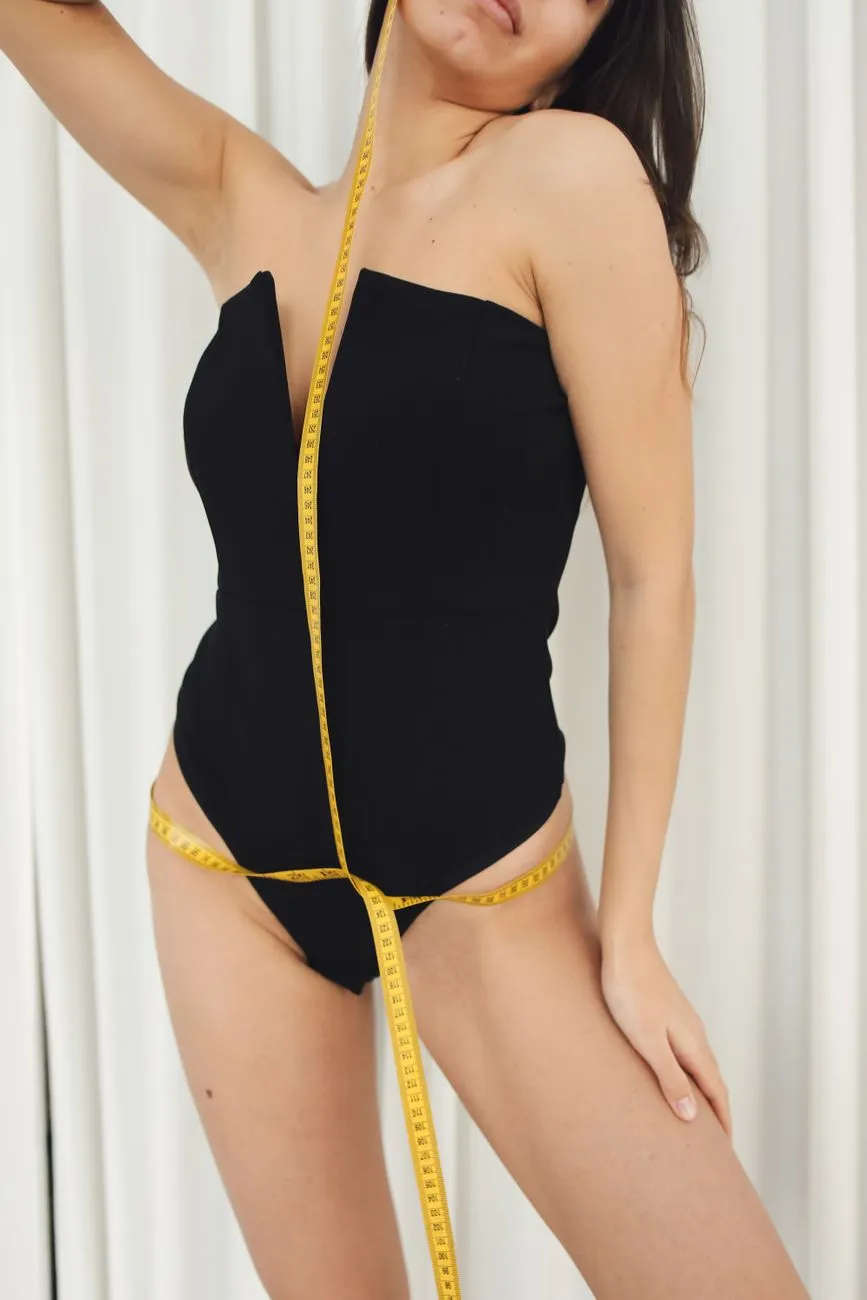
Body type styling can sound like a set of strict rules. It is more useful as a proportion map: once you know which parts of your frame are naturally wider, narrower or in between, you can choose clothes that create the visual balance you want. This guide covers how to measure, how to identify your shape with a quick self-quiz, and the core styling principle for each main shape.
Start with measurements, not with a label
You do not need millimetre-perfect measurements. Three or four numbers are enough. Stand in fitted clothing or underwear in front of a mirror, with a flexible tape if you have one.
How to measure the four key points
- Shoulders: measure across the back from one shoulder point to the other, not around the arms. If you are alone, a straight-on full-body photo can work just as well.
- Bust or chest: measure around the fullest part of the chest, keeping the tape level and not tight.
- Waist: measure the narrowest point between your ribs and hips, usually just above the navel. Do not pull the tape in.
- Hips: measure around the widest part of the buttocks and upper thighs.
For men, the same points apply. Shoulder width is often the most useful number for choosing jackets and shirts, while the waist-to-hip comparison tells you how tapered trousers should be.
If measuring alone feels awkward, use a straight-on full-body photo instead. Stand naturally, feet about hip-width apart, arms relaxed. A photo is often more objective because you can compare the shoulder line and hip line without zooming in on one area. For framing that actually shows your proportions, see How to Take a Full-Body Photo for AI Try-On.
The 60-second self-quiz
Look at your photo or mirror and compare three horizontal lines: shoulders, waist and hips. Do not zoom in on one area; look at the overall frame.
- Are your shoulders clearly wider than your hips? You are likely an inverted triangle.
- Are your shoulders and hips similar in width, with a clearly defined waist? You are likely an hourglass.
- Are your shoulders and hips similar in width, but your waist is not very defined? You are likely a rectangle.
- Are your hips clearly wider than your shoulders? You are likely a pear or triangle.
- Does your midsection carry most of the fullness, with shoulders and hips similar or narrower? You are likely an apple or oval.
Many people sit between two shapes, so treat these groups as styling hints, not rigid labels. Your body shape is also not your size. Every shape comes in all heights and sizes.
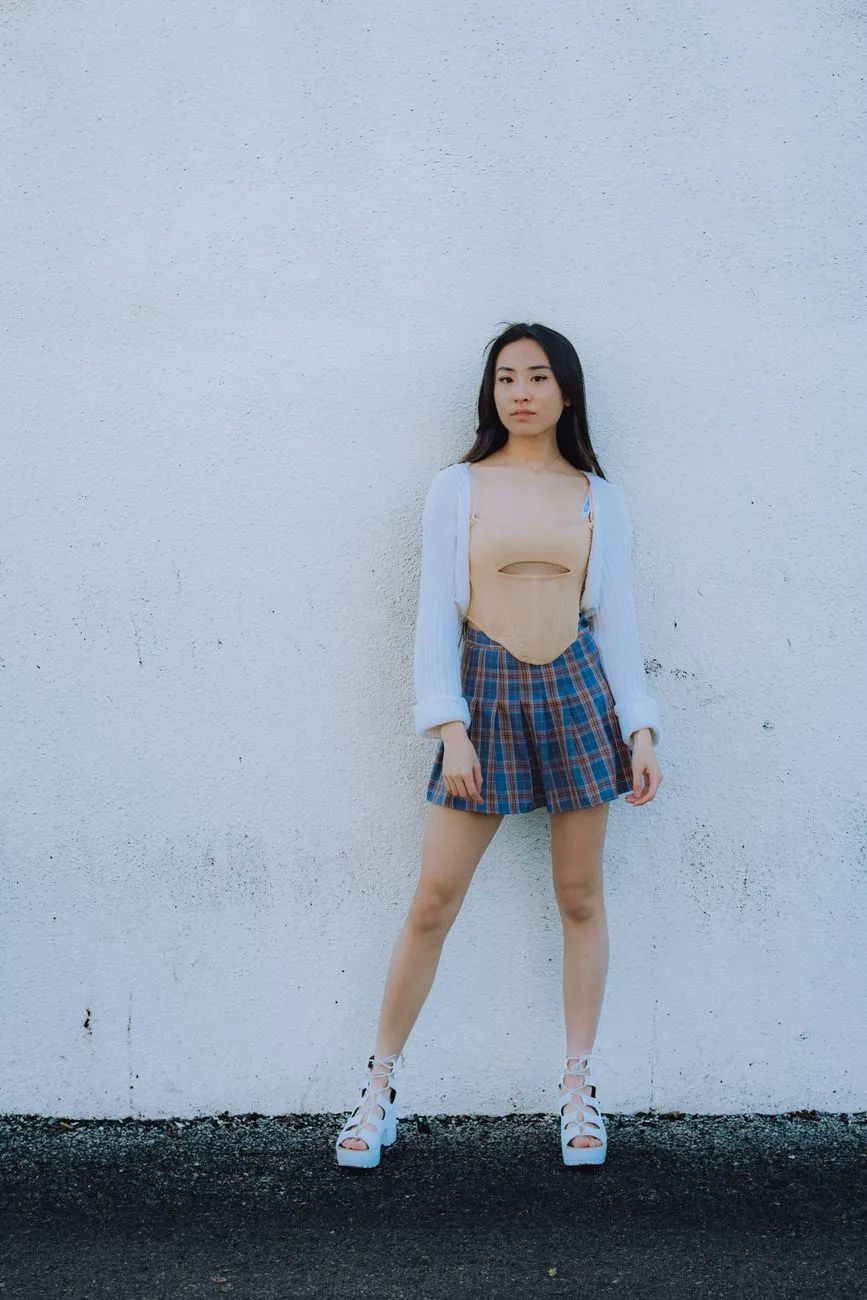 Photo: Connor Scott McManus / Pexels
The five main shapes and the core styling principle for each
Each shape below has one main goal and simple ways to achieve it. These are not rules. If you love an outfit that breaks the advice, wear it.
Hourglass
Core principle: follow your natural line and keep the waist visible.
If you want to highlight your proportions, choose wrap tops, belted dresses, high-waisted trousers, and fitted or gently draped knits. A V-neck or sweetheart neckline works with the top half without adding bulk.
If you want to show your shape, very boxy or oversized layers can hide the waist. Add a belt or choose a fitted layer instead.
For men, an hourglass proportion is less common, but if you have a noticeably smaller waist, choose tailored or tapered shirts and avoid very straight, voluminous cuts.
Pear or triangle
Core principle: balance hips and shoulders by bringing focus upward and keeping the lower half simpler.
Choose tops with shoulder detail, lighter colours, or horizontal stripes. Keep trousers and skirts in plain, dark or neutral shades. A-line skirts, straight-leg trousers and dark denim tend to work well.
If you want to visually balance the lower half, avoid tight, shiny or heavily detailed bottoms that draw the eye straight to the hips. You can read more outfit formulas in What to Wear for a Pear Body Shape.
Rectangle
Core principle: create the suggestion of curves through volume at the shoulders and hips, plus waist emphasis.
Try belted dresses, peplum tops, layered jackets, high-waisted bottoms with a tucked top, and skirts with gentle flare. A belt over a long cardigan or dress can create definition.
If you want more curve, straight shift dresses or head-to-toe stretchy clothes can read as one long line. A waist seam or tie is often enough to change that.
For men, the same idea works with structured jackets, textured knits, and medium-weight fabrics that broaden the chest and shoulders rather than clinging to the midsection.
Inverted triangle
Core principle: keep the top half clean and add volume or interest to the lower half.
Dark, simple tops without strong shoulder pads work well. Balance them with wide-leg trousers, full or A-line skirts, lighter colours or prints below, and details at shoes or hems. V-necks also soften the upper line.
If you want to soften width, avoid high-contrast shoulder details, puff sleeves and structured shoulders on top.
For men, broad shoulders are often an advantage. If you want to balance a narrower lower half, choose straight or relaxed trousers rather than very skinny cuts.
Apple or oval
Core principle: create vertical length and move the eye away from the exact middle.
V-necks, open-collar shirts, longer cardigans or jackets worn open, empire-line tops, A-line dresses, dark solid mid-layers, and straight-leg trousers with a flat front all help create a longer line.
If you want less focus on the midsection, avoid high stiff waistbands, horizontal stripes across the fullest part, and clingy fitted middles.
For men, V-neck knits, vertical patterns, open layering, and trousers that sit at the natural waist or slightly lower can create the same effect.
Simple outfit formulas to start from
These are starting points you can adapt to what you already own.
- Hourglass: wrap top + high-waisted straight trousers + pointed shoes. Or fitted knit + A-line midi skirt + slim belt.
- Pear: shoulder-detail blouse + dark straight jeans or trousers + simple shoes. Or light printed top + dark A-line skirt.
- Rectangle: belted shirtdress + short jacket. Or fitted top + high-waisted full skirt.
- Inverted triangle: plain dark top + wide-leg trousers + light-coloured shoes. Or V-neck knit + A-line midi skirt.
- Apple: longer V-neck tunic + dark straight trousers + long necklace. Or empire-line dress + open long cardigan.
For men, start with shoulder fit. If you have a slim build, choose slightly structured shoulders and medium-weight fabrics. If you carry more weight through the middle, use vertical lines and darker solid layers.
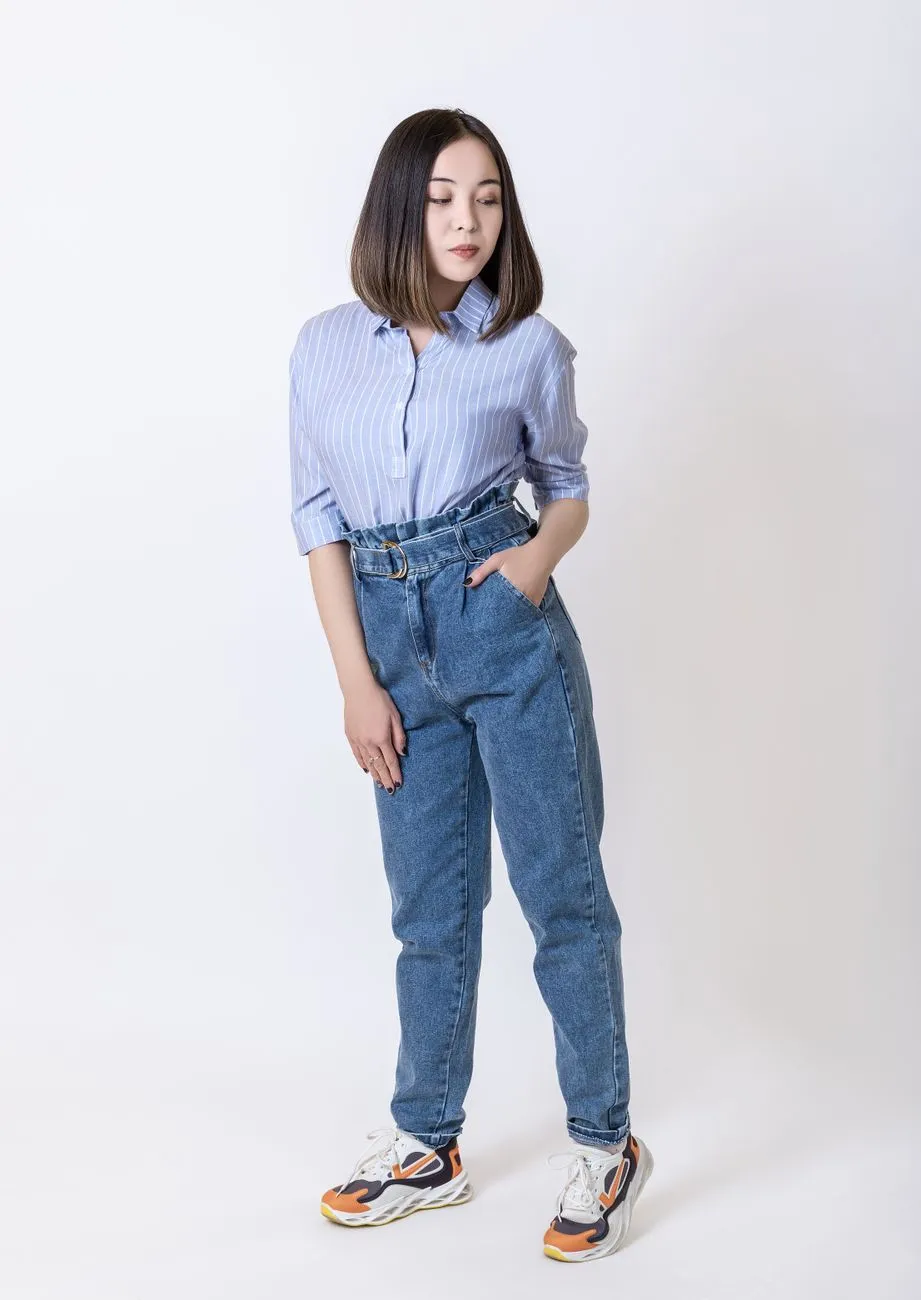 Photo: Dima Valkov / Pexels
Test the silhouette before you buy
Body shape advice only gets you so far. A garment’s cut changes how it sits on a real frame, so the quickest way to test whether a top, top with trousers, or dress follows your intended silhouette is to see it on your actual proportions.
With Macgi, you upload or take one full-body photo on your phone, choose a top, a top with trousers, or a dress, and get a try-on preview in about 15–40 seconds. The AI keeps your face, body shape, skin tone, pose and background and changes only the clothes—there is no body editing. It works in the phone browser, no app needed. Your photos are used only for your own try-on images, never posted, shared, used for ads or AI training. The temporary copy sent to the AI is deleted within 24 hours.
Try-on images are AI previews, so always check the store’s size chart before ordering. For a step-by-step approach to ordering with fewer returns, see Try On Clothes Online Before Buying.
Common mistakes to avoid
- Working from a label instead of actual proportions. Use the shape as a compass, not a diagnosis.
- Forgetting vertical proportions. Your leg-to-torso ratio matters as much as your shoulder-to-hip ratio. High-rise and low-rise fits affect both.
- Dressing only to hide something. It is often more useful to choose one feature you want to highlight—such as waist, shoulders or legs—and build from there.
- Ignoring fabric. The same silhouette can look completely different in stiff denim versus drapey viscose. Try both before deciding.
- Buying only for the widest point. If a garment fits one area but is loose elsewhere, consider tailoring rather than sizing up all over.
- Not testing movement. Sit, lift your arms, walk a few steps. Comfort changes how an outfit looks.
FAQ
Do I need exact measurements to find my body shape?
No. A straight-on photo in fitted clothes is enough for most people. Measurements help when you are between two shapes or comparing garments online, but a visual comparison usually gets you most of the way.
What if I’m between two body shapes?
Use both principles where they overlap. For example, if you are between rectangle and pear, try waist emphasis plus a darker or simpler lower half. Many people are blends, so treat each shape as a styling dial you can turn up or down.
Does this apply to men as well?
Yes. Men’s shapes are discussed less often, but the same shoulder-waist-hip comparison works. The main difference is clothing categories: men can use jacket shoulder structure, trouser taper, and layering to adjust the same proportions.
Should I only wear clothes that “flatter” my shape?
No. Flattering is optional. If you love something and it does not fit the typical advice, wear it. These are tools for when you want a specific visual balance, not obligations to follow every day.
How can I check a specific clothing shape without buying it?
Use an AI try-on tool like Macgi with a straight-on full-body photo. It gives a preview of a top, top with trousers, or dress on your actual proportions. Just remember the image is a preview; fit and sizing still need the store’s size chart.