Macgi
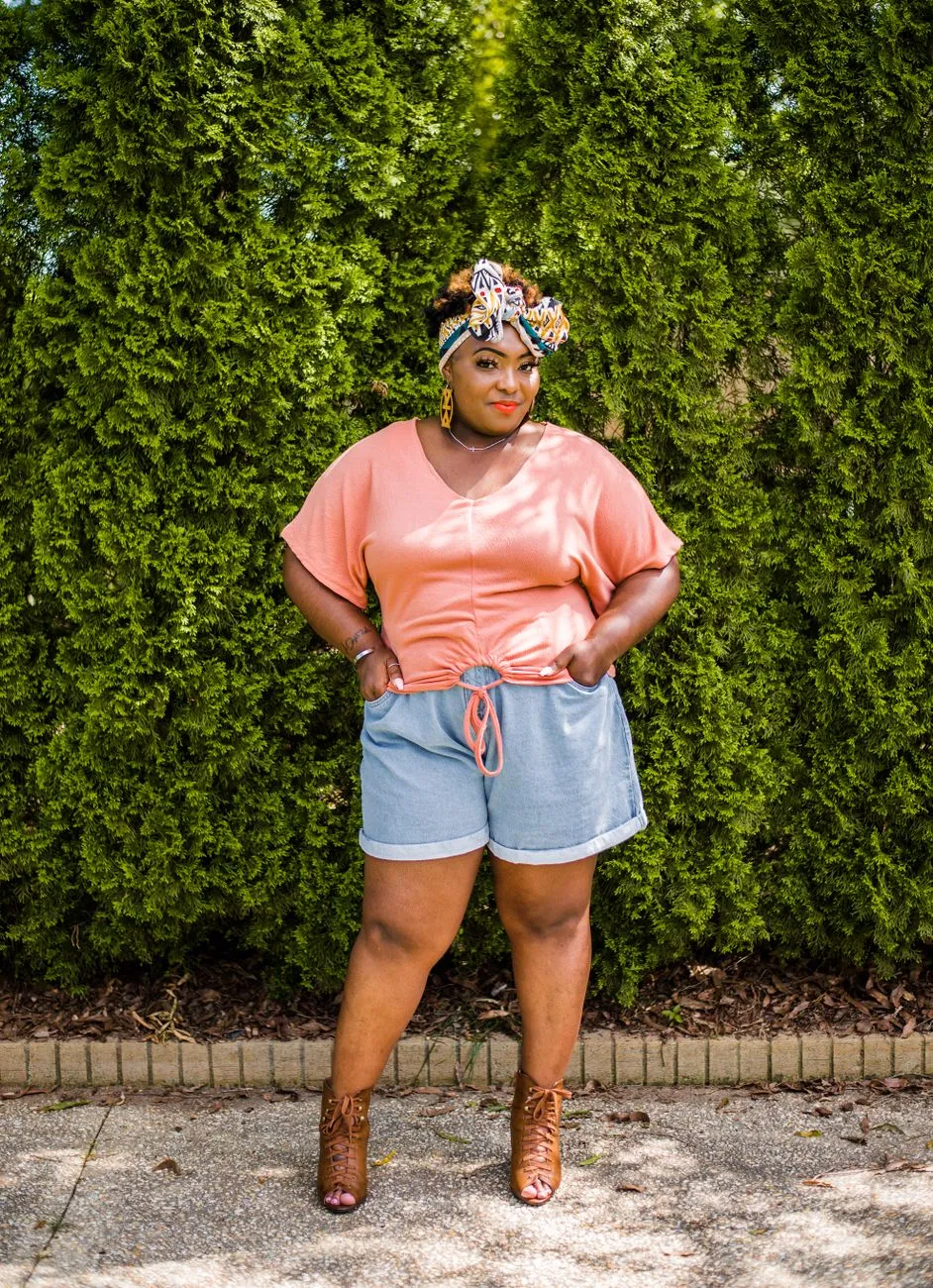
Winter dressing for plus-size bodies often becomes a fight with volume: the warm coat, the thick knit, the scarf, the base layer. It is not that the body is the problem; it is that too many bulky pieces are stacked on top of each other. The fix is not to avoid all texture. It is to use one smooth base, one intentional mid layer, and one outer layer with length or structure. This guide covers coats, puffer alternatives, knits, and layering formulas that keep you warm without adding extra width.
The core rule: one smooth base, one strong layer
Most winter bulk comes from layering several heavy pieces at once: a thick undershirt, a chunky knit, a fleece zip-up, then a padded coat. Each piece is fine on its own, but together they create a rounded, packed-in shape.
A better starting point is to allow only one truly thick or textured piece per outfit.
- If your coat is padded or oversized, keep the knit underneath smooth and fine-gauge.
- If your knit is chunky and statement-making, pair it with a cleaner, more structured coat.
- If you are wearing multiple layers for warmth, make the base layer thin and close to the body, and let the outer layer do the visual work.
Colour also changes how bulky an outfit reads. Darker, low-contrast colours on the torso and legs tend to create a longer vertical line, while a lighter or brighter colour near the face draws the eye upward. If you want less horizontal emphasis across the middle, avoid abrupt colour blocks that cut the body in half. Instead, wear a dark pair of trousers with a top in a similar tonal range, and add interest through a coat, bag or jewellery.
Fit matters more than size. A layer should sit close to the body without pulling, pinching or restricting the shoulders. If you keep the base smooth and the outer layer structured, you will generally feel warmer and look less bundled than if you add extra layers “just in case.”
Coats that do the work: length, shoulders, closure
A coat is the most visible part of a winter outfit, so its length and cut shape everything underneath it.
Best coat lengths
If you want a long, uninterrupted line, look for a coat that ends above the widest part of your hip, or below it at mid-thigh to knee. A hem that stops exactly at the widest point of your hip or thigh can create a horizontal stop that emphasises that area. For many people, a coat that falls from the upper thigh to the knee is the easiest length to wear over trousers and knit dresses.
A slightly longer coat can look elegant, but avoid going so long that it becomes a heavy column with no shape. If you like a long coat, choose one with a straight or gently shaped cut, not one that widens at the bottom.
Shoulders and closure
Look for a shoulder seam that sits at or slightly past your natural shoulder, not halfway down the upper arm. A dropped shoulder can feel cosy, but it can also make the whole upper body look wider than it is. A clean, set-in shoulder gives structure without adding padding.
Single-breasted coats are usually easier to wear than double-breasted ones because they create fewer horizontal lines across the chest. If you like double-breasted styles, choose one with narrow lapels and a lower button stance so the eye moves down rather than sideways.
A wrap coat with a soft tie is a useful option if you want waist definition without a tight belt. If you prefer a straighter silhouette, leave the coat open and let the inner layers do the shaping.
What to avoid in a coat
- Big patch pockets placed at the hip can add width exactly where many people want less.
- Very cropped, boxy jackets cut the body at the widest point and can make the outfit feel top-heavy.
- Wide fur cuffs, thick shearling collars or oversized hoods add volume around the face and shoulders. If you want a soft collar, keep it moderate.
- Shiny, stiff puffers can read as both bulky and loud. If you like padding, choose matte fabric and a narrower cut, or move the padding to a hidden layer.
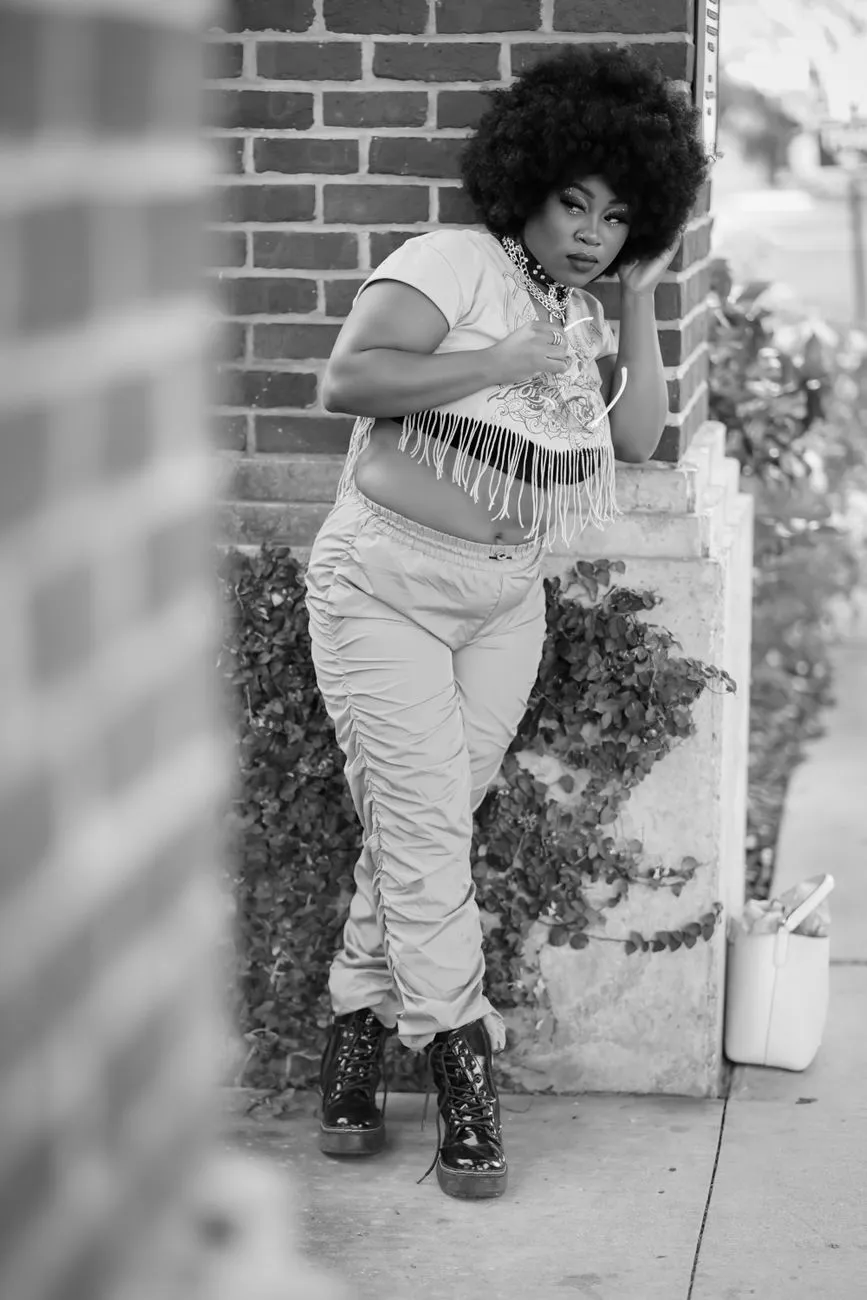
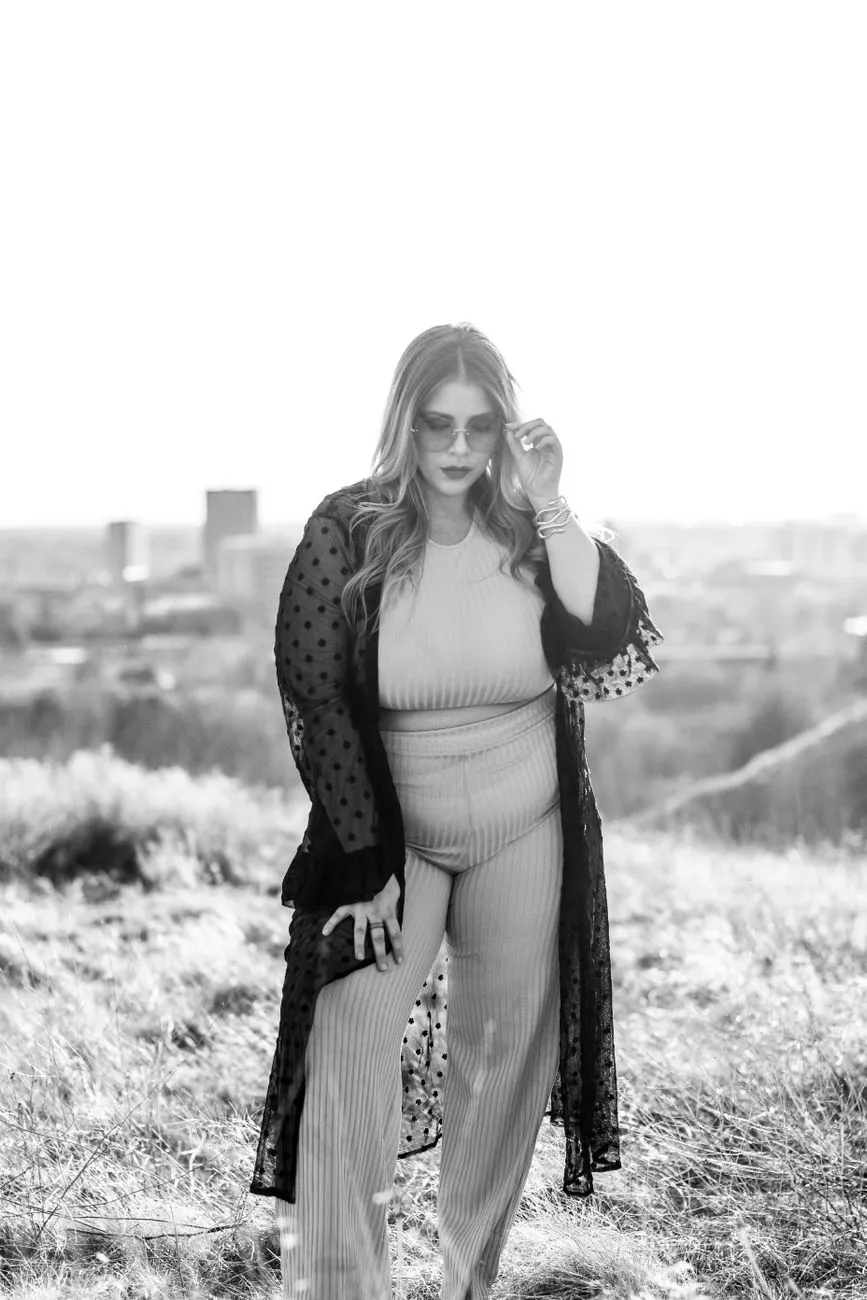 Photo: Jenny Uhling / Pexels
Puffer alternatives that keep you warm without the bulk
Puffer jackets are warm, but they are not the only route to warmth. If you want less visible volume, there are several alternatives that insulate without adding a rounded, Michelin-like shape.
Structured wool-blend topcoat
A wool-blend topcoat or peacoat is one of the most useful winter pieces. The fabric is dense and warm, but the surface stays smooth and vertical. For a longer line, choose a single-breasted style in charcoal, navy, camel or black and wear it over a fine knit. For more on choosing between jacket types, see Best Winter Jacket Type: Windbreaker, Puffer, Fleece or Wool?.
Quilted liner or thin down vest under a coat
This is the stealth-warmth trick. A thin quilted liner worn underneath a wool coat adds insulation without adding visual bulk. The liner sits close to the body, and the outer coat remains structured. The same principle works with a lightweight down vest, as long as it is not too puffy and does not bunch around the armholes.
Fleece or brushed-back jacket
A flat-sided fleece jacket with a zip front can work as a mid or outer layer in milder cold. Choose one with vertical seams or a straight zip rather than oversized slouchy shapes. Wear it under a shell or alone with dark trousers. Avoid fleece with bulky collars or wide, ribbed cuffs if you want a sleeker look.
Trench or rain shell over a warm knit
A windproof shell over a good knit is often warmer than a thick coat, because wind chill makes a bigger difference than many people expect. A long trench or parka shell in a water-resistant fabric blocks the wind, while a merino or wool-blend knit traps heat. This two-piece approach lets you adjust indoors without being stuck in a heavy coat.
If you do still want a puffer, choose one with narrow or vertical quilting, a semi-fitted body, and a matte fabric. A small amount of shape through the back or a hidden drawcord can keep it from looking like a sleeping bag.
Knits: choose weight, neckline and hem on purpose
Knits are the backbone of winter outfits, but not all knits are equal. Some add warmth without visual volume, while others are intentionally chunky.
Fabric weight
- Fine merino, wool-silk blends, and extra-fine lambswool are warm for their weight and sit close to the body. They work well under blazers, coats and jackets.
- Brushed cotton or viscose blend knits are soft and comfortable, but choose a fine gauge if you plan to layer them.
- Chunky fisherman knits, thick mohair and bouclé add texture and width. Use them as a single statement piece, not as one of three layers.
A useful rule: if you want less bulk, keep the knit fine and add warmth through the outer layer, not through more knitwear.
Necklines
A V-neck or a wider, softly draped crew neck opens up the chest area and creates a vertical line. Turtlenecks can work if they are thin and not too tight around the neck; a bulky roll-neck can add volume around the face and jaw. If you like a scarf, choose a flat woven or fine knit option and let the ends hang long down the front instead of winding it several times around the neck.
Hem lengths
If you wear a knit untucked, its hem should not stop exactly at the widest point of your hips or thighs. Ending just above or below that area tends to look smoother. A side-slit or high-low hem can also help by breaking up the horizontal line.
Sleeves matter too. Avoid sleeves with too much extra fabric around the upper arm unless you are deliberately going for a slouchy look. A slim or gently tapered sleeve is easier to layer under a coat.
Layering without bulk: the base-mid-outer sequence
Use this order to keep warm and stay visually clean.
Base layer
Start with a thin thermal or long-sleeve top in merino, modal or a silk blend. It should sit close to the skin and tuck cleanly into trousers or a skirt. This layer does the hidden heavy lifting for warmth. Avoid thick cotton undershirts that bunch around the waist.
Mid layer
Add one mid layer: a fine knit, a thin button-up shirt, a sweater vest or a light zip-neck. If you are wearing a chunky knit, skip the extra mid layer. Tuck the front slightly or fully if you want a defined waist, or leave it untucked if the hemline is smooth.
Outer layer
Finish with a structured coat, trench, shell, or the puffer alternative that suits the weather. Keep it open or lightly belted depending on the look you want.
On the bottom, follow the same logic. If you wear thermal tights under trousers, choose a smooth, moisture-wicking pair rather than thick, textured leggings. For trousers, straight-leg, wide-leg, or gently tapered cuts in a medium-weight fabric all work; the key is that the fabric should drape rather than cling. For more trouser-specific advice, see Plus Size Outfit Ideas Women Love: 15 Flattering Formulas.
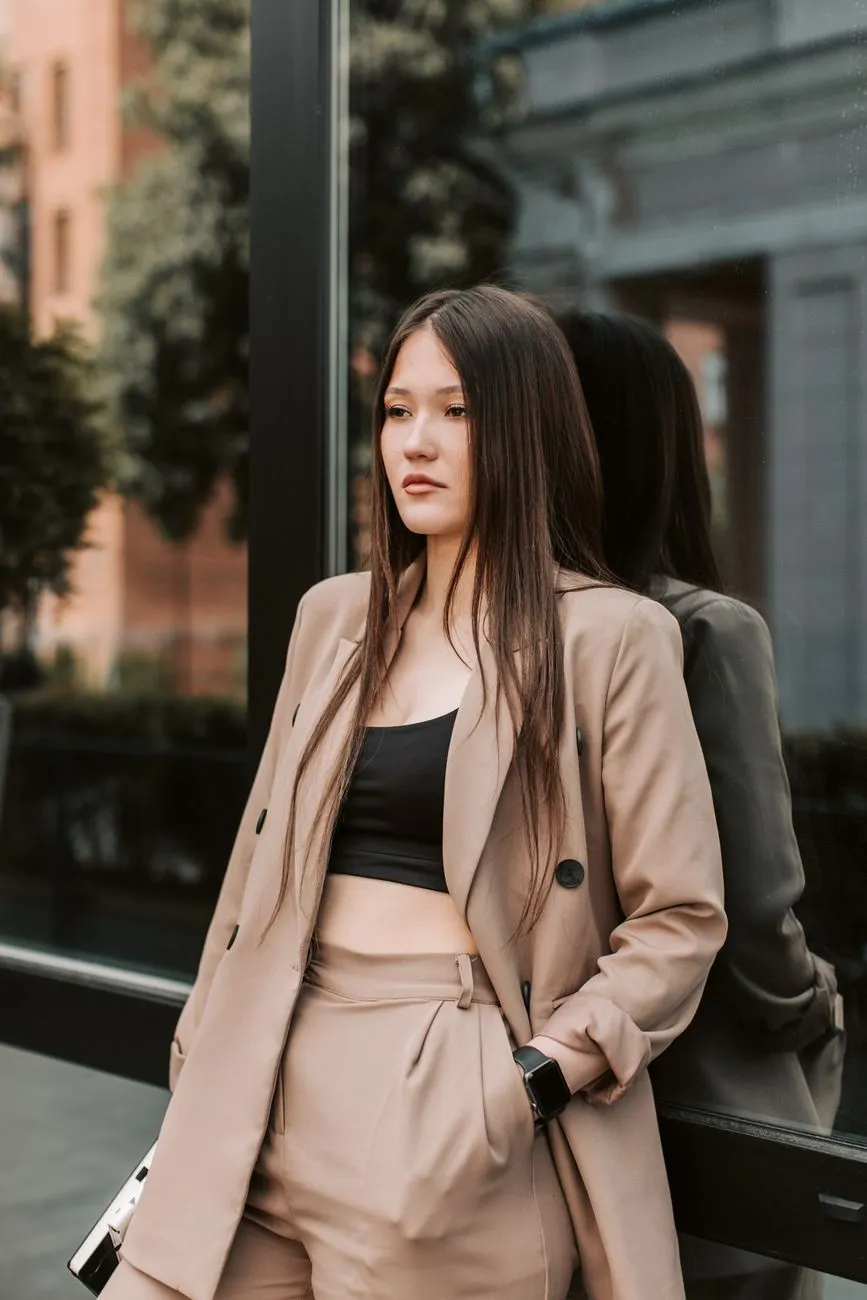
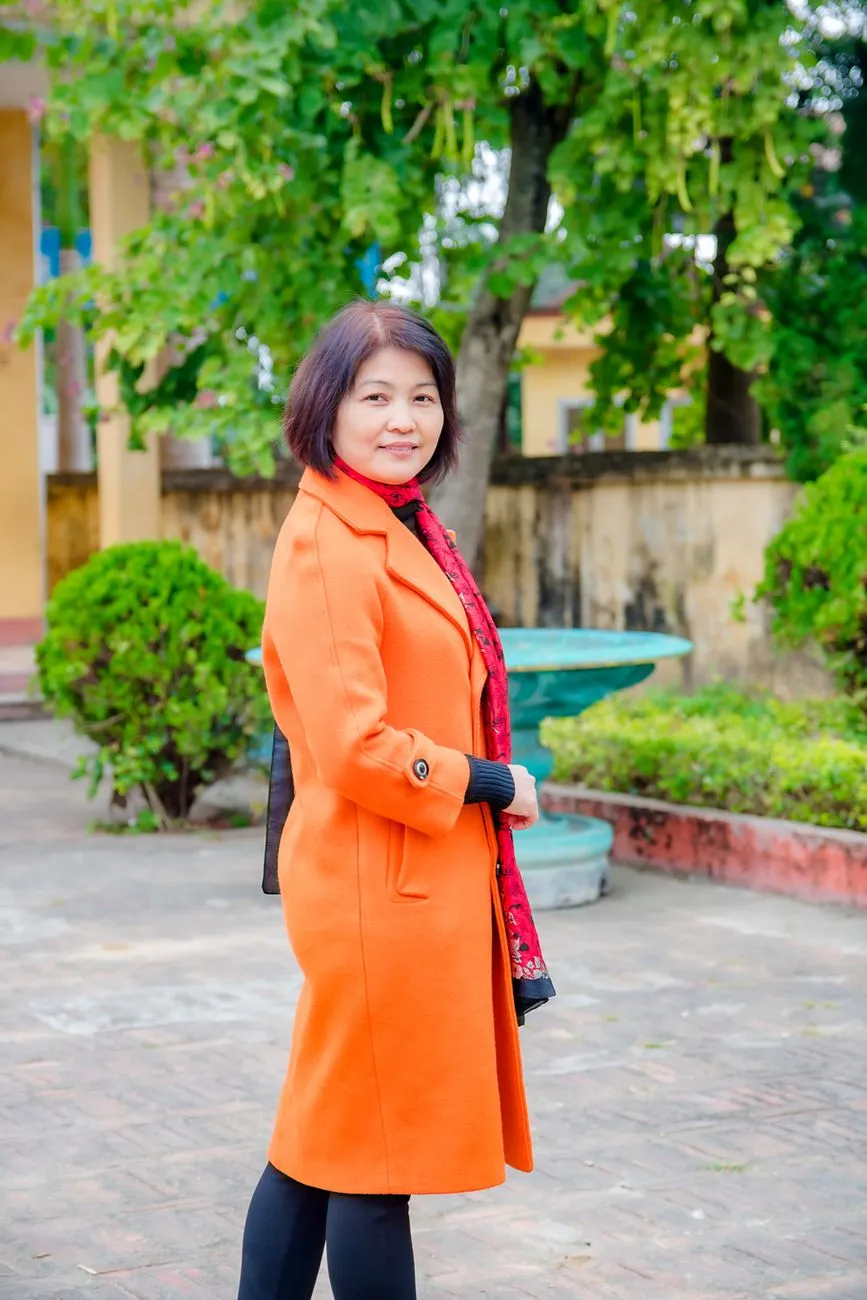 Photo: Thành Đỗ / Pexels
Women’s outfit formulas for winter
Formula 1: long wool coat + fine turtleneck + straight trousers
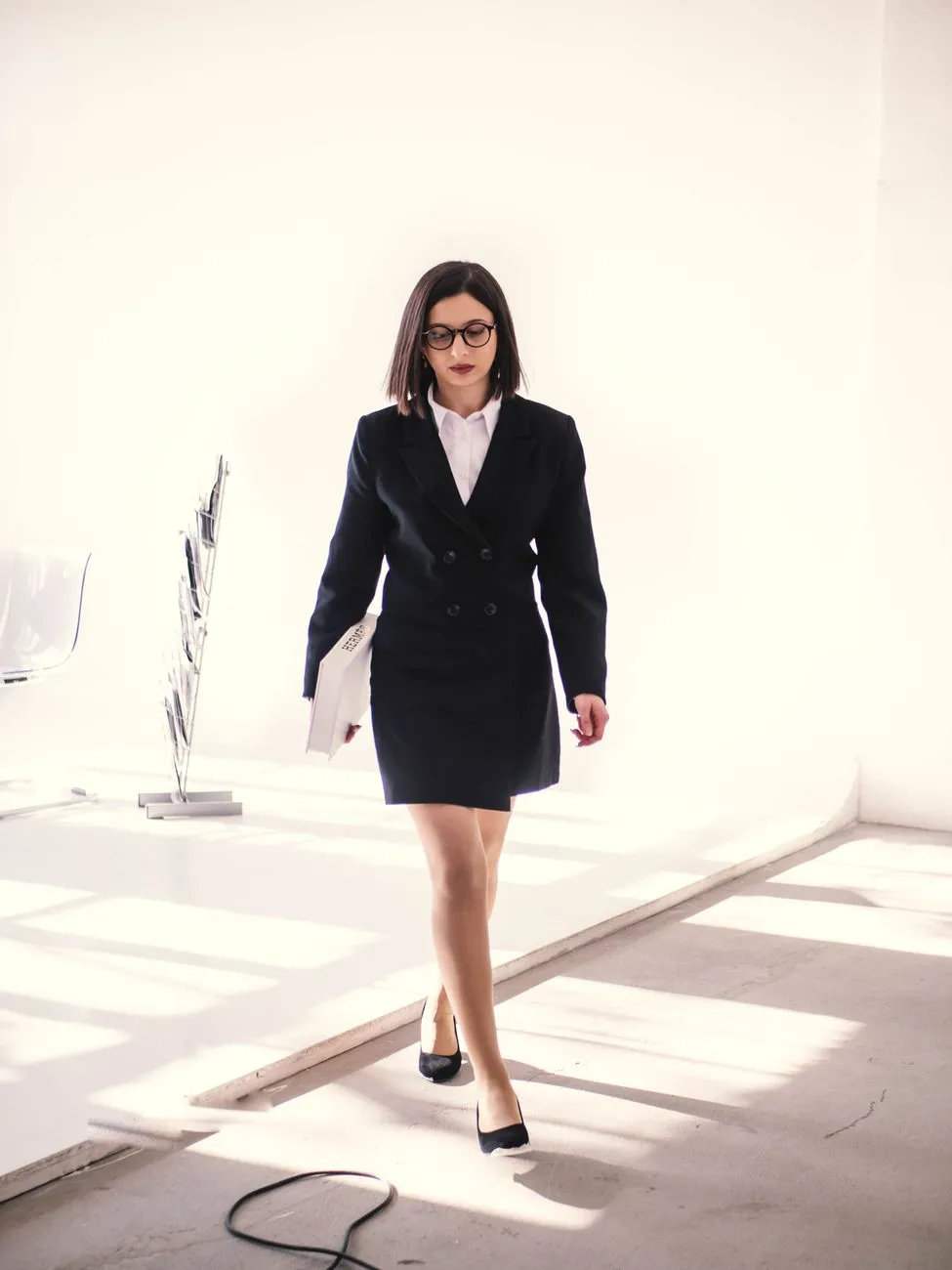
Wear a charcoal or camel single-breasted coat open over a black or tonal fine-gauge turtleneck. Tuck the turtleneck into straight-leg trousers that fall to the ankle or just above the shoe. Add heeled or pointed-toe boots in the same tonal family as the trousers. The repeated dark colour keeps the line long.
Formula 2: wrap coat + knit midi dress + knee-high boots
A knee-length wrap coat over a flat-knit midi dress is warm but not bulky. Choose a dress with a side slit or soft drape, not thick ribbing. Knee-high boots in a similar colour to the dress create one continuous leg line. If the coat and boots are similar in tone, the whole outfit reads taller.
Formula 3: quilted liner + wool topcoat + wide-leg trousers
For a colder day, wear a thin quilted liner as a hidden layer under a smooth wool topcoat. Underneath, wear a thin long-sleeve top. The visible layers stay sleek because the padding is hidden. Wide-leg trousers in a stable fabric balance the top without adding width. Add low block-heel boots.
Formula 4: trench + sweater vest + dark jeans
In milder winter weather, wear a fitted long-sleeve top with a sweater vest over it. The vest adds warmth around the core but leaves the arms less bulky. Top with a long trench or rain shell. Dark straight or slim-straight jeans keep the lower half clean. Add Chelsea boots.
Formula 5: long open cardigan + V-neck tee + ankle-length trousers
A long, open cardigan creates vertical lines down the front and is less bulky than a buttoned jacket. Wear it over a V-neck tee and high-waisted ankle-length trousers. Let the cardigan hang straight rather than belting it tightly. For more coat-and-knit combinations, browse Women’s Winter Outfits: 10 Coat + Knit + Skirt Formulas.
Men’s plus-size winter formulas
The same one-thick-layer rule applies for men.
- Single-breasted wool topcoat + crew-neck merino + dark straight jeans: Wear the coat open or lightly buttoned. The merino knit should be fine-gauge and untucked under the coat. Dark jeans with a straight leg and leather boots finish it cleanly.
- Quilted vest under a field jacket + flannel overshirt: Use a thin flannel as a mid layer over a fitted base. The hidden vest adds core warmth without turning the whole torso into a puff.
- Fine-gauge turtleneck + wool overshirt + dark chinos: A turtleneck in fine merino under an unbuttoned wool overshirt creates a long front line. Pair with dark chinos and chukka boots.
For men, avoid jacket hems that stop at the widest part of the hip. A coat that ends around mid-thigh or just above the knee works well. Trousers should sit at the natural waist and drape cleanly, not pull across the seat or thighs.
Shoes, finishing touches, and a fast way to preview
Shoes can make or break the “long line” effect. If you want an uninterrupted silhouette, choose shoes in a similar colour to your trousers. For women, a pointed or almond toe in a boot or pump tends to elongate. For men, a round-toe leather boot or chukka is practical without looking heavy. Very thick lug soles can be useful in snow, but they add visual weight at the bottom; if the weather allows, keep soles moderate.
Bags, jewellery and hats should sit where you want the eye to go. If you want the focus near your face, use a scarf, earrings or a beanie in a lighter colour. If you prefer attention lower, a structured bag or polished boot can do the job.
Before buying a coat or knit, you can test the shape on yourself rather than guessing from a product photo. Macgi works in the phone browser, with no app required: upload or take one full-body photo, choose a top, a top with trousers, or a dress, and in about 15–40 seconds you get a preview. The AI keeps your face, body shape, skin tone, pose and background, and changes only the clothes. That makes it useful for checking whether a coat length or knit neckline visually changes your proportions. Photos are used only for your own try-on images, never posted, shared, used for ads, or used for AI training, and the temporary copy sent to the AI is deleted within 24 hours. Remember that try-on images are AI previews; sizing still needs to be checked against the store’s size chart.
FAQ
Why do I look bigger in winter layers?
It is usually because two or more bulky pieces are stacked together. Keep only one thick layer, make the base smooth and close to the body, and choose an outer layer with length or structure. That reduces the packed-in look without losing warmth.
Can plus-size people wear puffer jackets?
Yes, if you want to. The key is the shape of the puffer. Choose one with narrow or vertical quilting, a matte fabric, and a semi-fitted cut. If you prefer less visible volume, use a thin quilted liner under a wool coat instead.
What knit is the least bulky?
Fine-gauge merino, wool-silk blends and extra-fine lambswool are warm without adding much visual thickness. They are the best base or mid layers for a sleeker winter outfit.
Are oversized coats a good idea?
They can be, but look for an oversized coat that still has clean shoulder lines and a clear vertical shape. If the whole coat is very voluminous and you are wearing a chunky knit underneath, the outfit can quickly look heavier than you want.
How do I keep my legs warm without adding bulk?
Use smooth thermal tights or base leggings under trousers rather than thick, textured layers. On the outside, choose trousers that drape from the hip and have enough room to move. An ankle-length or full-length trouser in a dark colour creates a longer line.
Should I belt my winter coat?
Only if you want waist definition. A soft wrap coat or a thin belt over an open coat can define the waist without squeezing. If you prefer a straight, relaxed shape, leave the belt off.
How many layers should I wear in cold weather?
For most winter days, three layers are enough: a thin base, one mid layer, and a structured outer layer. If it is extremely cold, upgrade the outer layer or add a thin quilted liner rather than piling on another chunky knit.