Macgi
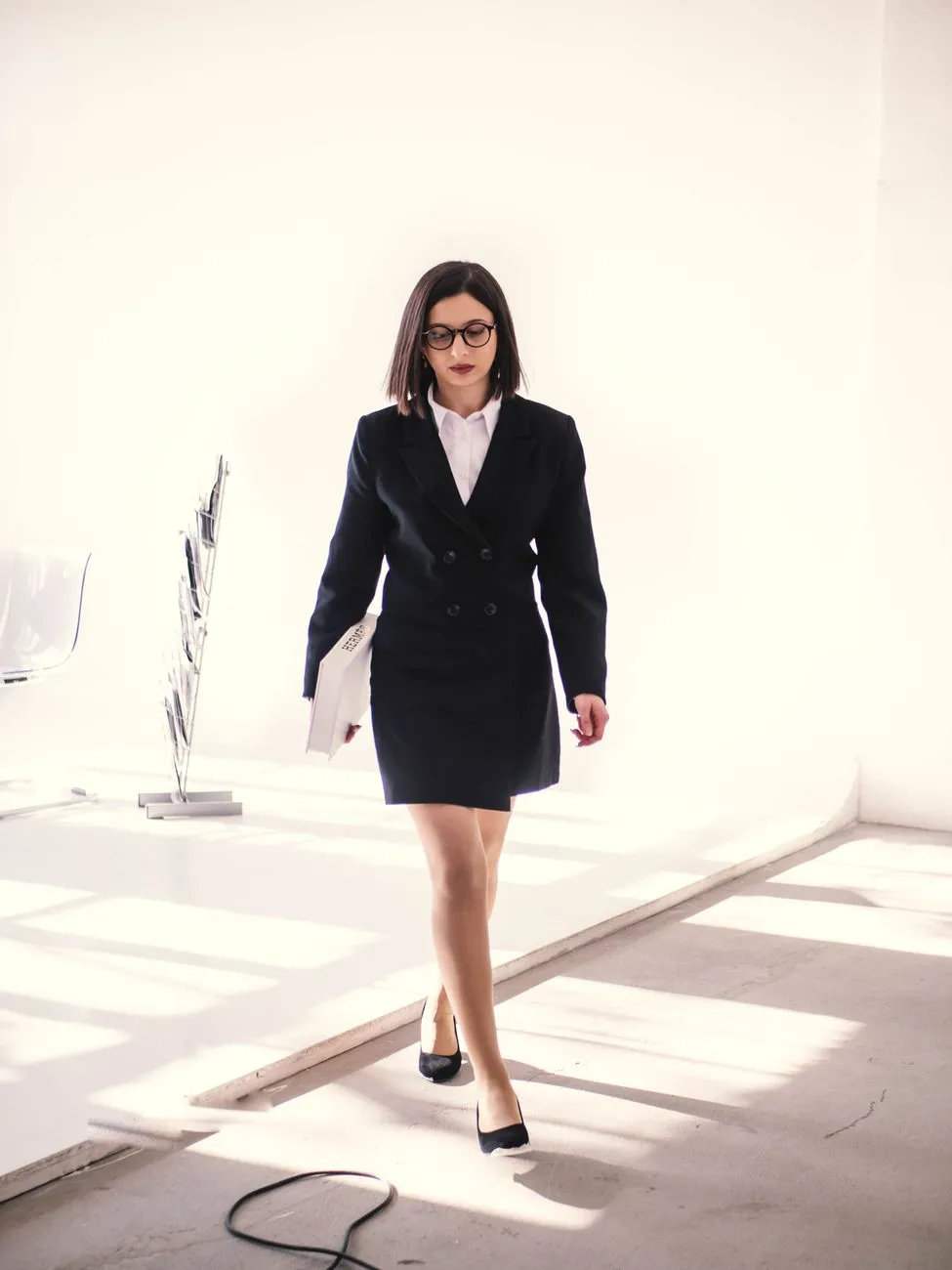
For shorter professional women, most workwear issues are proportion issues, not size issues. A blazer ending mid-thigh, trousers pooling at the shoe, or a shoulder seam sliding past your shoulder point can make an otherwise good outfit look sloppy. The fix is choosing and altering pieces so the garment lines hit the right spots. This guide covers tailored suits, trouser lengths, blazer proportions and shoes, plus a way to preview outfits before committing.
If you want a faster visual check, Macgi works in a phone browser with no app. Upload one full-body photo, try a top, a top with trousers, or a dress, and get a preview in about 15–40 seconds. It keeps your face, body shape, skin tone, pose and background, and changes only the clothes.
Why proportion matters more than height in petite workwear
Office dressing for shorter frames comes down to a few key lines: the shoulder seam, the jacket hem, the trouser hem and the top of the shoe. When those points land correctly, the outfit looks intentional. When they don’t, the eye reads the outfit as too long or too big.
One useful starting rule is to create an unbroken vertical line when you can: keep the top, trousers and shoes close in tone, or tuck the top so there is a clear break at the natural waist. This is not about looking taller for its own sake; it is about making the silhouette read as one clean column. For more ideas that do not rely on heels, see Petite Outfits to Look Taller: Tips Without High Heels.
Tailored suits: the suit formula for shorter frames
A matching suit is one of the easiest bases for petite workwear because the same-colour jacket and trousers already create a long vertical block. The details that matter are jacket length, trouser rise and fabric.
Suit jacket length
For shorter frames, a suit jacket generally works best when it ends at or just below the hip bone, not at mid-thigh. A too-long blazer creates a horizontal line lower down and can make the legs look shorter. A very cropped jacket can cut the torso into two sections and may look boxy. The practical safe zone is from the natural waist to the top of the hip.
If you already own a long blazer and like it, pair it with slim or straight trousers in the same colour and a fitted top underneath. That helps the longer line read as deliberate rather than oversized.
Suit trousers: rise and leg shape
High-rise and mid-rise trousers are usually the easiest because they start the leg line higher. Low-rise trousers can make the torso look longer and the legs shorter, even if the hem is correct. A straight-leg or gently tapered trouser is the most predictable. A wide-leg suit trouser can work if the waist sits high and the hem almost touches the floor without dragging.
Suit colour and fabric
Dark solid colours are helpful because they reduce visual noise, but camel, grey, deep green and other mid-tones can work just as well when the tone is consistent. The benefit of a monochrome suit is the continuous colour from shoulder to shoe. Choose fabric with some drape, such as fine wool, crepe or a structured blend, and avoid very stiff or heavy cloth if you want a sleek line.
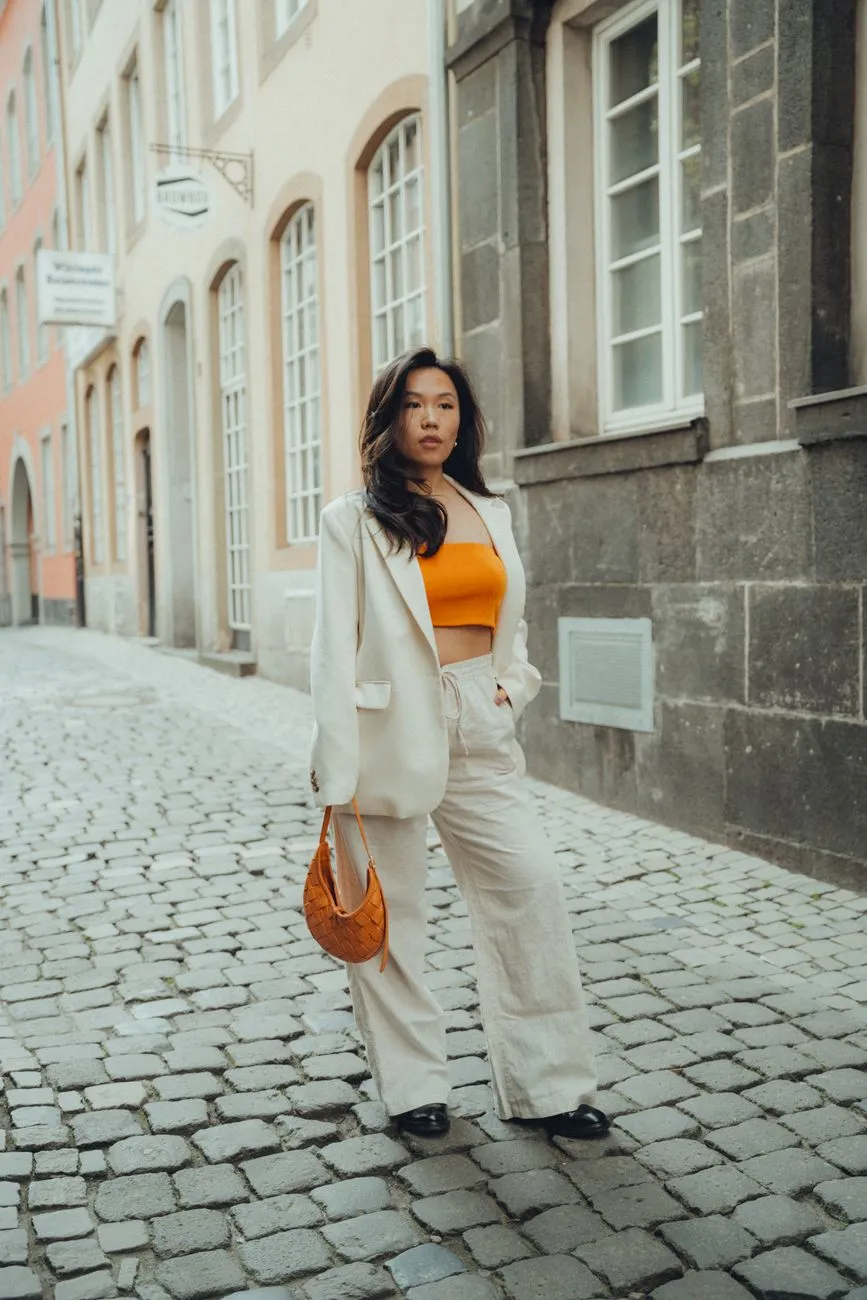 Photo: Anh Nguyen / Pexels
Trouser lengths that work (and the ones that fight you)
Trouser length is one of the fastest ways to make or break a petite work outfit. The wrong hem can interrupt the leg line.
Full length: the break rule
For shorter frames, full-length work trousers should skim the top of the shoe with little or no break. A deep break or pooling fabric shortens the leg and adds bulk at the ankle. If your trousers bunch, tailoring is usually worth it.
For wide-leg trousers, the hem must sit very close to the floor when you are wearing the intended shoes. If it floats too high, the wide shape looks cut off. If it drags, it looks messy.
Ankle and cropped lengths
Ankle-length trousers are useful because they end neatly and show a little ankle. The best crop point is just above the ankle bone. A mid-calf crop is riskier because it creates a horizontal line at a wider point and can visually divide the leg. For cropped styles, a pointed flat or slingback usually works well.
Wide-leg and straight-leg options
Straight or slightly tapered trousers are the easiest default. Wide-leg trousers can work when high-waisted, floor-skimming and worn with a pointed or heeled shoe. For hem and shoe guidance, see What Shoes to Wear with Wide Leg Pants: 5 Styles & Hem Rules.
Blazer proportions and shoulder fit
Blazer fit is less about the size on the label and more about where the seams, lapels and sleeves fall on your body.
Shoulder seams
The shoulder seam should sit at the edge of your shoulder bone, not down the upper arm. A wide shoulder makes the jacket look boxy; a narrow shoulder pulls across the upper back. If you can only get one fit point right off the rack, make it the shoulders. The body and sleeves are easier to alter.
Lapel and button stance
A single-button or two-button blazer with a higher button stance helps keep the eye moving upward. A low button stance can make the torso look longer, which is not always useful on a shorter frame. Moderate lapels usually work better than very wide lapels on a shorter torso.
Sleeve length
Sleeves should end at the wrist bone, with a little shirt cuff or skin showing. Sleeves that cover the hand make the arms look shorter and the jacket look too big. A tailor can usually shorten long sleeves.
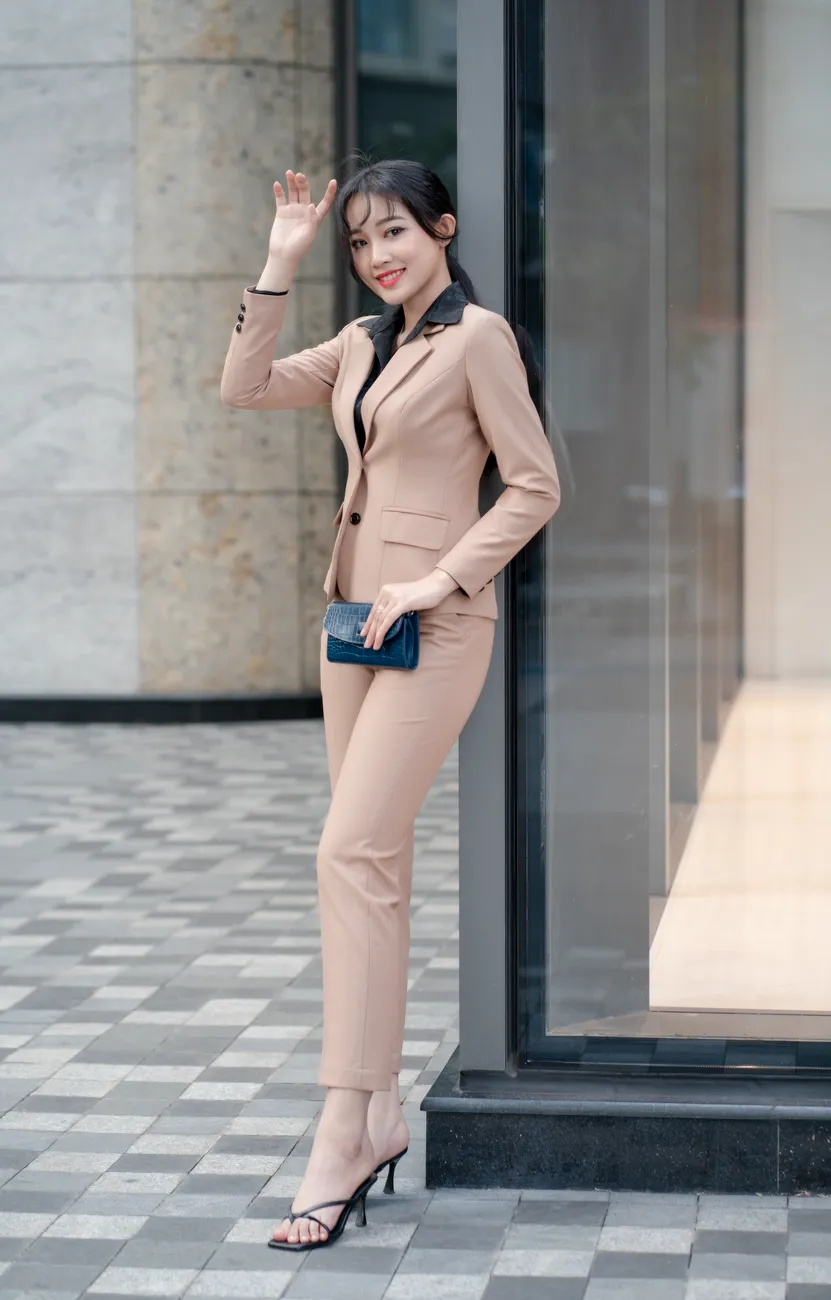 Photo: Hải Nguyễn / Pexels
Shoes for petite work outfits
Shoes set the visual endpoint for the trouser or skirt hem.
Pointed toes and low vamps
A pointed toe extends the eye forward and can make the leg line look longer than a round toe. A low vamp, showing more of the top of the foot, also continues the line of the leg. Pointed-toe flats, low block heels and slingbacks are strong office options. Avoid very chunky soles if you want a light, clean silhouette.
Heel height and comfort
You do not need high heels. A low block heel of around 2–5 cm is often enough to hold a longer trouser hem and stay comfortable. If you prefer flats, choose a pointed-toe flat or slim loafer rather than a heavy rubber sole.
Ankle straps and colour
A thick ankle strap can cut the leg line and make the legs look shorter. If you like an ankle-strap shoe, choose a thin strap or one that matches your skin tone or trouser colour. Matching shoes to trousers in a dark outfit creates a continuous line; in lighter outfits, skin-tone shoes can do the same.
Complete office outfit formulas for petite frames
These combinations are easy to assemble from pieces you may already own.
Formula 1: dark trouser suit + fine knit + pointed flat
A matching dark suit in a straight or slightly tapered cut, with the jacket ending at the hip. Tuck in a fine-gauge knit or fitted shirt. Add a pointed-toe flat or low block heel in the same colour family. The monochrome column does the work.
Formula 2: high-waist straight trouser + cropped blazer + slingback
High-waist trousers in grey, camel or olive, with a blazer ending at the natural waist or top of the hip. Keep the top simple and tucked. A low-heel slingback keeps the ankle line clean.
Formula 3: shift dress + tailored blazer + low block heel
A shift dress hitting at the knee or just above, in a solid colour or subtle print, with a tailored blazer ending near the hip. Keep the dress as the main line. If the dress is patterned, keep the blazer and shoes neutral.
Formula 4: wide-leg trouser + fitted top + pointed pump
A high-waisted wide-leg trouser with a floor-skimming hem, a tucked fitted top, and a pointed low-heel pump. This works when the hem is tailored for the shoe height.
How to preview a work outfit before buying
Workwear mistakes can be costly because of tailoring and returns. A photo is often more useful than a mirror because it shows the full silhouette.
If you are choosing between two blazer lengths or trouser crops, you can use Macgi in a phone browser. Upload one full-body photo, then try a top, a top with trousers, or a dress. The preview appears in about 15–40 seconds. Macgi keeps your face, body shape, skin tone, pose and background, and changes only the clothes, so you can compare proportions without altering yourself.
The photos are used only for your own try-on images—never posted, shared, used for ads or AI training—and the temporary copy sent to the AI is deleted within 24 hours. Try-on images are AI previews, not a sizing guarantee, so always check the store’s size chart. For a broader approach to ordering with fewer returns, see Try On Clothes Online Before Buying: 5 Steps to Fewer Returns.
FAQ
What is the best trouser length for petite women at work?
Ankle-length or floor-skimming usually works best. For straight trousers, aim for little or no break at the shoe. For wide-leg trousers, keep the hem close to the floor without dragging. Avoid mid-calf crops and deep pooling hems.
Are wide-leg trousers okay for short women?
Yes, if the waist is high, the hem is long enough for your shoes, and the width is not extreme. Pair them with a fitted or tucked top and a pointed or heeled shoe.
Should petite women wear cropped blazers?
A cropped blazer can work if it ends at the natural waist and is worn with high-waist trousers or a dress. A very short boxy jacket can cut the torso in two, so try to keep the lower half continuous.
What shoes are best for petite work outfits without high heels?
Pointed-toe flats, low block heels, slingbacks and slim loafers are usually easiest. Choose a low-cut vamp and avoid thick ankle straps or chunky soles if you want a clean line.
Can petite women wear midi skirts to work?
Yes, but the hemline matters. A midi skirt that stops just below the knee or at the narrowest part of the calf tends to work better than one ending at the widest point. Wear it with a fitted top and a pointed or skin-tone shoe.