Macgi
Why chat selling is different for clothing
Online fashion shoppers hesitate for a reason product pages cannot fully solve: they cannot feel the fabric, check the real stretch, or know whether the size small will fit their hips. A model photo shows one body, often under studio lighting, with the garment clipped or adjusted. Chat is where many clothing sales are actually closed because a real person can say the honest thing: “This dress runs narrow across the bust on many customers” or “The waistband has very little stretch.”
Chat selling for fashion is not about pushing. It is about reducing the shopper’s specific fear: buying something that looks wrong on them. When you answer that fear honestly, you close sales with fewer disputes and fewer returns later.
A good chat conversation should do four things:
- Confirm what the shopper wants and where they will wear it.
- Give specific fit advice using measurements, not just labels.
- Send proof such as fabric close-ups or a real flat measurement photo.
- Confirm the order details before payment so there are no surprises.
The five steps below turn that into a repeatable process for small fashion shops on Shopify, WooCommerce, Haravan, Sapo, Facebook, Instagram, TikTok or Zalo.
Step 1: Qualify the shopper without interrogating
Qualifying means understanding the buyer’s needs before recommending a size or style. It does not mean asking for weight, height and measurements in the first message.
Start with simple questions:
- “What occasion are you buying this for?”
- “Is this for you or someone else?”
- “What size do you usually wear in other brands?”
- “Do you prefer a fitted or relaxed look?”
These questions tell you whether the shopper wants comfort, a party fit, a work outfit or a gift. The occasion often decides the size recommendation. A dress for a wedding may need a different fit than the same dress worn casually.
Good wording:
“This top is fitted across the bust. May I ask your usual size so I can compare it with the garment measurements?”
Bad wording:
“You should get M. Everyone buys M.”
The second answer may be true for some items, but it ignores the shopper’s body and makes them feel like you just want the sale.
When you need body measurements, ask after you have already helped a little. Offer a simple way to measure:
“To make sure we choose correctly, you only need three measurements: bust, waist and hip. I can compare them with this garment. Would you like me to tell you exactly where to place the tape measure?”
This feels helpful, not invasive.
Step 2: Give honest size and fit advice using measurements and images
Most chat conversations fail when the seller guesses. “True to size” means nothing unless you know the shopper’s body and the actual garment measurements.
Keep a measurement cheat sheet for each product. The most useful measurements for clothing are:
- Bust or chest
- Waist
- Hip
- Garment length
- Sleeve length
- Shoulder width
- Rise and inseam for pants
- Thigh width for fitted pants
Measure the garment flat, not on a model. For example, if a dress has a 38 cm flat waist, the full waist is about 76 cm, but only if the fabric does not stretch much. If it stretches, measure both relaxed and stretched:
“The waistband measures 36 cm flat and stretches to 44 cm. If your waist is around 80–84 cm, it may fit but will be snug. If you want comfort, size up.”
This is much more useful than “size L fits 60–65 kg.” Weight is a poor guide because two people with the same weight can have very different shapes.
When a shopper is between sizes, use these rules:
- Woven fabric with little stretch: size up for comfort.
- High-stretch fabric: choose the smaller size if they want a fitted look, but warn them.
- Tailored items such as blazers: check shoulder width first.
- Loose styles: check the chest and hip, not just the length.
If you do not have a public size chart yet, build one from flat garment measurements. See Dress Size Chart: Bust, Waist, Hip and Length by Style for a practical format. For a broader process, read How to Help Customers Choose the Right Size Online for Boutiques.
Send a photo of the measuring tape placed on the garment. A written number plus a photo is far more convincing than a size chart alone. The shopper sees that you measured it yourself.
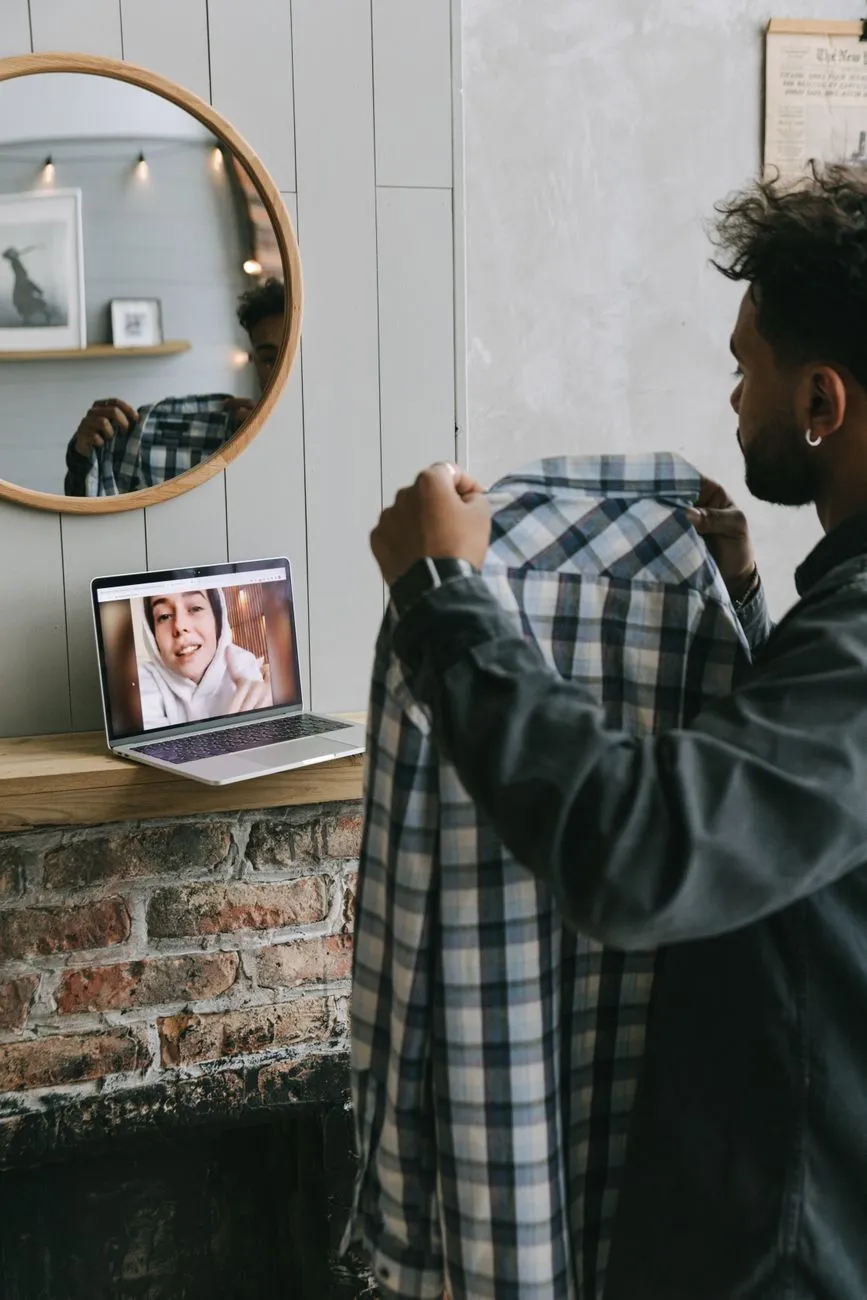
 Photo: Ron Lach / Pexels
Step 3: Send proof beyond the product page
Product photos can hide problems. A chat seller can fix that by sending real proof before the shopper pays.
Useful things to send in chat:
- A close-up of the fabric texture.
- A short video showing how much the fabric stretches.
- A photo of the inside label with fabric composition and care instructions.
- A photo of the color in daylight, not only the studio image.
- A photo of the garment next to a common object for scale, such as a phone or water bottle.
- The model’s height and the size the model is wearing, if you know it.
For example:
“The photo on the product page is brighter than the real color. Here is the blouse in daylight near a window. The real color is closer to dusty pink.”
This kind of honesty increases trust. The shopper may still buy, or they may choose another color, but they are less likely to return the item for being “not as pictured.”
Do not send only stock images. If the shopper asks whether the fabric is see-through or whether the skirt is too short, take a photo against a light source or on a person of similar height if available. If you cannot verify, say so.
Step 4: Handle price objections without racing to discount
A price objection in chat is rarely only about the number. It often means one of these:
- The shopper is comparing with a cheaper item made from different fabric.
- They are unsure about fit and do not want to risk money.
- They want a discount because they are used to bargaining.
- They do not understand what makes the item worth the price.
First, find out what is behind the objection:
“May I ask what you are comparing this with?”
Then explain the value honestly:
“This dress is made from a thicker cotton twill, and the seams are finished with French seams inside. It will hold its shape better after washing than a lighter version. The price reflects that construction.”
Avoid saying “This is high quality” without proof. Show a photo of the inside seam, the lining, the zipper or the fabric weight.
If the shopper asks for a discount, do not automatically give one. Offer alternatives that protect your margin:
- “If you take two items, I can include free shipping.”
- “I cannot reduce the price, but I can add a small fabric-care guide or a lint brush.”
- “I can hold this color for you until tomorrow so you can think about it.”
- “If you prefer a lower price, I have a similar style in a lighter fabric for less.”
For cash-on-delivery orders, many shoppers ask about the COD fee or total amount. Check the current official platform fee and your payment provider’s rules before quoting. Fees change, and quoting an old number creates distrust.
Do not say “last price?” too early. In many markets it signals that the first price was inflated. A calmer approach is:
“The price is fixed for this piece, but I can help with fit so you do not waste money on the wrong size.”
 Photo: Nathan Tran / Pexels
Step 5: Confirm the order like a careful cashier
Most chat order mistakes come from skipping confirmation. The shopper says “OK I take it,” and the seller rushes to create the order without repeating the details. Later the customer says they ordered size M, not L, or they did not know shipping was not free.
Before payment, send a short recap:
“Just to confirm: 1 x A-line dress, size L, navy, price 650,000 VND, shipping 30,000 VND, cash on delivery, delivery in 3–5 days. The waist measures 76 cm flat. Shall I create the order?”
Use your own currency and actual numbers. The point is that the shopper sees exactly what they will receive and pay.
If you sell on Shopify, you can create a draft order or send a checkout link after confirming. In WooCommerce, you can create a manual order and mark the payment method. On Haravan and Sapo, many small shops create the order in the admin area and note the conversation. Wherever your store runs, add a private note to the order:
“Customer confirmed size L after fit chat. Waist measured 76 cm. Prefers no plastic packaging.”
This note helps if the customer later complains.
For COD orders, reconfirm the phone number and delivery address. A wrong phone number is a common cause of failed delivery. See How to Prevent Fake COD Orders: 7 Strategies for Online Shops for a fuller process.
Finally, tell the shopper what happens next:
“I will send the tracking number tomorrow morning. Please check your phone for the delivery call.”
Follow up after the order without pressure
Closing the sale is not the last step. A short follow-up reduces post-purchase anxiety and helps you learn which fit advice was correct.
After dispatch:
“Your order is on the way. The tracking number is ____. The delivery person will call before arriving. If the size is not right, message me and I’ll help with an exchange.”
After delivery, wait two or three days. Then send one gentle message:
“Hi, did the dress fit as you expected? If the waist is too tight or loose, let me know. I can suggest a better size for your next order.”
Do not ask for a review immediately. First ask about fit. If the item fits, a positive review usually follows naturally. If the shopper does not reply, send at most one follow-up. For example:
“Just checking in once more. If the fit is good, could you send a photo? I’d love to see how it looks on a real customer.”
Then stop. Pressure turns a satisfied buyer into an annoyed one.
For shoppers who said “I need to think first,” follow up within 24 hours with something useful, not “Are you still interested?”
Better follow-up:
“I measured the size M waist again this morning. It is 38 cm flat without stretching. If your waist is around 78 cm, the L may be more comfortable.”
This continues the fit conversation instead of begging for a sale.
Common mistakes and what to track
The most common chat selling mistakes in fashion stores are:
- Saying “true to size” without knowing the shopper’s body.
- Promising that an item will look great without seeing the shopper.
- Sending only catalog photos and ignoring specific questions.
- Giving a discount too early because the buyer hesitated.
- Creating the order without confirming size, color, fee and delivery method.
- Hiding the return or exchange policy until after payment.
- Taking too long to answer, so the shopper buys elsewhere.
Track a few simple numbers to see if your chat process is improving:
- First response time: how long until the shopper gets a real answer?
- Chat-to-order rate: orders divided by serious chat conversations.
- Order confirmation rate: how many interested chats become confirmed orders?
- Return or exchange rate from chat orders compared with website orders.
- Average items per chat order.
- Review or photo follow-up rate.
For example, if you have 25 serious chats in a week and 6 become orders, your chat-to-order rate is 24%. If 3 of those orders later ask for an exchange, that may point to a size advice problem, not a selling problem.
Do not only measure sales. A chat process that gives honest fit advice may close slightly fewer sales in the short term but produce fewer returns, fewer disputes and more repeat customers.
If many chat questions are about how an item will look on the shopper’s body, a virtual try-on button on product pages lets shoppers judge the look before they even message you. Macgi’s widget uses the product photos you already have; the shopper uploads one full-body photo and sees themselves wearing up to two items in about 15–40 seconds. If that sounds useful for your store, you can try the free beta at Macgi’s sign-up page.
FAQ
How do I ask for a customer’s body measurements without being rude?
Introduce measurements as a way to prevent a mistake, not as a condition to buy:
“To help you choose, I only need three measurements. You can measure over light clothing. I’ll compare them with the actual garment measurements.”
If the shopper refuses, do not push. Use their usual size in other brands and the garment’s flat measurements instead.
What should I say when a customer asks “Is this true to size?”
Avoid a simple yes or no. Say what you know:
“For this item, the bust runs fitted. I usually recommend sizing up for a relaxed look. What size do you normally wear?”
This gives a real answer and starts a fit conversation.
How long should I wait before following up after a chat?
If someone was mid-decision, follow up within 24 hours with useful information, not a sales push. After delivery, wait two or three days before asking about fit. One gentle follow-up is enough unless the customer replies.
Should I always offer a discount when someone hesitates?
No. Fit certainty, extra photos, a shipping upgrade or a small non-price extra often work better. Offer a discount only when you know the margin and only after understanding the objection.
How can I reduce chat pressure on my product pages?
Add a clear size chart, model height and size worn, fabric stretch details, and flat garment measurements. Good product pages answer basic questions before chat begins, so your team can focus on specific fit concerns and order confirmation.