Macgi
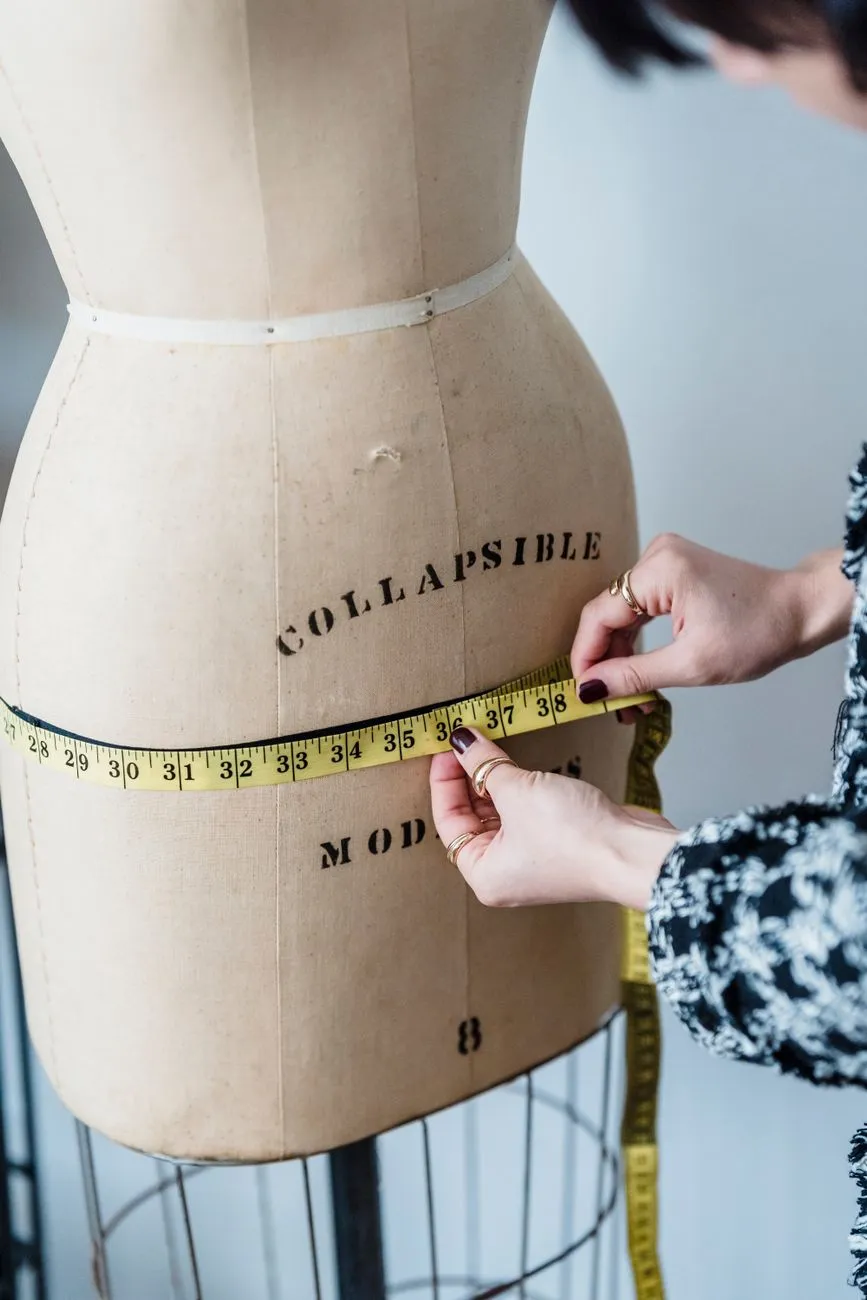
Most dress size charts fail because they are written as a single generic table copied from a supplier. A bodycon dress with no stretch and a waist seam fits nothing like a gathered A-line dress in the same “M”. If the chart does not account for bust, waist, hip, length, stretch and the way the dress is cut, the shopper is guessing. This guide breaks down dress size charts by style, shows how to describe fit without making customers feel bad about their body, and gives practical steps for publishing a useful size chart on your product pages.
The four measurements every dress size chart needs
A useful dress size chart separates body measurements from garment measurements. A body measurement chart tells the shopper to measure themselves and match the number to a size. A garment measurement chart tells the actual physical size of the dress, measured flat. Both are useful, but they answer different questions:
- Body chart: “Which size should I choose based on my bust, waist and hip?”
- Garment chart: “How large is this dress really? How much room does the waist have?”
Never mix the two in one column without saying which one it is. A shopper with a 90 cm bust will not be helped by a chart that silently lists the dress as 84 cm across the chest because that is the flat garment width times two. Label the chart clearly: “Body measurements” or “Garment measurements”.
Bust
For a body measurement chart, bust is measured around the fullest part of the chest, with the tape level across the back. For a garment chart, the bust is usually the flat chest width from one underarm seam to the other, multiplied by two. If the dress has cups, a shelf bra or a smocked back, say so, because those details change how the bust fits even when the tape measure matches.
Waist
For a body chart, the natural waist is the narrowest point of the torso, usually above the navel. But many dresses do not sit at the natural waist. An empire-line dress sits under the bust. A drop-waist dress sits near the hip. If the dress has a marked waist seam, the garment waist measurement should be taken at that seam, not at the customer’s natural waist. Always name the waist point: “natural waist”, “raised waist” or “low waist”.
Hip
For a body chart, hip is the widest point around the buttocks and upper thighs. For a fitted dress, the hip is critical. For A-line, fit-and-flare and full-skirt dresses, the hip measurement is less important because the skirt falls away. If the dress is stretchy, give the hip range: “unstretched 94 cm, comfortably stretches to 108 cm”.
Length
Length is the measurement most shops forget to grade by size. A maxi dress in size XS is not the same length as the same dress in size XXL. Give length from the top of the shoulder to the hem, or from the high point of the shoulder to the hem, and state whether the dress was measured on a flat garment or on a mannequin. For longer styles, include the length for every size if you can. For example, a size M knee-length dress is often around 95–100 cm from shoulder to hem, but your own product measurements should be the source, not a competitor’s table.
If you need a separate guide on measuring physical clothes, see How to Measure Clothes for a Size Chart: Flat Garment Guide.
 Photo: Thirdman / Pexels
Dress lengths and fit by style
The same bust, waist and hip numbers do not predict fit across styles. A bodycon dress expects those three numbers to sit close to the body. A shift dress may have a straight shape where the hip and shoulder widths matter more than the waist. A maxi dress adds length as the main predictor of whether the shopper will love it or return it.
Here is a practical way to think about the main dress styles:
| Style | Fit emphasis | Typical length to plan for |
|---|---|---|
| Bodycon | Bust, waist and hip all close to the body; stretch and lining matter most | Mini to knee |
| A-line | Bust and waist; hip has room because the skirt flares | Knee to midi |
| Fit-and-flare / skater | Waist and bust; full skirt hides hip ease | Knee |
| Maxi | Bust and waist depending on top; length is critical | Ankle to floor |
| Wrap dress | Waist is adjustable; bust fit matters; hip moderate | Knee to midi |
| Slip dress | Bust, waist and hip; bias-cut styles can feel tighter across the hip | Mini to midi |
| Shirt dress | Shoulder and bust; waist relaxed; hip straight | Knee to midi |
| Shift dress | Bust and hip; straight through the waist | Above knee to knee |
When writing the product description, match the chart to the style. For a bodycon dress, the size chart should show the stretched and unstretched bust, waist and hip. For an A-line dress, the hip is less important, but the waist and length become the buyer’s main decision points. For a maxi dress, put the shoulder-to-hem length in the table rather than only saying “maxi”.
A good rule: the more fitted the dress, the more measurements you need. The looser the silhouette, the more you can rely on bust, waist and length plus a note like “straight cut through the hip”.
Stretch, lining and what “true to size” means
“True to size” is almost meaningless unless you define what the size is supposed to fit. Instead of writing only “true to size”, say how the fabric behaves.
Stretch
Describe the fabric honestly:
- No stretch: woven cotton, linen, taffeta and similar fabrics do not give. If the customer is between sizes, recommend the larger size and tailor where needed.
- Low stretch: a small percentage of elastane can add comfort but not change the fit dramatically.
- High stretch: jersey, rib knit and heavy spandex can stretch several centimetres. Give a measured range: “waistband sits flat at 34 cm and stretches comfortably to 46 cm”.
Do not invent stretch values. Look at the fabric label or ask the supplier. If the dress is handmade, measure the garment flat, then stretch it lightly along the measurement line and note the number.
Lining
Lining changes fit more than many shop owners expect. A stretch outer shell over a woven lining will only stretch as much as the lining allows. If the shell is stretchy but the lining is not, shoppers will feel the dress is tighter than the stretch label suggests. This is one of the most common causes of “the size chart said it would fit but it doesn’t”.
Write it like this:
Size M bodycon dress: shell has high stretch; lining is a woven polyester without stretch. We recommend ordering your usual size from the garment measurements, not a size down.
If the dress is fully lined, mention whether the lining has any give. If the skirt is lined but the bodice is not, say that.
“Runs small” and “runs large”
If you say “runs small”, you still need to show the numbers. Better wording: “This style has a close fit through the shoulder and bust. Compare your bust measurement to the garment chart before ordering.” Avoid telling people that their usual size is wrong without giving them a way to find the right size.
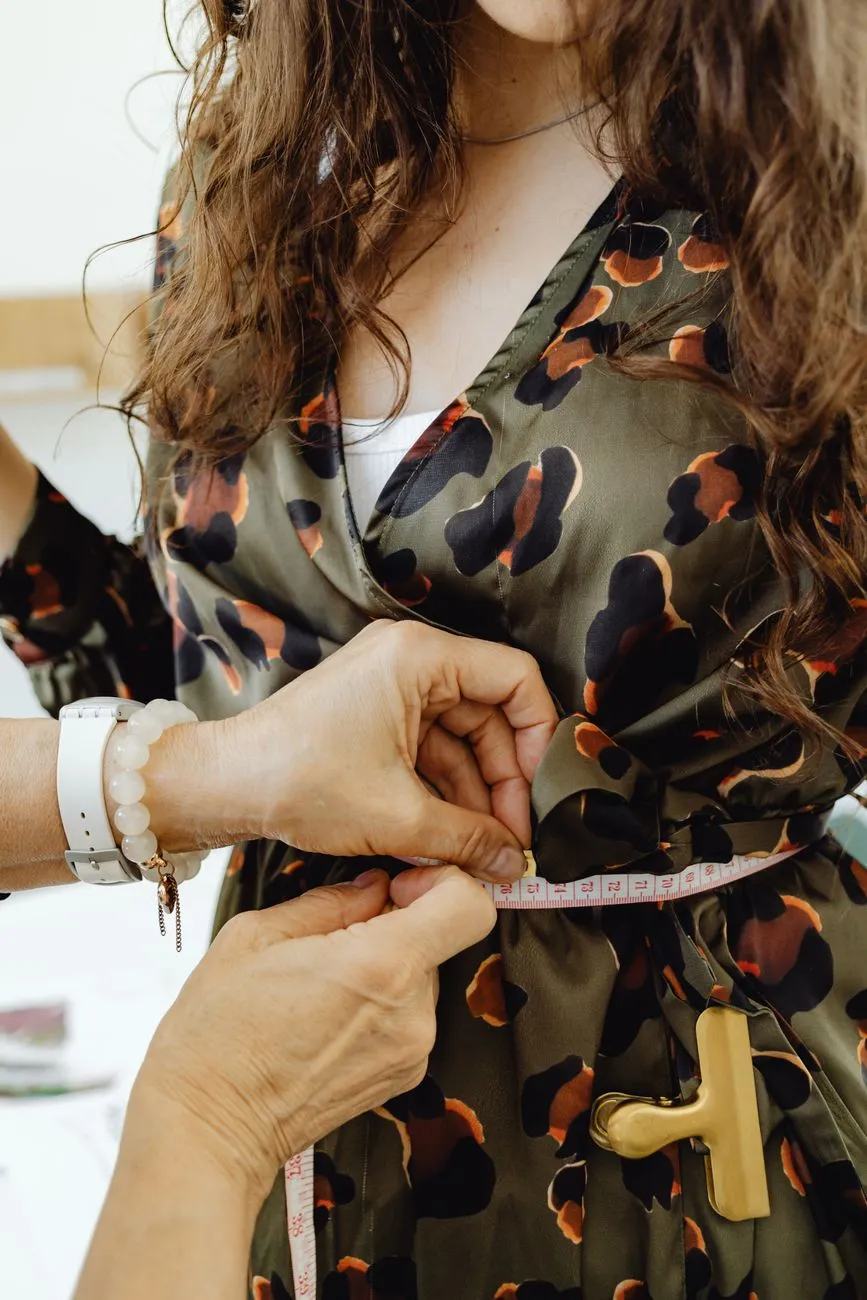 Photo: https://kaboompics.com/ / Pexels
How to describe fit for different body shapes without body shaming
Body-shape labels such as “pear”, “apple” or “hourglass” are not bad in themselves, but they can feel clinical or judgmental on a product page. Many shoppers already feel frustrated when clothes do not fit. The product description should describe the garment’s construction, not the customer’s body.
Focus on where the dress has or does not have ease
Use phrases that describe the dress, not the wearer:
- “Cut with extra room through the upper arm”
- “Skims the waist without pulling”
- “Falls away from the body from the natural waist”
- “Straight through the torso with a relaxed fit”
- “Fitted bodice with a full skirt from the waist seam”
- “Stretch lining follows the body without compression”
Replace judgment words with fit words
Bad examples:
- “Hides your tummy and big arms”
- “Only for slim figures”
- “Great for pear-shaped bodies”
- “Flattering if you have a small bust”
Good examples:
- “A-line skirt starts below the natural waist and falls away from the body”
- “The waist has a soft elastic panel for comfort”
- “The neckline opens the shoulder line”
- “No stretch through the torso; choose the larger size if you are between measurements”
The goal is not to tell the shopper what their body is. The goal is to tell them what the dress will do when they wear it.
Add a fit note for each shape concern without naming the shape
If a customer often asks “will this fit my hips?”, the product page can answer:
- “Model is 168 cm and wearing size M. The hip measurement of the size M garment is 98 cm with light stretch.”
- “This style is tailored through the waist; if you prefer a looser waist, size up.”
Notice that the second sentence suggests an action based on a preference, not on a body defect.
Step by step: adding dress size charts to your product pages
A size chart only works if the shopper sees it before choosing a size. Put it near the size selector or “Add to cart”, not buried in a footer link.
1. Choose the chart format
A table with columns for Size, Bust, Waist, Hip and Length is the most reliable. Add a second row or note for stretched measurements if relevant. Include both centimetres and inches if you sell internationally, or let the shopper toggle between units.
2. Write a short “how to measure” note
Above the table, add three lines:
- Measure yourself over light clothing.
- Keep the tape snug but not tight.
- Compare your body measurement to the body column, or compare your best-fitting dress to the garment column.
Link to your dedicated measurement guide if you have one.
3. Place it on the product page
Every platform handles this differently, but the idea is the same: insert a collapsible block, tab or accordion near the size options.
Shopify: In the theme editor, look for a product page block such as “Collapsible row”, “Custom liquid” or “HTML”. Paste your table inside. If your theme does not have a suitable block, create a page called “Size Chart” and link it from the product description, or use a metafield to store a per-product size chart image. In Shopify admin, look under Settings > Custom data > Products to create a metafield, then add a dynamic source to your theme. If the theme menus differ, look for the product page section and the “Add block” button.
WooCommerce: The easiest path is a product-tab plugin from the plugin directory. Install a plugin in the “Product Tabs” or “WooCommerce product tabs” category, add a tab called “Size & Fit”, and paste the table. For a code-light approach, add the table to the product description under a heading. If you want different charts per category, use a plugin that supports category-level tabs or a shortcode.
Haravan: In the Haravan admin, open the theme editor and go to the product page area. Add an HTML/accordion section or block near the buy button. If the theme does not support that, paste the size chart into the product description as a small HTML table. For shops running older themes, the product template may need to be edited by a developer.
Sapo: In the Sapo admin, look for the theme settings or product page editor. Add an HTML block, accordion or collapsible section next to the product options. If the theme is limited, put the table in the product description.
Custom site or Facebook/TikTok/Zalo landing page: Add a collapsible <details> element or a clickable “Size chart” link that opens a small popup. Keep the chart above the “Add to cart” button or directly under the size selector.
4. Make it mobile-friendly
Many shoppers open dress product pages on phones. A wide table can become unreadable. Use a responsive table block, or stack the rows on mobile. If you are not technical, choose a theme block or plugin that advertises mobile support.
A quick QA checklist before you publish
Before a dress size chart goes live, run through this list:
- Units are labelled: cm, inches, or both.
- Measurement type is stated: body or garment.
- Size names are consistent: S, M, L, XL or 34, 36, 38, 40, not mixed without conversion.
- Bust, waist, hip and length each have their own column.
- Length is given by size, at least for maxi and midi styles.
- Stretch and lining notes are included.
- The chart matches the actual style: fitted, A-line, shift, wrap, maxi, etc.
- The chart is visible on mobile.
- The chart does not use body-shaming language.
- You have spot-checked at least one physical garment against the chart.
If you already have size charts but returns remain high, look first at the stretch and lining notes. Shoppers often order based on the outer fabric and forget that a woven lining limits the fit. The next place to look is length: a “maxi” that ends at the calf on a customer who expected floor length creates disappointment even when the bust, waist and hip are correct.
A size chart answers numbers, but it does not answer the question every dress shopper really asks: “How will this look on me?” A virtual try-on button next to Add to cart lets shoppers take or upload one full-body photo and see themselves wearing the product before buying. Macgi makes a lightweight virtual try-on widget for online clothing stores that uses your existing product photos and can sit next to Add to cart on Shopify, WooCommerce, Haravan, Sapo or any site where you can add HTML. You can try the free beta while you improve your size charts.
Frequently asked questions
Should I use a body measurement chart or a garment measurement chart?
Use both if possible, but label them separately. A body chart helps a shopper match her own measurements to a size. A garment chart shows the actual flat size of the dress. If you can only maintain one, use a garment chart for fitted styles and a body chart for relaxed styles, and say which one you are using.
How many sizes should I include in a dress size chart?
Include every size you actually sell. Do not skip XS or XXL because the supplier did not give measurements. If you cannot measure every size when the batch arrives, publish the sizes you have and mark the rest as “coming soon”, rather than copying numbers from another style.
What is the best length for a “maxi dress” on a size chart?
There is no single best length. State the shoulder-to-hem measurement for each size and the model height if you have it. Explain that length will vary with height. A tall customer can then judge whether the dress will hit the floor, the ankle or mid-calf.
Can I reuse the same size chart for bodycon and A-line dresses?
No. The bust, waist and hip may use the same body target, but the garment measurements vary by style because of ease. A bodycon dress should show stretched and unstretched garment measurements. An A-line dress needs a garment waist and hip or a note that the hip is relaxed.
How do I describe a dress as “slimming” without body shaming?
Do not say “slimming”. Say what the dress does: “princess seams shape the waist”, “the skirt falls from the natural waist and opens over the hip”, or “vertical seam lines continue through the torso”. Let the construction speak instead of promising a body change.
What if I sell on Haravan, Sapo, WooCommerce and Shopify at the same time?
Maintain the size chart in one spreadsheet, then paste it into each platform’s product page block or description. Use the same wording, units and measurement points everywhere so a customer who sees the dress on two channels gets the same answer.