Macgi
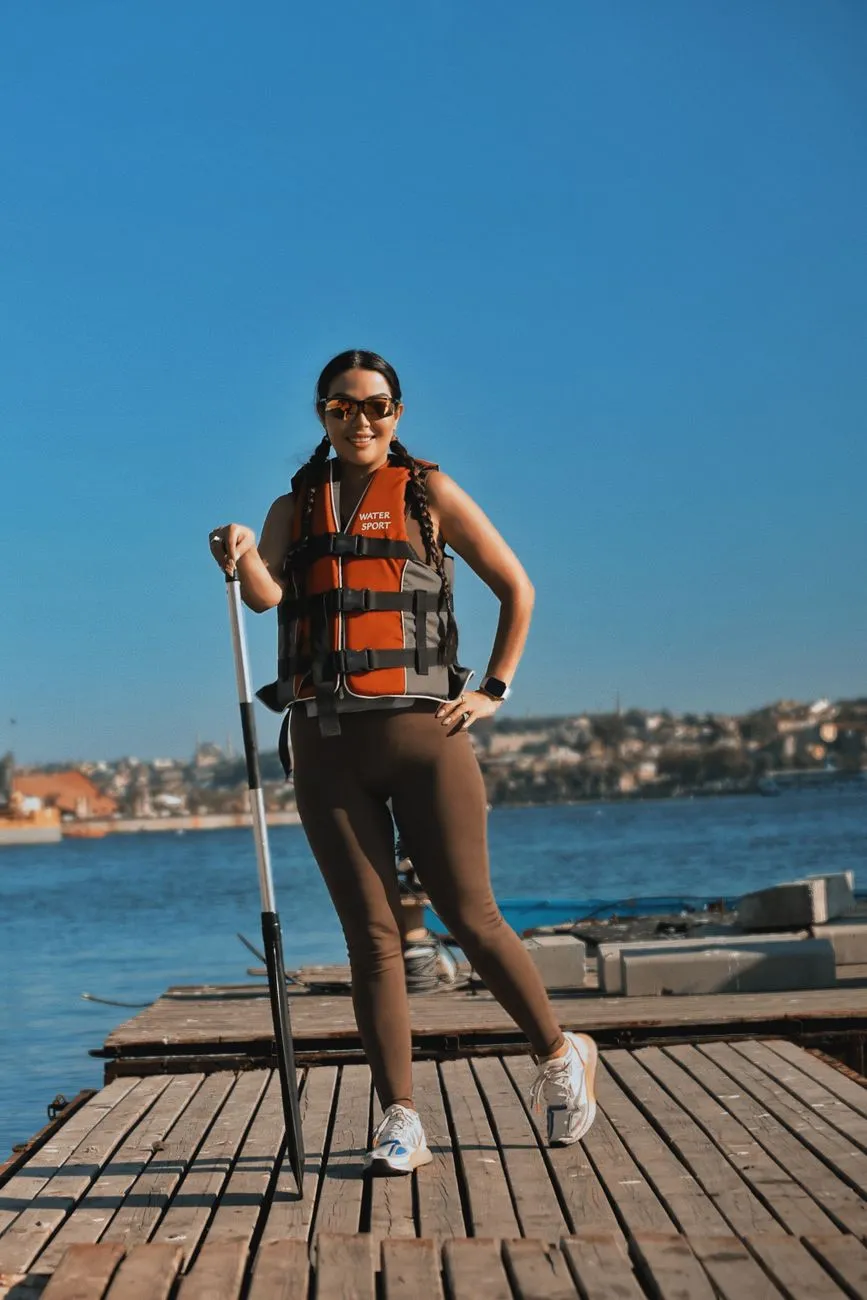
Kayaking and paddle boarding sit in a strange middle zone: you are on the water but not fully swimming, working hard enough to sweat, and often out in full sun for hours. The right outfit is not swimwear you never get out of, and definitely not street clothes. It is a small set of quick-drying layers that keep you comfortable, covered and visible.
The golden rule: no cotton, no denim
Cotton is the worst fabric for any water activity. It absorbs water and holds it. Once wet, a cotton T-shirt clings, sags, rubs, and adds noticeable weight. It also dries slowly and stops insulating you, so a breeze after a paddle can make you feel cold even on a warm day. Cotton socks and underwear cause the same problem: moisture stays against your skin and increases chafing.
Denim jeans are cotton at its heaviest and stiffest. Wet jeans restrict your stride, pull down, chafe the inner thighs, and take hours to dry. If you end up in the water, they can make swimming and getting back onto a board noticeably harder. Save jeans for after the activity.
For kayaking or paddle boarding, treat these as “do not wear”:
- Cotton T-shirts, polo shirts, hoodies or flannels
- Denim jeans, shorts, skirts or jackets
- Cotton socks and canvas sneakers
- Anything labelled “cotton-rich,” including blends that look sporty
Quick-dry fabrics that actually work
The goal is fabric that gets wet, releases water quickly, and does not hold it against your body.
Polyester and nylon
Polyester and nylon are the workhorses. Polyester wicks moisture and dries fast, though it can feel clingy if cut too tight. Nylon is smoother and more abrasion-resistant, which is useful when you are kneeling on a board or sliding in and out of a kayak. Most quick-dry active tops and board shorts are polyester, nylon, or a blend with elastane for stretch.
Merino and synthetic blends
For cooler mornings or longer trips, a thin merino wool base layer works well. Merino wicks moisture, resists odour, and keeps some warmth even when damp. It dries more slowly than nylon or polyester, so wear it under a quick-dry shell rather than as your only layer in heavy spray.
What to look for
- Flatlock seams to reduce rubbing
- A close but not tight fit; water drag can make loose fabric flap
- UPF 30 or 50 labelling if you want sun protection
- Darker or patterned fabrics tend to look more opaque when wet than thin light colours
Tops for kayaking and paddle boarding
Long sleeves are usually the smartest choice on open water because arms are hard to keep covered with sunscreen. A long-sleeve rash guard or swim shirt gives sun protection without making you overheat if it is thin and breathable.
- Rash guard / swim shirt: close fit, made from polyester or nylon with stretch. Good for sun, spray, and reducing paddle rub.
- Quick-dry T-shirt: looser and more casual, but still synthetic. A polyester or nylon tee works if the sun is not too harsh or you prefer a relaxed feel.
- Sun shirt / hooded shirt: a lightweight button-up or zip-up with a collar and long sleeves. It gives more coverage and can be unbuttoned when you get hot.
- Avoid: ribbed cotton tees, loose-weave linen or viscose shirts, and anything that turns transparent when wet.
For men, a fitted rash guard or relaxed quick-dry top over board shorts is a simple starting point. For women, a high-neck or crew-neck rash guard over a supportive swim top gives secure coverage. If you prefer more coverage than a swimsuit, a long-sleeve sun shirt over a tank or sports bra works well, especially with roll-tab sleeves.
If you are ordering a rash guard or quick-dry top online, Macgi can help you preview how the neckline and sleeve length sit on your own photo. It works in your phone browser, no app needed, and shows a top, a top with trousers, or a dress in about 15–40 seconds. The AI keeps your face, body shape, skin tone, pose and background, and changes only the clothes. It is still an AI preview, so use it as a styling check, not a substitute for the size chart.
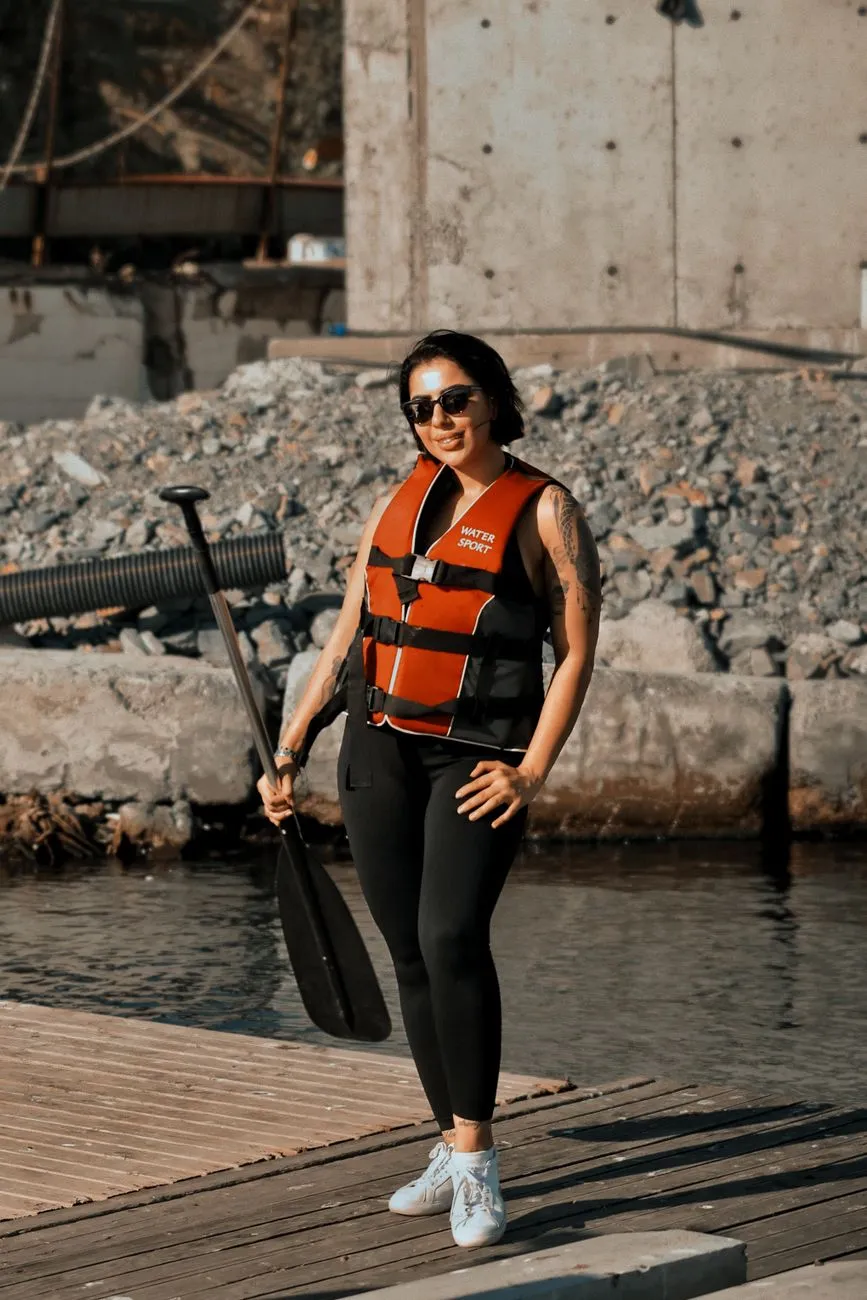 Photo: Murat IŞIK / Pexels
Bottoms: board shorts, leggings and modest options
The key is to choose bottoms that do not become heavy or see-through when wet. For most people, that means synthetic board shorts, quick-dry leggings, capris or nylon joggers.
- Board shorts: loose, quick-dry, and easy to move in. Choose above-the-knee or knee-length; very long or wide shorts can catch water and feel heavy. Some have a liner, some do not—wear a quick-dry brief or swim bottom underneath.
- Quick-dry leggings or capris: a good option if you want fuller leg coverage. Look for high-waisted, opaque-when-wet fabric. Avoid cotton leggings, which become heavy and sag.
- Nylon joggers or hiking pants: for cooler weather or a more modest silhouette, lightweight nylon pants with a tapered leg work well. Avoid wide-leg or floor-length styles that can tangle around your feet on a board.
- Skorts or athletic dresses: a quick-dry skort or knee-length dress with built-in shorts can work, but a long flowing skirt is not ideal because it can wrap around your legs in the water.
For men, board shorts with a liner are the simplest option. If you prefer more coverage, quick-dry nylon shorts over compression shorts or lightweight synthetic pants are both fine. For women, high-waisted quick-dry leggings under a loose board short are a practical layered option if you want more coverage without feeling restricted.
Footwear that can get wet
Bare feet may feel fine on a sandy launch, but rocks, shells, broken glass and hot sand make footwear a safer choice. The best water shoes have a secure heel, good grip, and drainage.
- Water shoes or neoprene booties: lightweight, protective, and made to get wet. They drain water and dry quickly.
- Sport sandals with a back strap: secure, give your feet room to breathe, and work for walking in and out of the water.
- Old mesh trainers: can work in a pinch, but they stay wet longer and can feel heavy. Avoid cotton canvas shoes.
- Avoid flip-flops or slides: they slip off easily, offer no toe protection, and can float away in moving water.
If the water is cold, thin neoprene socks inside water shoes add warmth without blisters. No cotton socks.
Sun protection and layering for wind and spray
Sun reflects off the water, so you can burn faster than you expect. Build sun protection into the outfit itself.
- Hat: a wide-brim hat with a chin strap stays on in wind and shades your face, ears and neck. A cap and neck gaiter is a good alternative.
- Sunglasses: polarized lenses cut glare, and a strap keeps them from ending up in the water.
- Neck gaiter or sun hood: protects the neck and lower face without needing to reapply sunscreen every 20 minutes.
- Water-resistant sunscreen: still needed for your face, ears, backs of hands, and any exposed skin. Reapply more often than you would on land.
For layering, start with a thin quick-dry base, then add a windproof or water-resistant shell if there is spray or a cold wind. A synthetic fleece or merino mid layer works for chilly mornings; avoid cotton hoodies and denim jackets. The same layer logic applies on land—see What to Wear Hiking for a fuller breakdown, but swap hiking pants for quick-dry nylon and add a spray shell. If your paddle day turns into beach lounging, What to Wear to the Beach has more on cover-ups and sandals.
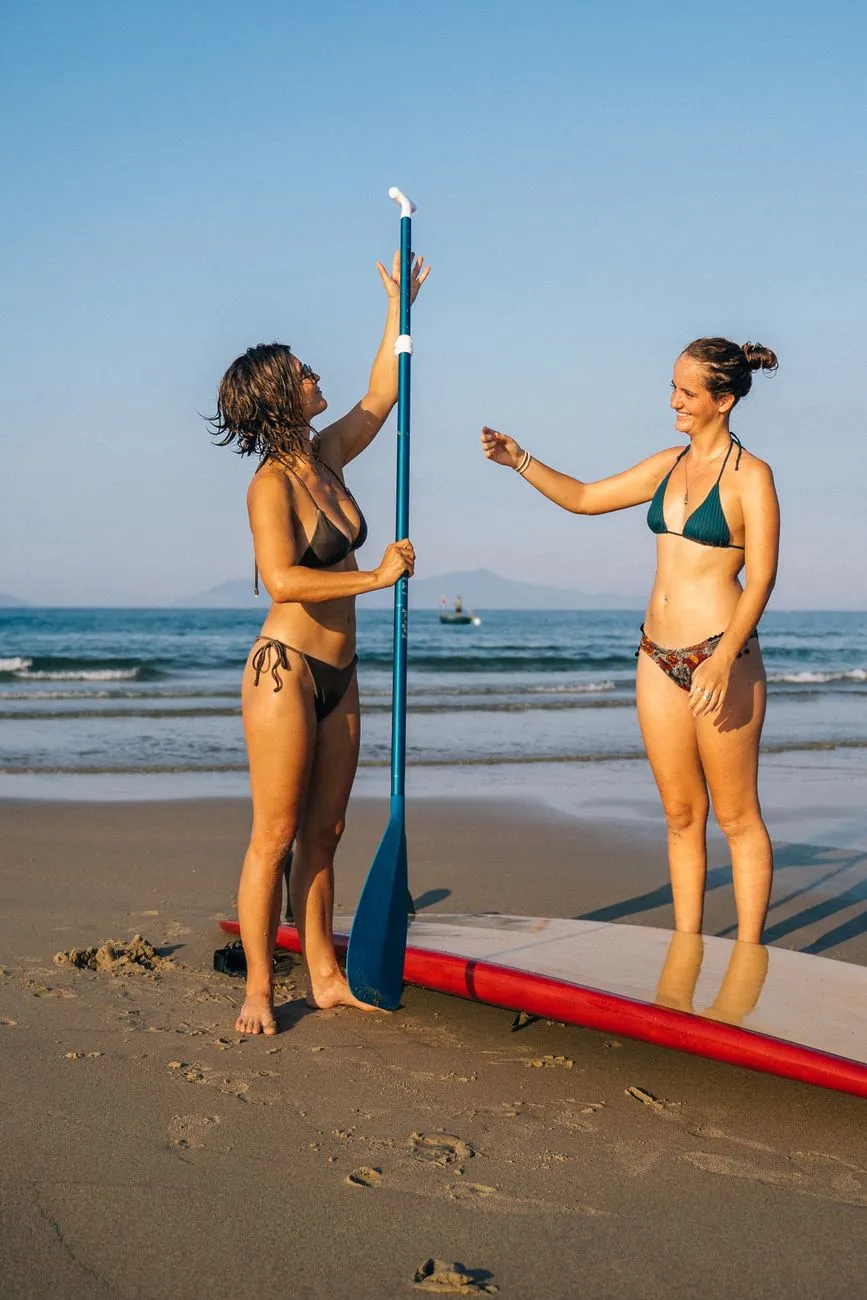 Photo: Anna Tarazevich / Pexels
Outfit formulas for men and women
These combinations work for most flat-water kayaking, paddle boarding, and calm coastal outings.
For women
- Long-sleeve UPF rash guard + high-waisted quick-dry leggings + water shoes + wide-brim hat with chin strap
- Quick-dry button-up over a sport top + knee-length board shorts + sport sandals with back strap
- Zip-up sun shirt + capri-length quick-dry leggings + neoprene booties + polarised sunglasses on a strap
- If you want more coverage: long-sleeve sun shirt + nylon joggers + water shoes, with a neck gaiter and brimmed hat
For men
- Long-sleeve rash guard + board shorts with liner + water shoes + cap
- Quick-dry nylon tee + board shorts + sport sandals with heel strap
- Merino base layer + quick-dry pants + splash shell + neoprene socks with water shoes for cool mornings
- If you want more coverage: lightweight nylon pants instead of shorts, with a long-sleeve sun hoodie and brimmed hat
For multi-day paddle trips, pack like you would for a small travel capsule: choose two tops, two bottoms, one shell, and one pair of water shoes that all dry overnight and work together. The same packing discipline in Capsule Wardrobe for Travel applies here.
FAQ
Can I wear leggings kayaking?
Yes, if they are quick-dry polyester or nylon leggings, not cotton. Choose a high-waisted, opaque-when-wet style, and test them under bright light before you go if modesty matters to you. Darker or patterned fabrics show less when wet than thin light colours.
Are jeans okay if I’m just paddling for an hour?
No. Even a short paddle can soak jeans with splashes, and wet denim becomes heavy, stiff and uncomfortable. It also takes hours to dry. Choose quick-dry shorts or leggings instead.
What is the best thing to wear if I want more coverage than a swimsuit?
A long-sleeve rash guard or sun shirt on top, with quick-dry leggings, capris or nylon joggers on the bottom. This covers most of your skin, dries fast, and gives you sun protection while still allowing movement. Avoid floor-length or very loose styles that can tangle in the water.
Do I need special water shoes or are regular sandals okay?
You need footwear that stays on your feet and can get wet. Sport sandals with a back strap work, but regular flip-flops or slides do not because they slip off and offer no toe protection. Water shoes or neoprene booties are the most reliable choice.
What colours are best for visibility and sun safety?
Bright colours such as coral, turquoise, yellow or neon make you easier to see from a distance on open water, which is useful for safety. For sun protection, darker or tightly woven fabrics often block more UV, but many quick-dry tops list a UPF rating. If you prefer light colours, check that the fabric is opaque when wet.
How do I know if a top will stay opaque when wet?
Check the fabric: polyester and nylon blends are usually safer than thin cotton, linen or viscose. If possible, test a small splash on the inside of the hem before wearing. A virtual try-on or product photos can help with the overall fit and neckline, but not always with wet transparency, so check the material description.