Macgi
Putting together an outfit is a skill, not a shopping haul. You can own ten pieces and make them work, or fifty and still feel you have nothing to wear. The difference is usually four things: proportion, color, fit, and where you put the focal point. This guide turns those into a repeatable method.
Start with the four-part method
Before you add accessories or change shoes, ask four questions in this order:
- What proportion do I want to show? Decide whether the top and bottom should split your body into halves or thirds, and where the waistline sits.
- What are my two main colors and one accent? Limit the outfit to a base color, a secondary color, and one pop.
- Does each piece fit at the shoulders, waist, hips, and hem? Fit changes how the same pieces look more than any other factor.
- Where should the eye go first? Choose one focal point, such as a neckline, waist, ankles, or shoes.
If an outfit feels wrong, one of these four answers is usually missing. The sections below show how to answer each.
Proportion: balance what you show
Proportion is about the visual length and width of each block of clothing. You do not need to change your body; you choose where the eye travels.
Use the rule of thirds
A top that ends around your hip bone and trousers that continue to the shoe can cut the body in half. That is not wrong, but it often looks less deliberate. A more reliable formula is to create a 1/3 to 2/3 split. For example:
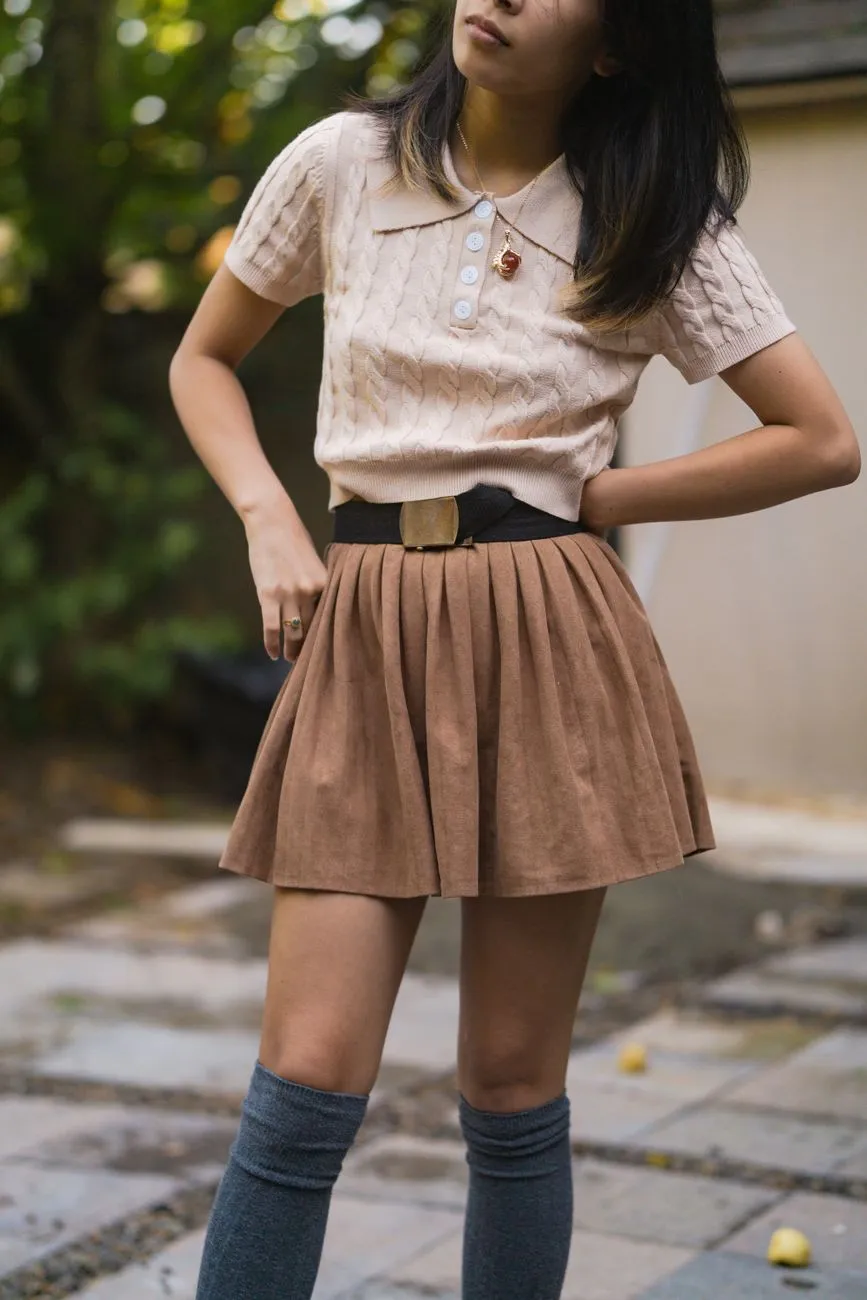
- Tuck a shirt into high-waisted trousers so the top reads as one third and the legs as two thirds.
- Wear a cropped jacket over a longer base layer.
- Let a long coat fall past the knee while the lower hem of the dress or trousers shows only a shorter block.
Show the narrowest point
If you want to define the waist, place your top’s hem, belt, or waistband at the narrowest part of your torso. This is usually just below the ribs, not at the hips. A top that ends at the widest hip line can add visual width there. A slight tuck, French tuck, or shorter top changes that line immediately.
Balance top and bottom volume
The easiest outfit formula is one fitted block and one relaxed block. For example:
- Wide-leg trousers with a slim crew-neck tee or fitted shirt.
- A full midi skirt with a tucked simple top.
- Slim trousers or straight jeans with a slightly oversized knit or boxy shirt.
When both halves are very loose, the outfit can lose structure. When both are very tight, the outfit can feel one-note. Mixing volume creates rhythm.
For more on working with your natural lines, see How to Dress for Your Body Type: Measure, Identify and Style.
Color: keep it to two plus one
Color is the fastest way to make an outfit look intentional. You do not need to memorize every combination. Use this structure.
Start with a neutral base
Choose one neutral as the backbone: black, white, navy, grey, beige, brown, olive, or denim. This is the piece that grounds the outfit, usually trousers, skirt, or outerwear.
Add a secondary color
The second color can be another neutral or a muted tone. For example, beige + white, navy + light blue, olive + cream, black + grey. The goal is harmony at a glance.
Add one accent
An accent can be a bag, shoe, scarf, lip color, or small pattern. It should be the brightest or most saturated thing in the outfit. A red bag with a navy-and-white outfit, or yellow socks with grey trousers and a white tee, is enough.
A useful rule is 60-30-10: roughly 60% base, 30% secondary, 10% accent. The percentages do not need to be exact. They are a reminder that color needs hierarchy. For more on how to build palettes, see How to Color Match Clothes: Color Wheel, Neutrals, 60-30-10.
Avoid too many bright colors
Three bright colors that are not related often fight. If you want to wear color, pick one hero color and keep the rest neutral. A green top with dark denim and white shoes works. Green with orange and purple rarely does.
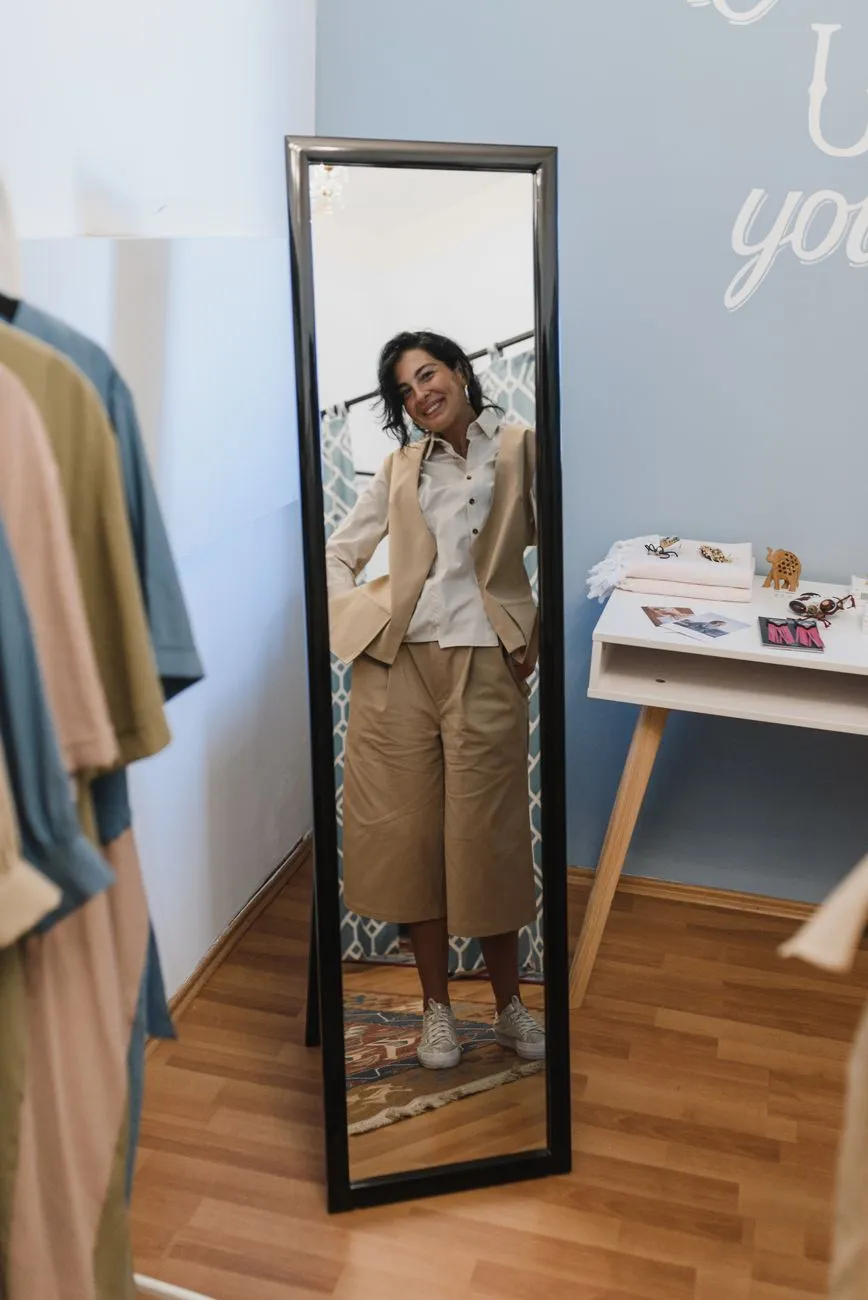 Photo: Arina Krasnikova / Pexels
Fit: the non-negotiable layer
Fit is not about size. It is about where seams, hems, and fabric sit on your body. A cheap piece that fits well usually looks better than an expensive piece that pulls or drowns you.
Check the shoulder seam
For shirts, jackets, and structured tops, the shoulder seam should sit at or very near the edge of your shoulder. If it falls halfway down your upper arm, the top adds width and can make the whole outfit look borrowed. If it pulls before your shoulder, the top is too small across the back.
Check the waist and hip
Trousers and skirts should fit the widest part of your lower body without stretching or gaping. If the waistband digs or the pockets flare, the piece needs adjustment or a different cut. A tailor can change waistbands and hems; that is often cheaper than replacing the garment.
Decide on the hem break
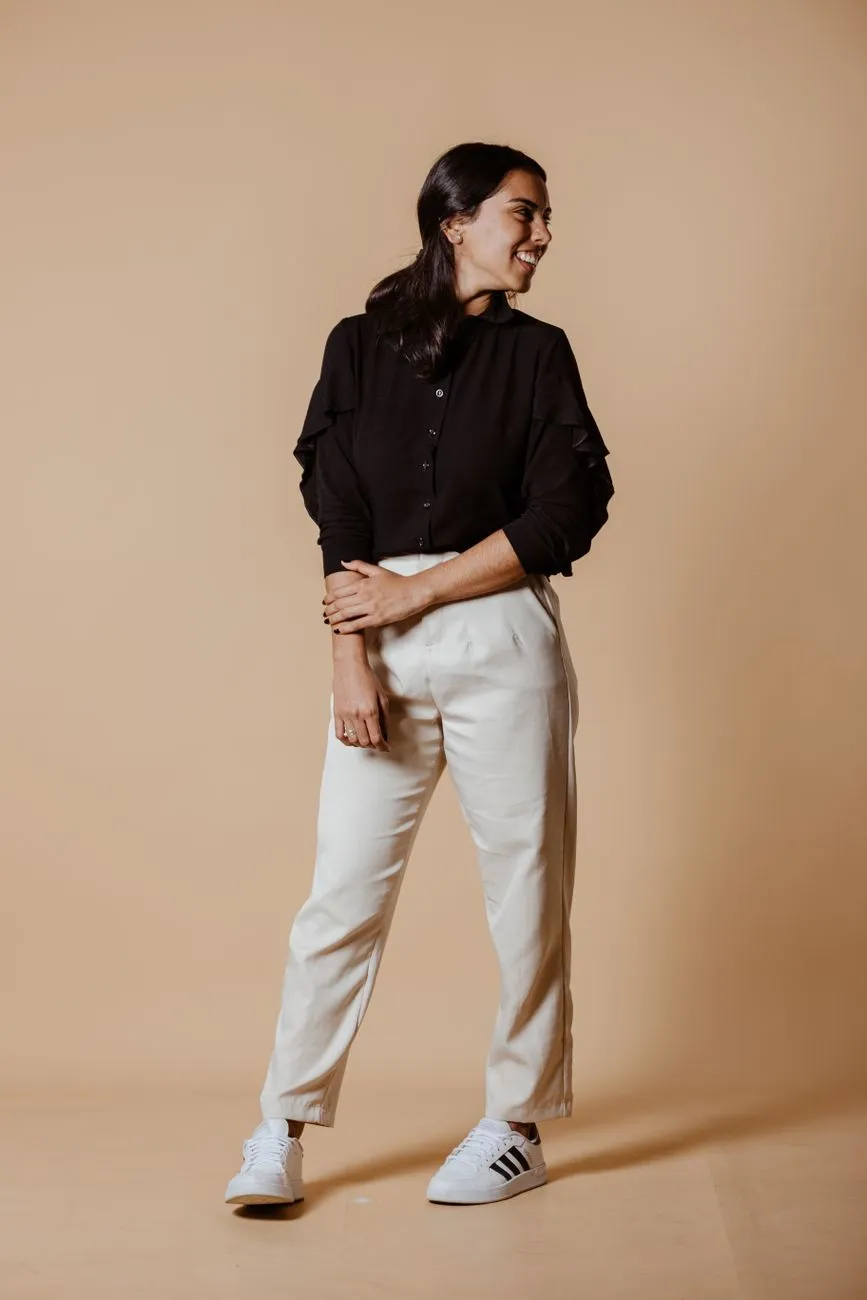
For trousers, the hem should end neatly at the shoe. A slight break is fine for classic styles. A cropped hem works with sneakers, loafers, and some wide-leg shapes. For wide-leg pants, the hem should not pool on the floor unless you are deliberately going for a floor-skimming look. See What Shoes to Wear with Wide Leg Pants: 5 Styles & Hem Rules for pairing guidance.
Let fabric drape, not cling
Knit tops, silk, satin, and linen should skim the body. If you want a looser look, go up one size only if the shoulders and armholes still fit. If a piece clings in a way you do not like, a camisole, slip, or untucked layer can help. Choose fabrics with a bit of drape for bottoms if you want movement without bulk.
Focal points and accessories
A focal point is the one thing you want people to notice first. Without one, the eye wanders. With too many, the outfit looks busy.
Choose one hero detail
Pick one of these:
- A structured neckline, such as a square or boat neck.
- A belt or waist-cinching silhouette.
- A shoe that contrasts with the trousers.
- A bright bag or earrings.
- A patterned piece, such as a printed shirt or scarf.
Everything else should be quieter. If you wear a patterned top, keep the bottom and shoes simple. If you wear statement earrings, skip the loud necklace. If your shoes are very bright, keep the rest neutral.
Accessorize with a purpose
Accessories should answer a problem: a belt defines the waist, earrings lift attention upward, a watch adds polish at the wrist, a scarf fills an open neckline. If an accessory is only there because it matches, it often adds clutter.
Shoes are part of the outfit, not an afterthought
Shoes change the outfit’s proportion. A pointed toe can elongate the leg; a chunky sneaker can anchor a wide-leg trouser; a heel or slim loafer can sharpen a cropped hem. Choose shoes after you have set the top and bottom proportions, not before.
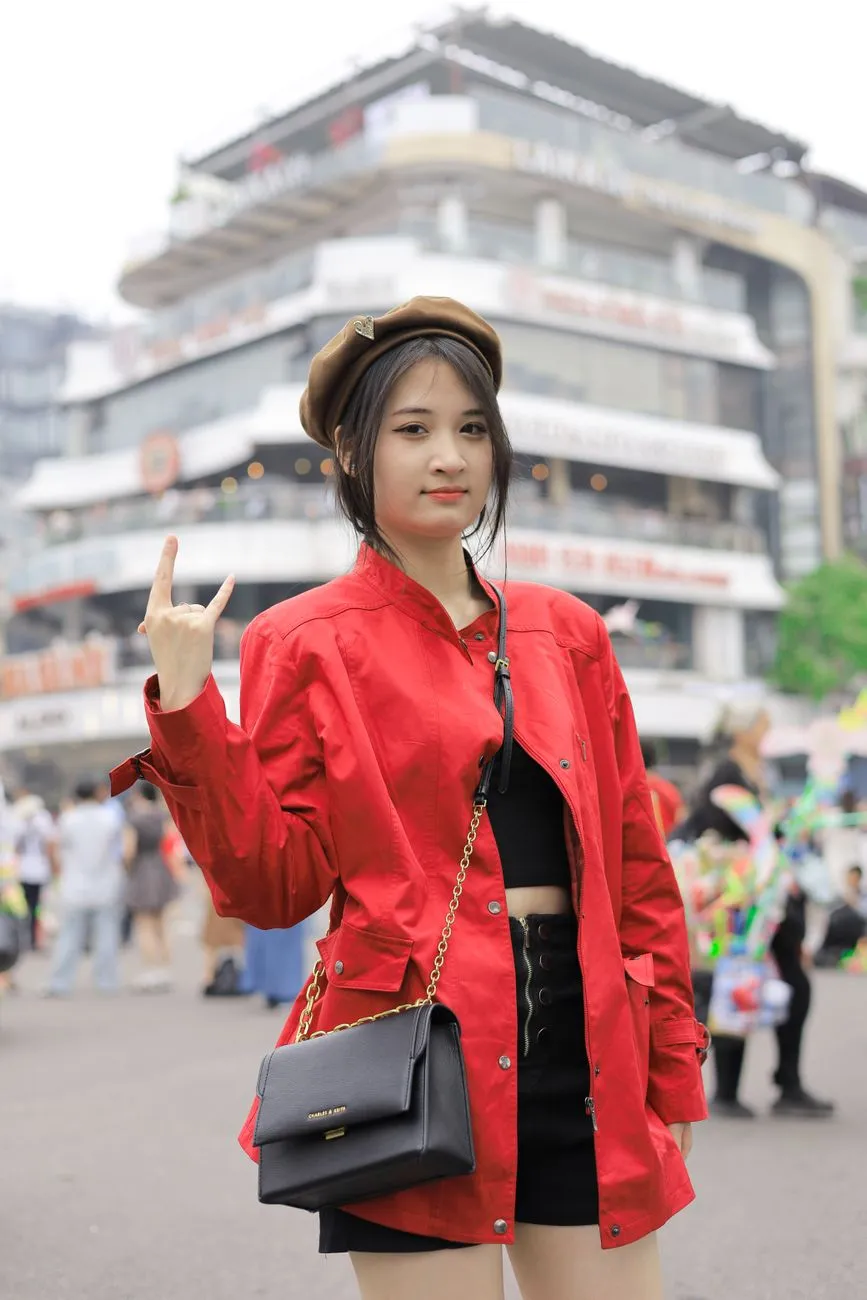 Photo: Hồng Quang Official / Pexels
Common mistakes that make an outfit feel off
These are the issues that appear again and again.
1. Too many focal points
A printed top, bold earrings, a bright bag, and statement shoes compete. Keep the hero piece; simplify the rest.
2. Ignoring the waistline or hem
A top that ends at the widest part of the hip or trousers that drag on the ground can make an outfit look unfinished. Change the tuck or hem first.
3. Matching everything too literally
Wearing the same shade from head to toe can be elegant, but wearing five slightly different shades of beige or blue rarely is. If you want tonal, vary the depth and texture deliberately.
4. Forgetting the climate and activity
Beautiful proportions do not matter if the outfit is too hot, too cold, or impossible to sit in. Check that you can move, walk, and sit before leaving the house.
5. Trying to copy an outfit without adapting it
The same formula may need different lengths or fits on different bodies. Use inspiration as a starting point, then adjust the tuck, hem, or shoe.
A repeatable step-by-step method
When you get dressed, do this:
- Choose the bottom first. Trousers or skirt set the proportion and color base.
- Choose a top. Decide whether to tuck, half-tuck, or leave it out. Check the shoulder seam and waistline.
- Add a third piece. This can be a jacket, cardigan, belt, or bag. It should control the proportion and break up the color.
- Choose shoes. Set the hem length and pick the leg line you want.
- Add one focal point. Pick one accessory or detail to highlight, then remove anything that competes.
- Do a full-length check. Take a full-body photo or use a mirror. Look at the overall shape from a distance, not just the top half.
If you want to test a combination without trying it all on, this is where Macgi helps. Upload or take one full-body photo in your phone browser, no app needed, choose a top, a top with trousers, or a dress, and see the result in about 15–40 seconds. Macgi keeps your face, body shape, skin tone, pose and background and changes only the clothes, so you can compare proportion and color on your own photo without any body editing. Photos are used only for your own try-on images, never posted, shared, used for ads or AI training. The temporary copy sent to the AI is deleted within 24 hours. Remember that try-on images are AI previews, so sizing still needs the store’s size chart.
FAQ
How many colors should an outfit have?
Two main colors plus one accent is the simplest reliable formula. You can wear more, but give the palette a clear hierarchy.
What is the easiest focal point to add?
A bag or shoe in one accent color is the easiest because it does not change the fit. A structured neckline or belt is also effective if you want the focus higher.
Should I tuck in my top or leave it out?
If you want to create a longer leg line or define the waist, tuck or half-tuck. If the top is structured and the bottom is slim, leaving it out can work. The deciding factor is where the top ends in relation to your hips.
Do I need a lot of basics to make outfits work?
No. A small set of neutral bottoms and simple tops can be combined many ways. Start with one dark and one light bottom, two or three tops in different silhouettes, and one third piece. Build from there.
Can I use virtual try-on to check proportion and color?
Yes. Using a tool like Macgi in the phone browser, you can upload a full-body photo and preview a top, a top with trousers, or a dress. It is a fast way to see the outfit on your body without getting changed. Keep in mind it changes only the clothes, not your body, and it does not replace the store’s size chart.