Macgi
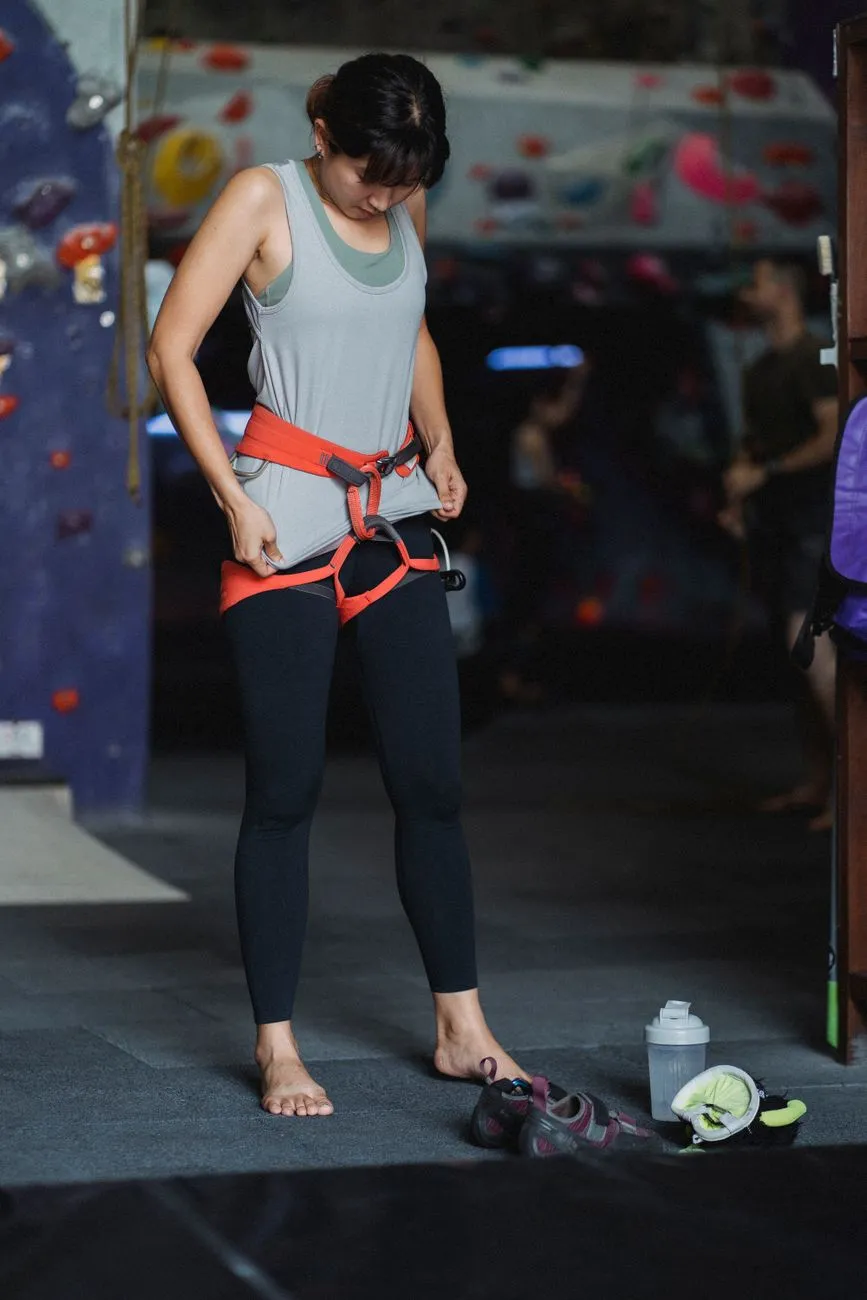
Ziplining and paragliding look completely different—one sends you along a cable, the other lifts you into the air—but the clothing requirements are surprisingly similar. In both cases, a harness must sit close to your body, your shoes need to survive a run or a landing, and wind at speed or altitude can make a mild day feel cold. The goal is not to look like a mountaineer. It is to choose pieces that are secure, fitted, and easy to layer. If you already have a hiking layer system, much of it will transfer here; for a fuller breakdown, see What to Wear Hiking: Layer System, Shoes, and Weather Protection.
1. Why outfit rules matter more than style
The first thing to understand is that you are not dressing for a photo or a casual walk. You are dressing around a harness.
The harness sits against your body
On a zipline, the harness wraps around your legs, waist, and sometimes shoulders. On a paraglider, you sit in a harness that supports your hips and thighs. Any fabric that is loose, bunched, or slipping will make the harness less comfortable and can affect how the gear sits against your body. That is why fitted clothing is the core rule—not skin-tight, but close enough that the harness straps have nothing to move around.
Everything that dangles is a snag risk
Zipline pulleys, carabiners, ropes, paraglider lines, and reserve handles all create moving parts. Loose drawstrings, flared sleeves, long fringes, scarves, necklaces, and even long untied hair can get caught. Most operator bans are simply an attempt to remove anything that could tangle or come loose mid-air.
2. Closed shoes: the one item you cannot skip
For both activities, closed shoes are non-negotiable. This is not about fashion; it is about protecting your feet during takeoff, landing, and uneven ground.
Shoes that work
- Lace-up trainers or sneakers with a grippy sole are the easiest safe choice.
- Trail runners are ideal if the launch site or zipline platform is on rocky, muddy, or uneven ground.
- Lightweight hiking shoes can work if they are flexible enough to run in.
For paragliding, you need to run during takeoff and land on your feet, so choose shoes you can move in comfortably. Heavy, stiff boots are not ideal because they make running awkward.
Shoes to leave behind
Do not wear flip-flops, slides, sandals, espadrilles, ballet flats, heels, platforms, or anything open-toe. Open shoes can slip off during a run or landing, and exposed toes are vulnerable on gravel, wooden platforms, or rocky takeoff spots. Many operators will simply not allow you to participate in sandals.
Socks and lacing
Wear socks that cover your heel and ankle to prevent rubbing from the shoe collar and harness straps. Tie laces in a double knot and tuck the loops inside the shoe so they cannot catch on anything. If your shoes have bungee laces, make sure the toggle is pressed flat.
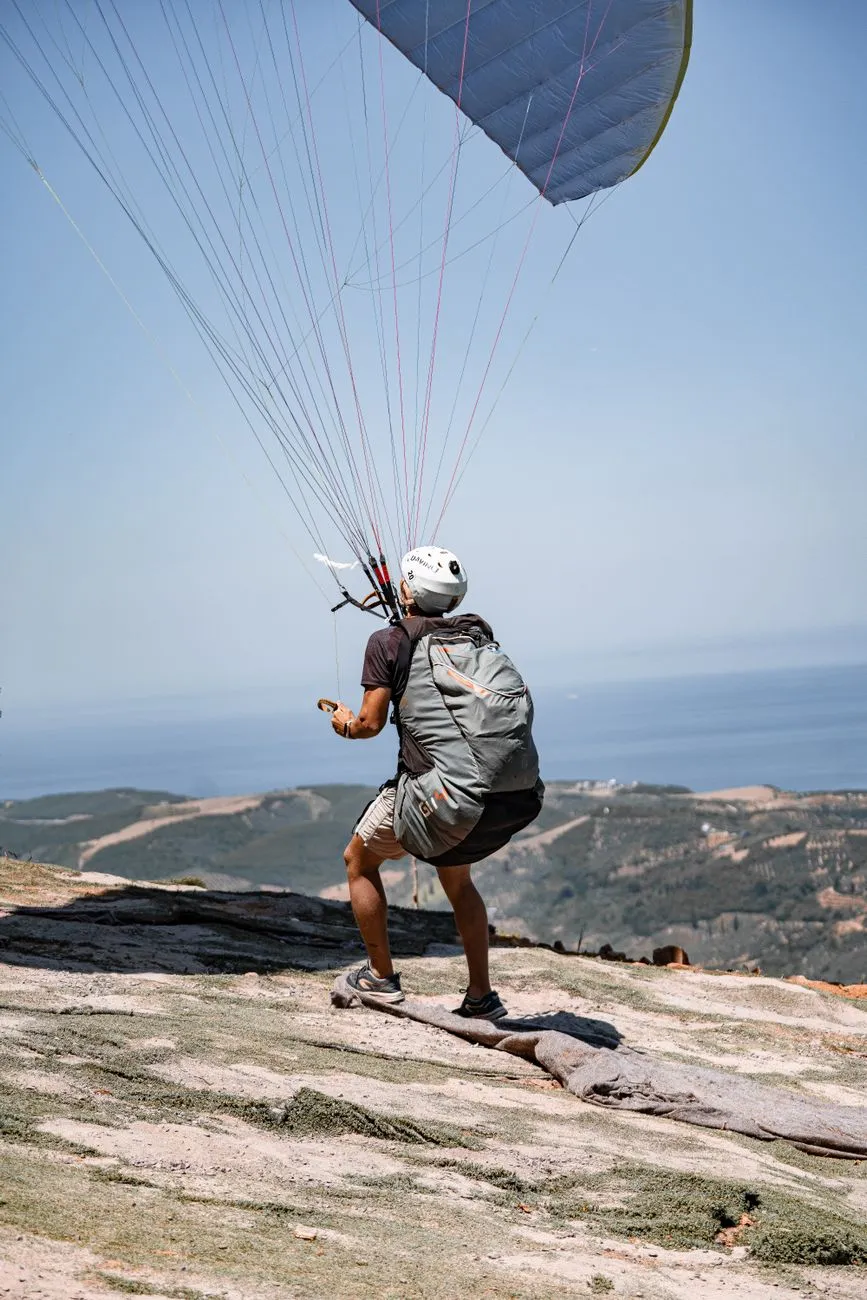 Photo: Şahin Doğdu / Pexels
3. Fitted clothing: what it means for men and women
Fitted does not mean compression or shapewear. It means clothing that moves with you but does not flap in the wind, ride up under a harness, or leave loose fabric hanging near equipment.
Tops
For women: a fitted T-shirt, long-sleeve athletic top, or racerback with a supportive sports bra works well. Avoid billowy sleeves, cold-shoulder cuts, peplum tops, and long tunics that can bunch under the leg loops of a harness. If your top is longer, tuck it in or choose a hip-length cut.
For men: a fitted or regular athletic T-shirt, long-sleeve base layer, or lightweight performance tee is the safest option. Avoid oversized T-shirts and loose hoodies with dangling drawstrings. If you wear a hoodie, tuck the hood and strings inside the collar or jacket.
Bottoms
For women: high-waisted leggings, joggers, slim hiking trousers, or yoga pants with a tapered ankle are ideal. Avoid wide-leg trousers, flare pants, palazzo pants, long skirts, and maxi dresses. These can flap in the wind, catch under straps, and make a harness difficult to fit properly.
For men: tapered joggers, athletic pants, stretch outdoor trousers, or slim cargo joggers work best. Avoid baggy sweatpants with wide cuffs and non-stretch jeans that restrict movement. If you wear shorts, choose longer fitted athletic shorts with a liner, and consider wearing compression shorts underneath for comfort against the harness.
Dresses and skirts
A skirt or dress is not practical for ziplining or paragliding. The harness can lift or press the fabric, and wind can make a skirt fly up. Many operators discourage or ban skirts and dresses for this reason. If you really want to wear something dress-like for photos before the activity, change into proper bottoms before your turn.
4. Layers for altitude and wind
Even on a warm day, the wind at a paragliding launch site or while moving fast on a zipline can make you feel cold. Layering lets you adapt without wearing anything bulky under the harness.
Base layer
Choose a moisture-wicking synthetic or merino base layer. Cotton is a poor choice because it holds sweat and can leave you chilled once the wind hits. A long-sleeve base layer also protects your arms from sun, brush, and light scrapes.
Mid layer
A thin fleece, softshell jacket, merino sweater, or zip-up athletic jacket works well. Full-zip is easier to put on and remove at the launch site. If your mid layer has a hood, tuck it inside the collar so it cannot snag.
Outer layer
A packable windbreaker or softshell is the most useful outer layer. It blocks wind without adding bulk. Avoid wearing a thick puffy jacket under a harness. The harness compresses the insulation, which reduces warmth and can make the fit feel loose or uneven. If you are very cold, wear a fitted insulated jacket and adjust the harness after putting it on, but a slim wind shell plus a fleece is usually enough.
A simple layering formula
For most ziplining and paragliding days, this works:
- Base: short or long-sleeve performance top
- Mid: thin fleece or softshell
- Outer: packable windbreaker
- Bottom: leggings, joggers, or stretch hiking trousers
- Shoes: lace-up trainers or trail runners
You can remove the mid or outer layer just before your turn and tie it around your waist only if it is secure and cannot flap. Otherwise, leave it with your bag.
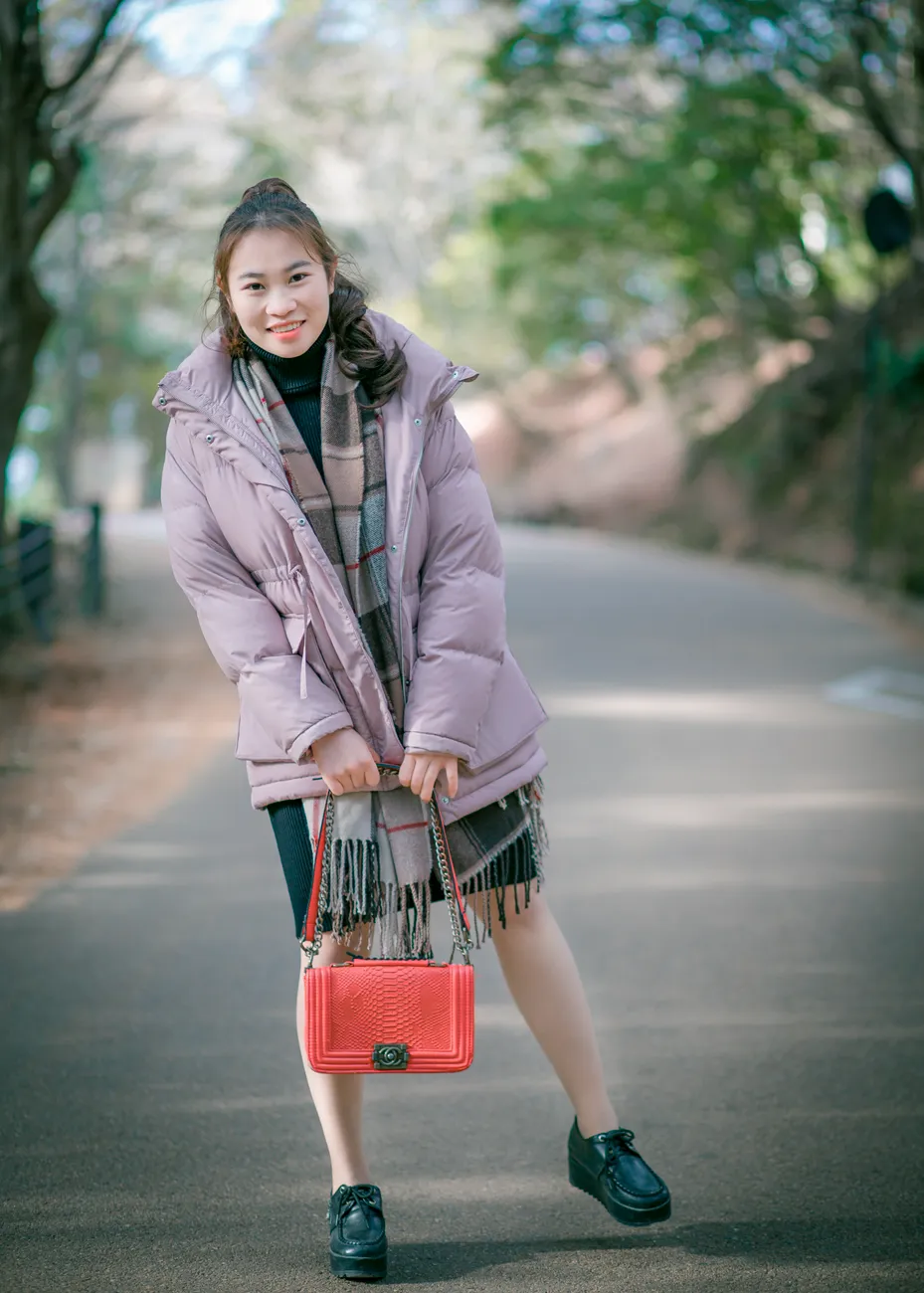 Photo: Thắng Văn / Pexels
5. Dust protection for ATV combo rides
Many ziplining or paragliding tours include an ATV ride to reach the launch site, or as an add-on. ATV sections are dusty, muddy, and rough, so your outfit needs a few extra details.
Cover your skin
Long sleeves and full-length pants are better than short sleeves and shorts for dust, mud, and minor scrapes. If it is hot, choose thin, breathable synthetic fabrics that dry quickly and do not trap heat.
Protect your face and eyes
A neck gaiter or buff pulled over your nose and mouth helps with dust. Avoid loose scarves because they can flutter and catch. Tuck the buff under your helmet so it stays put. Sunglasses or clear safety glasses keep dust out of your eyes; goggles are even better if the operator provides them.
Hair and shoes
Tie long hair low and tight so a helmet fits properly. A braid, low ponytail, or bun at the nape of your neck is best. A high ponytail can make the helmet sit unevenly and can catch on straps. Choose shoes that are easy to wipe clean; avoid suede, white fabric, or light pastel colours if the trail is dusty or muddy. Dark or mid-tone colours hide dust much better.
Secure your phone and camera
Keep your phone in a zipped pocket or leave it in a locker. Never keep it in an open back pocket during an ATV ride or while ziplining. If you want photos or video, ask the operator whether they provide a secured pouch, chest mount, or wrist lanyard.
6. What operators usually ban, and why
Every operator has its own rules, but the following items are commonly banned or strongly discouraged for ziplining and paragliding:
- Open-toe shoes, sandals, slides, flip-flops: not secure for takeoff, landing, or rough ground.
- Dresses and skirts: interfere with harness fit and can blow up in wind.
- Very loose clothing: wide sleeves, wide-leg trousers, long scarves, shawls, and unsecured hoods can snag.
- Dangling jewellery: long necklaces, large hoop earrings, long earrings, and loose bracelets.
- Unsecured phones, cameras, or selfie sticks: can fall from height or distract you.
- Bags and backpacks worn during the activity: interfere with the harness and can catch on lines.
- Long hair left completely loose: can tangle in pulleys, lines, or straps.
- Alcohol or anything that affects balance and judgement: should be avoided before flying or riding.
The reasons are practical, not arbitrary. If an operator asks you to remove something, remove it. No outfit is worth missing the activity or compromising your safety.
7. Complete outfit formulas
These formulas keep you covered, comfortable, and less likely to be pulled aside for a safety check.
For women
- Top: fitted long-sleeve or short-sleeve athletic top, tucked in or hip-length
- Bottom: high-waisted leggings or slim joggers with a tapered ankle
- Shoes: trail runners or lace-up trainers
- Layer: packable windbreaker plus a thin fleece if cold
- Extra: neck gaiter for ATV, hair in a low braid, no dangling jewellery
For men
- Top: fitted athletic T-shirt or long-sleeve base layer
- Bottom: tapered joggers or stretch hiking trousers
- Shoes: lace-up trainers or trail runners
- Layer: softshell or windbreaker plus a light fleece if needed
- Extra: zipped pockets, hair tied back if long, no loose drawstrings
What to pack for a multi-activity day
If you are doing ziplining in the morning and paragliding in the afternoon, pack one set of technical clothing, one warm layer, and a change of clothes for afterwards. Capsule Wardrobe for Travel: 10-15 Pieces and Packing Lists can help you keep that list short and reusable.
Before you commit to a specific top and trousers, you can use Macgi in your phone browser to see how the outfit silhouette works on your own body. Upload one full-body photo or take one on the phone, then try a top, a top with trousers, or a dress. The result arrives in about 15–40 seconds. Macgi keeps your face, body shape, skin tone, pose, and background, and changes only the clothes—no body editing. The photos are used only for your own try-on images, never posted, shared, used for ads, or used for AI training, and the temporary copy sent to the AI is deleted within 24 hours. It works in the phone browser with no app. Try-on images are AI previews, so sizing still needs the store’s size chart. If you are new to this, see How to Take a Full-Body Photo for AI Try-On for the most realistic result.
FAQ
Can I wear jeans for ziplining or paragliding?
If you have slim or straight jeans with stretch and you can move easily, jeans can work for ziplining. For paragliding, stiff or non-stretch jeans can restrict your running stride and feel uncomfortable under the harness. Stretch hiking trousers or joggers are usually a better choice.
Are leggings okay for paragliding?
Yes, if they are opaque, high-waisted, and thick enough to prevent harness rubbing. Choose leggings that stay in place when you run and do not roll down under the leg straps. Pair them with a longer fitted top if you want more coverage.
Do I need hiking boots?
Not necessarily. Trail runners or sturdy trainers are often better because you need to run for a paragliding takeoff and land on your feet. Hiking shoes can work if they are flexible and not too heavy. Stiff mountaineering boots are usually less comfortable for running.
What if I only have sandals?
Do not go in sandals. Borrow or buy closed shoes before the activity. Many operators will not allow open-toe footwear, and wearing sandals can be dangerous. If you are unsure, contact the operator in advance and ask whether they have loaner shoes, but do not count on it.
Can I wear a jacket under the harness?
Yes, as long as it is close-fitting and not bulky. Layering under the harness works best with a slim base layer, a thin fleece, and a windbreaker. Avoid thick puffy jackets because the harness compresses them and can make the fit feel uneven. Remove the outer layer if it is too loose and put it on before or after the flight.
How do I keep my phone during the activity?
Ask the operator. Many provide a secured pouch, chest mount, or wrist lanyard. If they do not, leave your phone in a zipped pocket or a locker. Never hold a phone or camera in your hand while ziplining or paragliding, because it can fall or distract you at the wrong moment.