Macgi
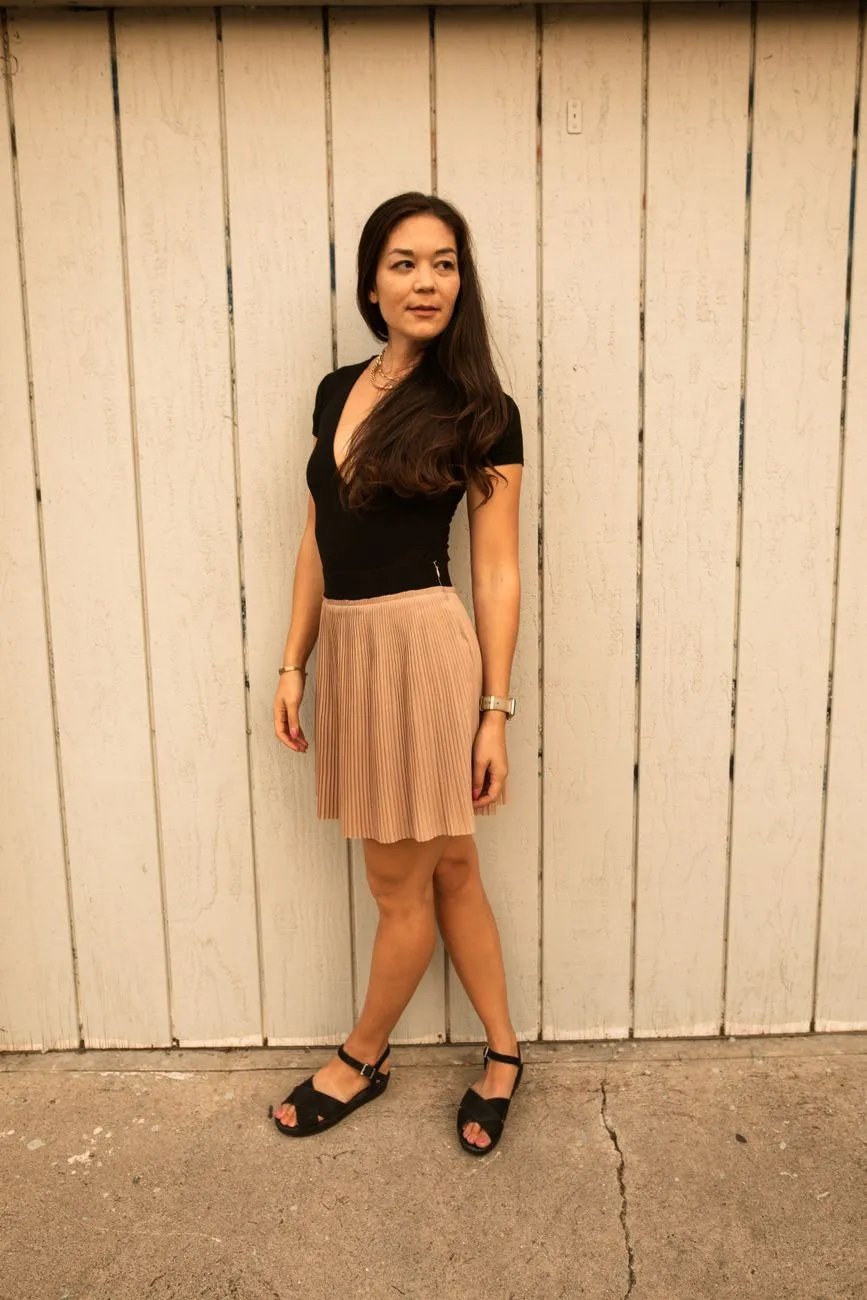
A pleated skirt is one of the most useful pieces in a wardrobe because the pleats do a lot of the styling work. They add movement, texture and vertical lines, so even a plain T-shirt can look considered. This guide covers how to choose the right pleats for your proportions, which tops to wear, how to style midi, mini and white pleated skirts, and the shoe rules worth knowing.
What makes a pleated skirt easy to style
A pleated skirt has built-in structure, so you do not need much else. The folds repeat down the body, which draws the eye vertically and makes the outfit feel longer and more deliberate. A pleated skirt also moves as you walk, which adds life to flat shoes and simple tops. That is why it works for both polished and casual looks: the same skirt can go with a fine knit for the office or a cropped tee for the weekend. The key is to let the pleats be the main detail and keep the top and shoes calmer, unless you deliberately want contrast.
How to choose pleats for your body and height
Knife pleats
Knife pleats are narrow folds pressed in the same direction. They lie fairly flat at the waist and hip, so they give a cleaner line than accordion pleats. If you want a pleated skirt that does not add much fullness through the hip, a soft knife-pleat style in a drapey fabric is a useful choice. It is also easy to dress up because the folds look sharp but not overly busy.
Accordion pleats
Accordion pleats are narrow, tight and pressed all around the skirt, usually in a synthetic or blended fabric so they hold their shape. They create the most movement and volume. If you want to add curve to the lower half, balance broader shoulders, or just enjoy a dramatic swish, this is the style to try. If you prefer a quieter lower half, choose a darker accordion skirt or a flat-front style with pleats starting below the hip, and pair it with a fitted top.
Box and inverted pleats
Box pleats are wider, often pressed away from each other; inverted pleats fold toward the centre. They look more tailored and controlled than accordion pleats. Because the pleats are wider, they create shape without a lot of flare, which makes them a good option for work, school-like looks and more structured outfits. They also highlight the waist when you tuck in a top.
Fabric and length
Fabric changes everything. Soft cotton, viscose or wool drapes and moves; stiff polyester or a blend holds sharp accordion lines better but can feel less breathable in warm weather. For height, if you are petite and want to keep length, choose a midi that ends below the widest part of the calf or above the ankle, or a mini that shows leg. Taller frames can usually carry longer midis and wider pleats without being overwhelmed. The goal is to keep the pleat line unbroken, so avoid hems that stop exactly at the widest point of the calf.
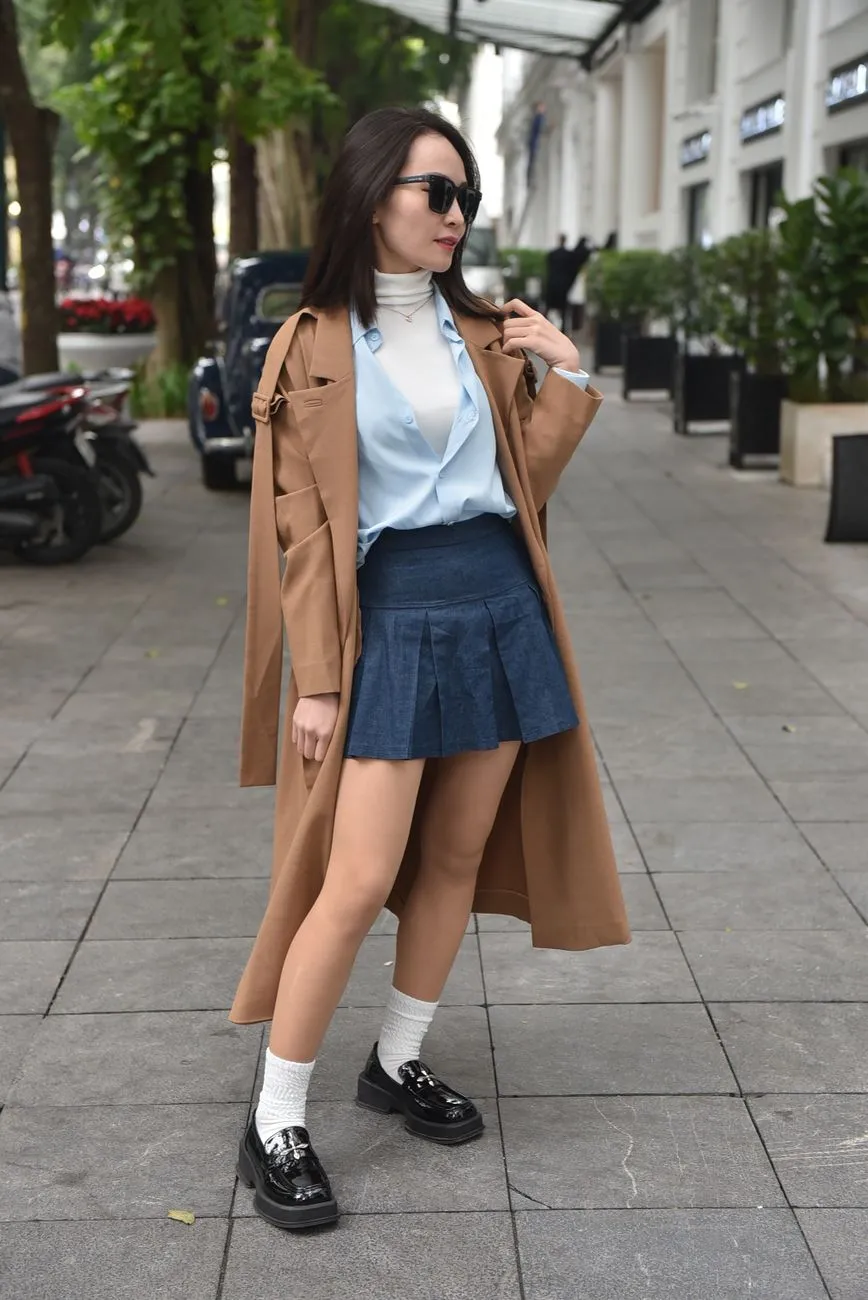 Photo: Felix Young / Pexels
Tops that work with any pleated skirt
The most reliable rule is to keep the waist visible. A pleated skirt has a natural high waist, so tuck in the top or choose a top that ends at the waistband. Avoid long, heavy tops that fall over the pleats and hide the shape; if you want a looser top, do a front tuck or choose a cropped length.
Useful top formulas:
- Fitted tee or tank, fully tucked.
- Bodysuit or fine knit.
- Button shirt tied at the waist or half-tucked.
- Cropped sweater or boxy top that ends right at the waist.
- Slim top under a cropped jacket or blazer.
For colour, the easiest approach is to pair a printed or bright pleated skirt with a solid top, and a plain skirt with either a solid top or a simple stripe. Neutrals such as black, white, navy, grey, beige and cream always work. If you want a stronger colour pairing, treat one piece as the neutral and one as the accent. You can find a fuller colour matching method in How to Color Match Clothes: Color Wheel, Neutrals, 60-30-10.
If you are choosing the top half and want to see it on your own proportions before buying, Macgi can help in your phone browser: upload one full-body photo, try a top or a dress, and get a result in about 15–40 seconds. It keeps your face, body shape, skin tone, pose and background and changes only the clothes. Your photos are never posted, shared, used for ads or AI training, and the temporary copy sent to the AI is deleted within 24 hours. The try-on image is an AI preview, so still check the store’s size chart before ordering.
How to style a midi pleated skirt
A midi pleated skirt ends anywhere from below the knee to above the ankle. The most flattering length for many people is around the lower calf or just above the ankle, because it shows the narrowest part of the leg. If the hem stops at the widest part of the calf, it can make the leg look shorter; that is a styling choice, not a rule, but it helps to know.
Top formulas for midi:
- Grey or navy midi + fine knit + pointed flats.
- Black midi + white button shirt + low block heels.
- Beige or brown midi + fitted tee + denim or cropped jacket.
Shoes for midi should not fight the skirt’s vertical line. Pointed flats, slingbacks, low block heels, slim ankle boots and strappy sandals all work. Avoid mid-calf boots because they cut the leg at its widest point and interrupt the line. In cool weather, tights close to the shoe colour keep the look smooth.
If you also like A-line skirts, the same top proportion rules apply, but pleats add more texture. See How to Style an A-Line Skirt: Short, Midi, Long and Khaki for more formulas.
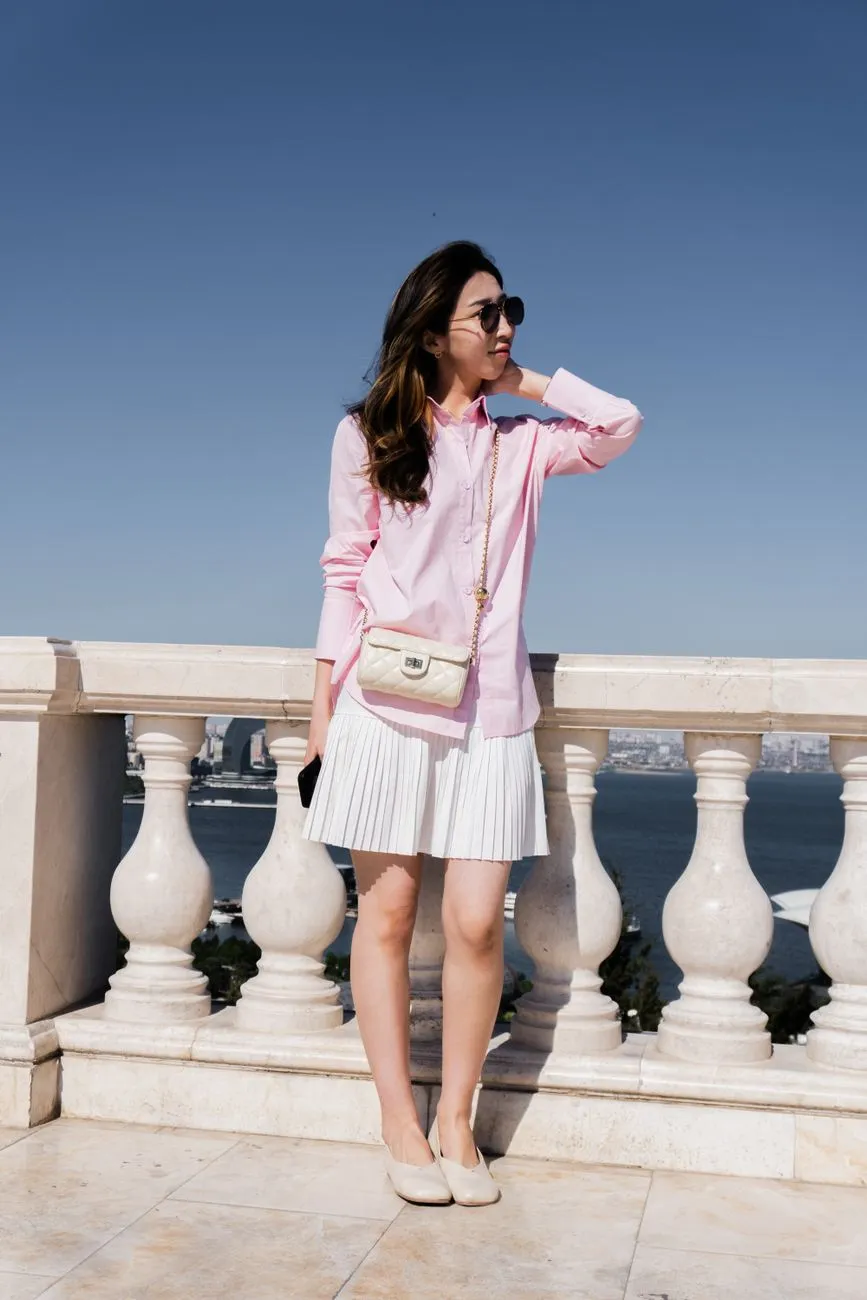 Photo: Zulfugar Karimov / Pexels
How to style a mini pleated skirt
A mini pleated skirt is shorter and reads more playful, preppy or sporty. The pleats give it movement, so it does not have to feel stiff. The main proportion trick is to balance the shorter length with a top that still defines the waist, but you can go slightly looser on top than with a midi because the legs provide length.
Top formulas:
- Navy or black mini + white fitted tee + loafers.
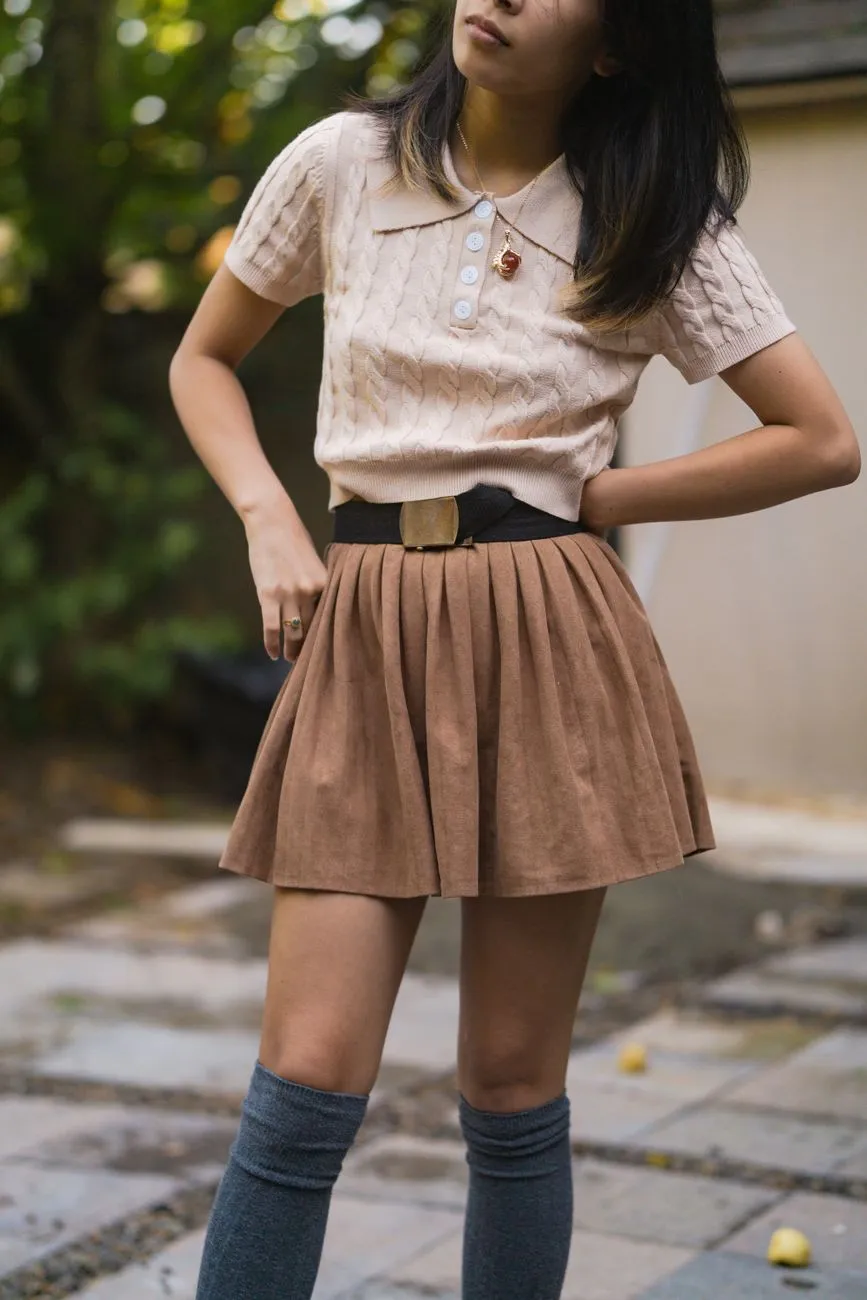
- Grey mini + black fine knit + knee-high boots.
- White mini + pastel top + clean sneakers.
Shoes: loafers, Mary Janes, ballet flats, low-profile sneakers and knee-high boots all suit a mini. For an evening look, low block heels or slim sandals work; very high heels are optional, not required. If it is cool, opaque tights extend the wear of the skirt without changing the proportion.
How to style a white pleated skirt
A white pleated skirt is brighter and more eye-catching than darker versions, so it becomes the focal point. The easiest styling approach is to pair it with a solid top in a clear neutral or a soft pastel.
Colour combinations for a white pleated skirt:
- Black top for strong contrast and an evening feel.
- Navy top or navy and white stripe for a clean, classic look.
- Grey, beige or tan for a softer neutral outfit.
- Pastel pink, blue, lavender or mint for spring and summer.
- Red or green for a bolder accent.
Shoes: white sneakers keep the look tonal and casual; beige or nude sandals help lengthen the leg; black loafers or pumps add contrast; metallic flats or sandals can dress it up. If you wear white shoes, keep them clean so the whites look intentional. Also check that the skirt is lined or wear a skin-tone underlayer if the fabric is thin.
For longer skirt top ideas, read What Top to Wear with a Long Skirt: 15 Tee, Shirt, Knit Ideas.
Shoe pairings that change the whole outfit
- Flat shoes: pointed flats and loafers are the most versatile. A pointed toe adds length; a rounded ballet flat is softer and more casual.
- Heels: low block heels, mules and slingbacks work with midi. Mini can carry higher heels but they are not necessary. Keep the heel shape simple so it does not compete with pleats.
- Boots: ankle boots work with midi if the shaft is slim and ends below the hem or slightly under it. Knee-high boots work with mini. Avoid mid-calf boots with midi.
- Sneakers: clean low-profile or retro styles in white or a matching neutral. Heavy running shoes can feel too bulky against delicate pleats, but if you want streetwear contrast, that is a valid choice.
- Sandals: flat strappy, slides and espadrilles in warm weather. Nude and metallic tones are the most flexible.
FAQ
Can I wear a pleated skirt if I have wide hips?
Yes. If you want to streamline, choose soft knife pleats or flat-front styles where pleats begin below the hip, in darker solid colours. If you want to celebrate volume, accordion pleats will do that. There is no body type that cannot wear pleats; it is about where you place fullness.
What top should I wear with a pleated skirt for work?
A fine knit tucked in, a button shirt half-tucked, or a fitted tee under a blazer. Choose a midi or knee-length neutral skirt and simple shoes like loafers or block heels.
How do I keep pleats from flattening?
Do not press them with a hot iron directly. Hang the skirt by the waistband, steam gently if needed, and follow the care label. For travel, fold along existing pleat lines to reduce creasing.
What shoes should I avoid with a pleated skirt?
Avoid mid-calf boots with midi skirts, very heavy chunky trainers unless you want a strong streetwear contrast, and shoes that cut the leg at the widest point. But these are guidelines; if you love it, wear it.
Can men wear pleated skirts?
Yes. Kilts, tailored pleated skirts and fashion styles are worn by men. Pair with boots, loafers, a plain tee, knit or jacket. The same proportion rules apply: keep the top relatively simple and let the pleats be the detail.