Macgi
Beach outfits for women often go wrong because they focus on looking cute and forget the practical realities: sand, salt, damp swimwear, and a walk to dinner afterwards. A better approach is to build your look from three layers: a swim base, a breathable cover-up, and one or two pieces that can pass for lunch or dinner. This guide covers the staples worth packing, how to turn them into outfits, and the day-to-night swaps that take less than five minutes.
The golden rule: choose fabrics that dry fast and move air
Most beach outfit mistakes are fabric mistakes. A stiff cotton shirt that looks fine in a fitting room can feel heavy after ten minutes in humid air, and a dark polyester cover-up can trap heat against your skin.
The most useful beach fabrics:
- Linen: breathable, strong when dry, and the wrinkles look relaxed rather than messy in a beach context.
- Cotton voile and cotton gauze: lightweight and airy, but they can go sheer when wet, so check before relying on them.
- Rayon/viscose: drapes well and feels cool, though it can be more delicate when soaked.
- Lyocell: soft, breathable, and tends to dry faster than thick cotton.
- Quick-dry synthetic blends: useful for swimwear and some cover-ups because they wick and dry quickly between water and lunch.
What to avoid: heavy denim, stiff canvas, very dark tight polyester, and anything with a tight waistband or zipper that will dig in after sitting on hot sand.
One practical test: hold the fabric up to a phone flashlight. If a lot of light comes through, it may become more transparent when wet. Pair it with a slip or wear it over a swimsuit rather than alone.
15 beach staples worth having
These are not fifteen things you must buy. Treat the list as a menu. If you choose five or six pieces that mix easily, you can cover most beach days and evenings.
- A one-piece swimsuit or bikini top you can move in. Secure straps matter more than an exact trend. If you want to use a bikini top as a bodysuit under a shirt, choose one without bulky hardware.
- A sarong or pareo in cotton or rayon. Learn one or two ties: around the waist as a skirt, around the neck as a halter, or under the arms as a strapless dress.
- A linen or cotton kaftan. A loose kaftan covers shoulders and thighs, lets air circulate, and is easy to pull on over a damp swimsuit.
- A white or cream linen shirt. Open over swimwear by day, tied at the waist or tucked into trousers by dinner.
- A crochet or knit cover-up. Adds texture over a plain swimsuit; if it is open-weave, wear a swimsuit or slip underneath.
- A ribbed tank or fitted crop top. Quick-drying and useful for lunch after the water.
- Relaxed linen or cotton shorts. Look for a leg opening that does not pull across the thigh. A mid-thigh to knee-length cut tends to feel airy and less likely to ride up.
- Wide-leg linen trousers. The easiest bottom for a beach-to-dinner switch; they move air and look polished with flat sandals. See What to Wear with Linen Pants for more combinations.
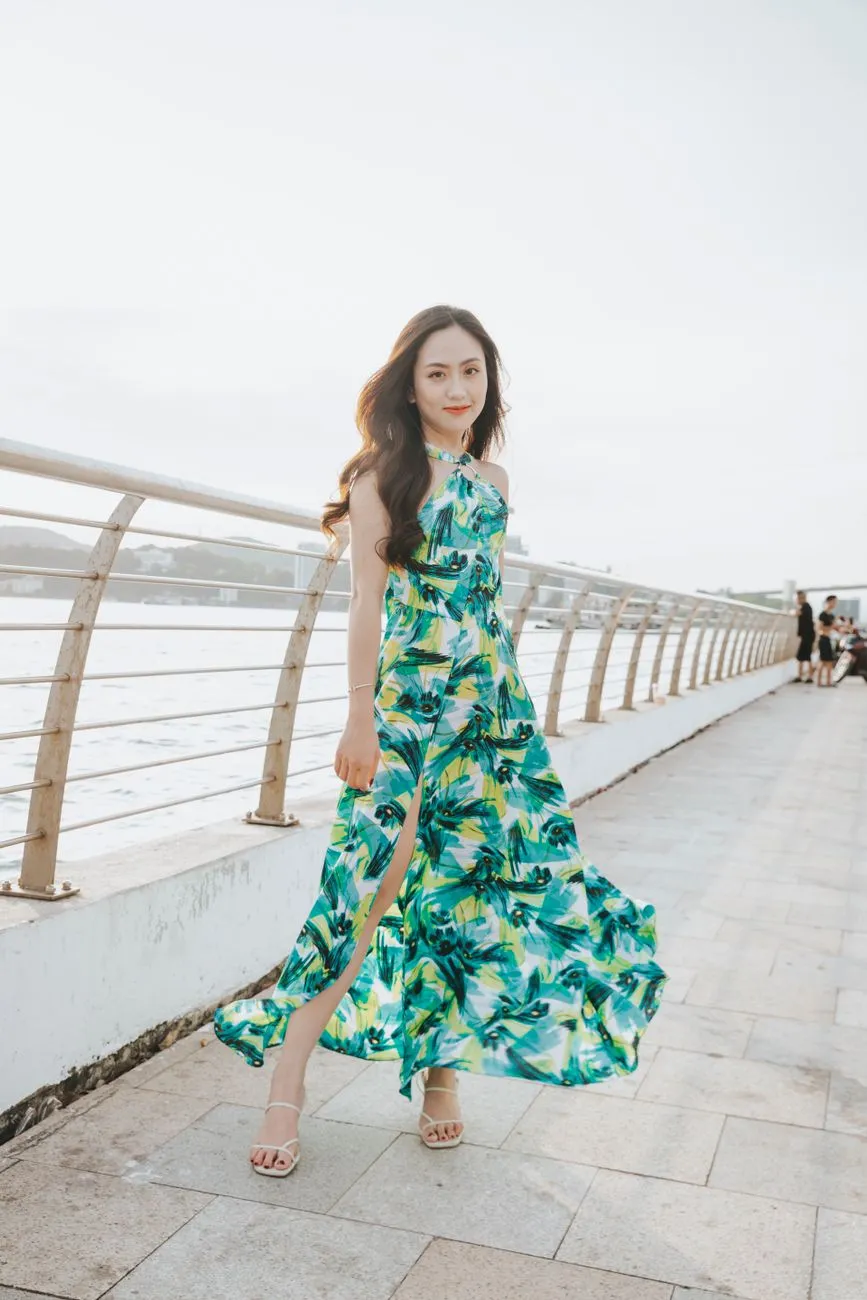
- A maxi dress in a breathable fabric. A one-piece outfit that needs almost no styling.
- A smocked or slip sundress. Dresses with smocked bodices stay comfortable when you sit, and slip dresses work as a beach-to-dinner layer.
- A t-shirt dress or shirt dress. A relaxed cover-up that can pass for a casual dinner with a shoe and bag change.
- A wide-brim hat. Look for a brim that shades your face, ears, and neck rather than just the top of your forehead.
- Sunglasses with UV protection. Polarized or UV400 lenses are useful near water because glare can be intense.
- A woven bag or raffia tote. It can carry a wet swimsuit, towel, sunscreen, and a water bottle without turning soggy.
- Supportive flat sandals or water-friendly slides. Flat soles with a backstrap or a secure slide are easiest in deep sand; save heels for paved walkways.
If you are buying a maxi dress or linen set online, Macgi’s AI try-on can help you preview the shape and length on your own photo before committing. It changes only the clothes, not your face, body shape, skin tone, pose or background.
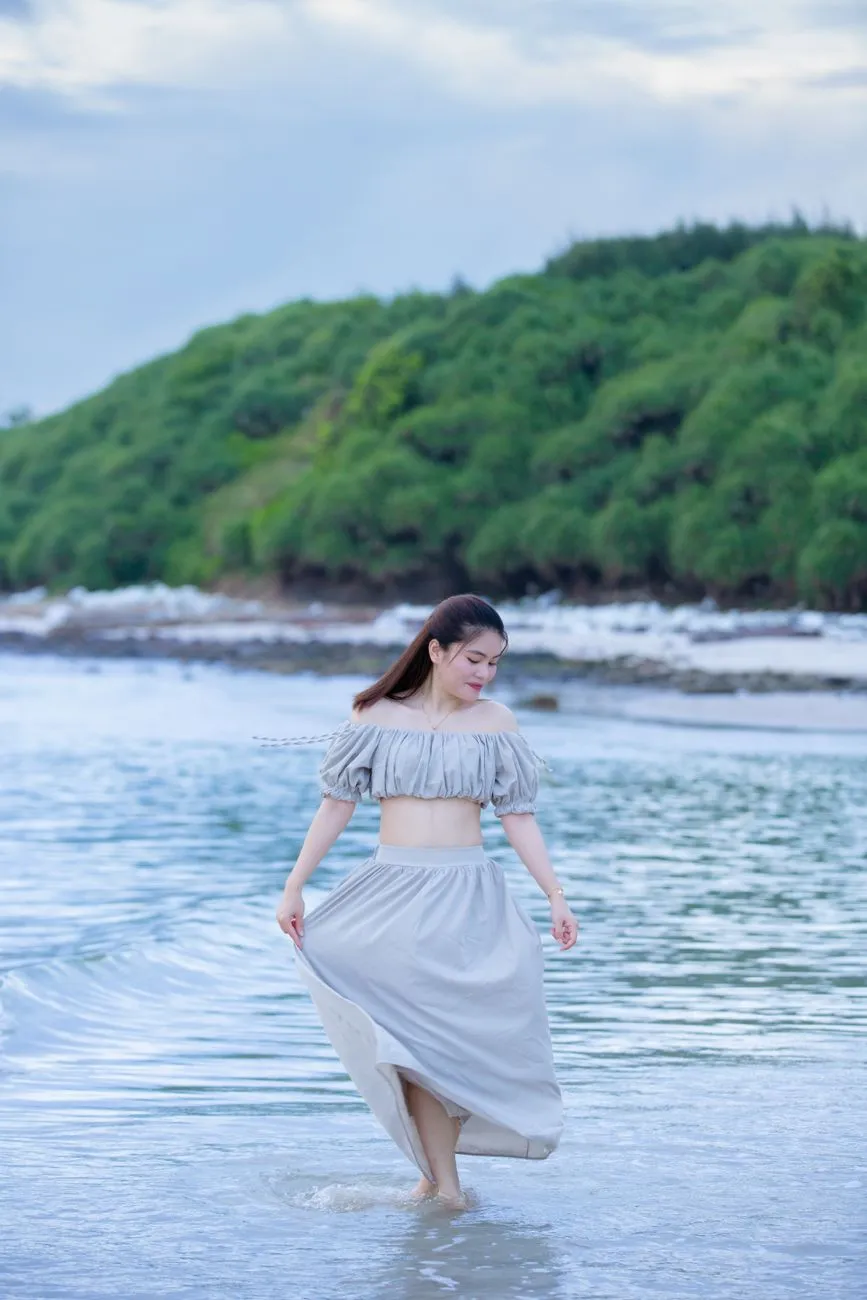 Photo: Tuấn Vũ / Pexels
5 daytime outfit formulas from those staples
- Swimsuit + linen shorts + open linen shirt + flat sandals + hat. This works for a long beach walk, snack bar, or market. If your swimsuit has an interesting neckline, leave the shirt open.
- One-piece + sarong tied at the waist + ribbed tank + slides. A good option if you want more coverage without adding heat.
- Maxi dress + flat sandals + sunglasses + woven bag. The lowest-effort outfit; choose a dress you can step into easily.
- Ribbed tank + wide-leg linen trousers + slip sandals. This is essentially a linen set separated. Throw on the matching linen shirt in the evening and it still works.
- T-shirt dress over a swimsuit + water-friendly slides. If you plan to swim again after lunch, this saves you from changing twice.
In all of these, shoes should be flat or very low. Sand makes heels sink and soft ground can feel unstable even in a low wedge.
Day-to-night swaps that take five minutes
The easiest beach-to-dinner swap is not a whole new outfit; it is changing the wet and sandy parts. Start with your swim base or a dry tank, then make three changes: dry bottoms or a dress, real sandals instead of plastic slides, and one accessory that reads evening, such as a thin belt, small hoop earrings, or a delicate necklace.
Swap formulas:
- Linen shorts → wide-leg linen trousers. Keep the same top, add a belt and leather or woven flat sandals.
- Plastic slides → flat leather sandals or low espadrilles. This instantly makes linen shorts or a t-shirt dress look more finished.
- Beach tote → smaller woven or canvas bag. You do not need to carry sunscreen and a towel to dinner.
- Open linen shirt tied at the waist → tucked or front-knotted linen shirt. It defines the waist without a belt.
- Maxi dress + flat sandals + hat → maxi dress + low heeled espadrille or flat sandals + earrings, hat off. The same dress reads differently with hair up and less sun protection.
The same logic works if you are packing for a partner: dry board shorts swapped for linen trousers and a camp-collar shirt is the men’s equivalent of the five-minute beach dinner outfit. For more day-to-night beach looks, see What to Wear to the Beach.
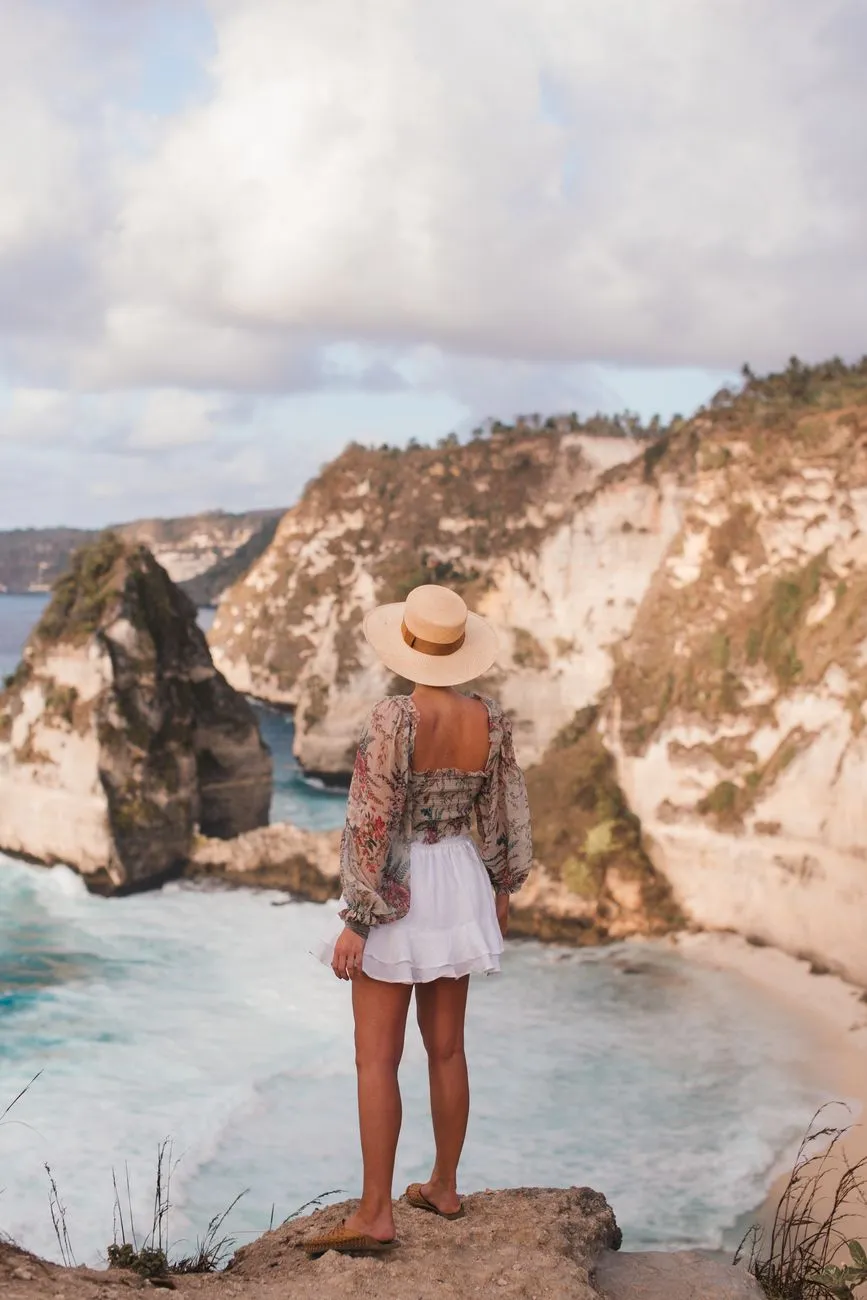 Photo: Rachel Claire / Pexels
Sun protection that still looks like an outfit
Sun protection at the beach does not have to mean a shapeless rash guard. The easiest pieces to build in are the ones you already wear: a wide-brim hat, sunglasses, a loose long-sleeve shirt or kaftan, and a cover-up that shades the shoulders and chest.
A long-sleeve linen or cotton shirt can be worn open over a swimsuit by the water, then buttoned for a walk or lunch. If you burn easily, choose a cover-up with sleeves and a higher neckline rather than relying on a tiny triangle top.
Clothing blocks some UV, but it is not magic. Loosely woven fabrics and wet, stretched fabric can let more UV through, so treat clothes as one layer among several. Reapply sunscreen more often if you are in and out of the water, and cover areas that are hard to reach with the back of your hand.
Sunglasses are not just for style. Near sand and water, glare can make you squint, which makes photos less relaxed. Look for a UV-blocking or polarized lens, and choose a frame large enough to cover the delicate skin around the eyes.
Colours and prints that photograph well at the beach
Beach backgrounds are usually bright sky, pale sand, and green or blue water. That means saturated colours and clean neutrals tend to hold their own in photos.
- White and cream look fresh and clean, but on very pale sand they can disappear in midday light. If you want more definition, add a tan, terracotta, or bright accessory.
- Coral, tomato red, cobalt, turquoise, and butter yellow contrast strongly with both blue water and beige sand, so they often look lively without being loud.
- Soft pastels such as lilac, mint, and sky blue suit early morning and late afternoon light, when harsh shadows are less of a problem.
- Earthy neutrals like khaki, tan, warm brown, and olive are easy to mix and look calm in golden-hour photos.
If you are not sure which shades are most flattering on your skin, check Color matching clothes to skin tone. For prints, small florals, stripes, and gingham are simple because they do not fight with the background. Very large logos or dense graphics can make an outfit look busy in a crowded beach shot.
What to avoid at the beach and why
- Heavy denim shorts or jeans. They dry slowly, feel heavy when damp, and can chafe after swimming.
- Very thin white pieces without lining. They can become see-through when wet; test before leaving.
- High heels or wedges on sand. They sink, twist ankles, and make walking on soft sand exhausting.
- Tight, dark polyester. It traps heat and sweat, and any damp area shows more visibly.
- Fragile jewellery and delicate bags. Salt water, sunscreen, and sand can tarnish or scratch them.
- Clothes that need constant adjusting. If you are tugging a strap or waistband all day, it will show in photos and feel less relaxing.
FAQ
What are the best beach staples for women?
A maxi dress, a linen shirt, wide-leg linen trousers, a comfortable one-piece swimsuit, a sarong, flat sandals, and a wide-brim hat. These pieces mix easily and cover most daytime and evening situations.
How do I turn a beach outfit into dinner?
Dry your base, swap wet shorts for wide-leg linen trousers, switch plastic slides for leather or woven flat sandals, add earrings or a belt, and carry a smaller bag instead of a beach tote.
What shoes should I wear to the beach?
Flat sandals with a backstrap, water-friendly slides, or simple rubber flip-flops. Avoid heels and wedges on sand because they sink and feel unsteady.
What colours look best in beach photos?
White, cream, coral, cobalt, turquoise, butter yellow, soft pastels, and earthy neutrals all photograph well. Choose a colour that contrasts with the sand and water without overpowering the scene.
Can I use AI try-on for beach clothes online?
Yes. Macgi works in your phone browser, no app needed. Upload one full-body photo, choose a top, a top with trousers, or a dress, and see an AI preview in about 15–40 seconds. The tool keeps your face, body shape, skin tone, pose and background and changes only the clothes. Your photo is never posted, shared, used for ads or AI training, and the temporary copy sent to the AI is deleted within 24 hours. Try-on images are AI previews, so still check the store’s size chart before buying.