Macgi
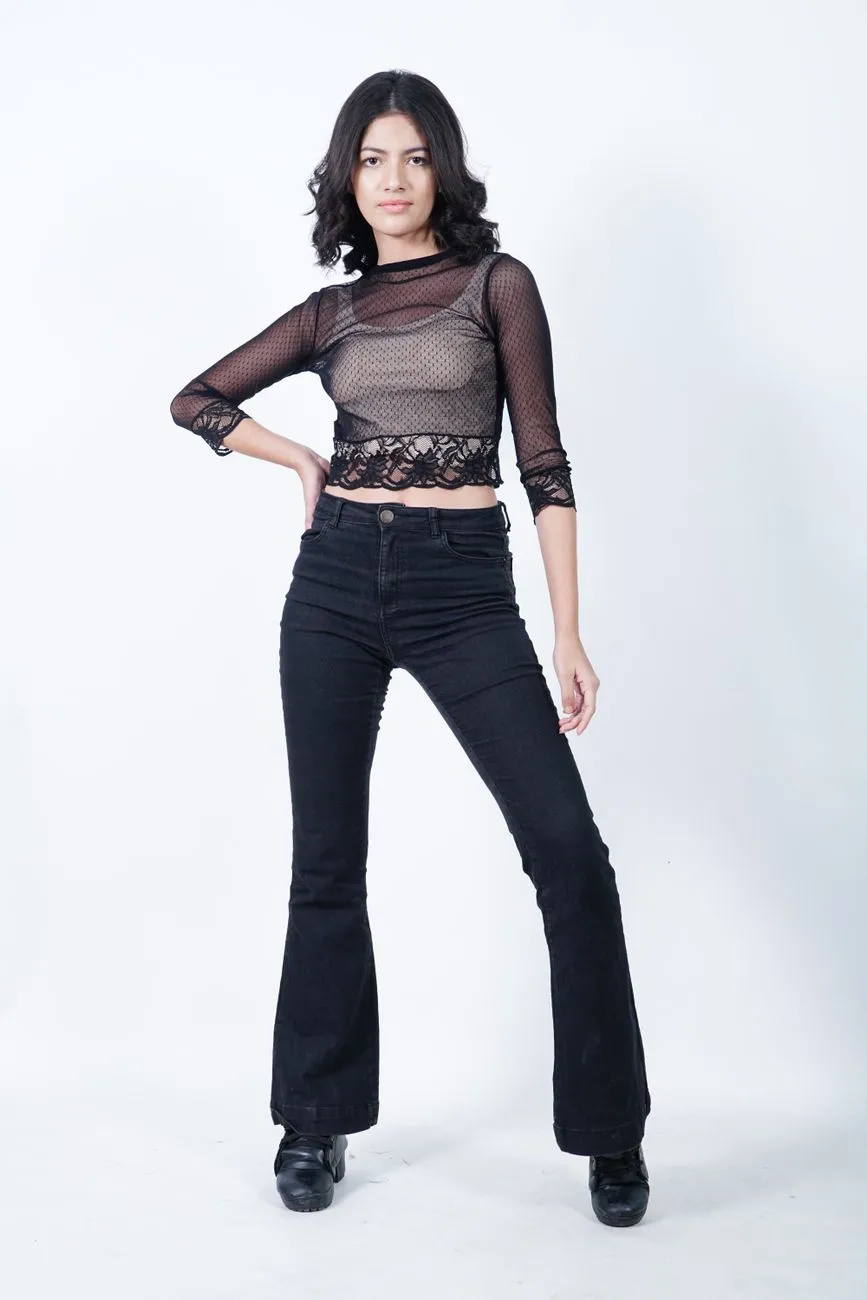
Flare pants are often treated as a trend piece, but they are really a proportion tool. The trick is not the flare itself—it is where the flare starts, where the hem ends, and what you put above and below it. Get those right and flares can make your legs look longer, define the waist, and make a simple top look deliberate. Get them wrong and they can shorten the leg or look like a costume.
This guide covers the differences between flare and bootcut, hem rules, the tops and shoes that keep the line long, whether shorter people can wear them, and a few outfit formulas you can use right away.
Flare vs bootcut: how to tell them apart
People often use “flare” and “bootcut” as if they were the same, but the difference matters for styling.
Bootcut pants are fitted through the hip and thigh and open only slightly from the knee down. The hem is usually just wide enough to sit over a boot, but from the front it can still read close to a straight leg. Bootcut is quiet, office-friendly, and easier to wear with a wider range of shoes because the opening is not dramatic.
Flare pants open more strongly, usually from the knee or sometimes from mid-thigh, and the hem is noticeably wider. A “kick flare” starts lower and opens sharply near the ankle, while a “full flare” creates a longer, sweeping line. Flare is more leg-lengthening when the proportions are right, but it is also more sensitive to hem length and shoe choice.
A simple way to think about it: bootcut adjusts a straight leg; flare creates a new silhouette. If you want a subtle nod to the trend, choose bootcut. If you want the elongating effect, choose a flare that starts just below or at the knee and does not get too wide too fast.
This difference also affects how much volume you need on top. A very wide flare can overwhelm a slight frame, so you may want a slightly more fitted top or a defined waist. A bootcut is forgiving enough to work with relaxed knits and longer layers.
 Photo: Thegiansepillo / Pexels
Hem length rules: the line that makes or breaks flares
The hem is the most important part of wearing flares. The right length makes the leg look continuous; the wrong length cuts it off.
For full-length flares, the back hem should sit about 1–1.5 cm above the ground when you are standing in the shoes you plan to wear. The front hem can have a tiny break, but it should not fold or pool around the shoe. Too long and the fabric bunches at the ankle, which makes the leg look shorter and the silhouette heavy. Too short—hitting mid-calf or above the ankle bone—turns flares into a cropped wide trouser, which is a different look that shows a lot of leg and works best with a slim ankle and a deliberate shoe choice.
The practical rule: try on or preview flares in the same heel height you intend to wear. If you buy them to wear with a 5-cm block heel, do not judge the length barefoot. A pair that puddles with flats may skim perfectly with a heel.
Hem width also matters. If you carry weight around the hips and thighs, a flare that begins at the knee and opens gradually can balance the lower body without adding width at the thigh. If your hips are straighter, a lower, sharper flare can create a subtle curve. Avoid a flare that is very wide at the hem if you are petite or if the fabric is stiff—it can look like the pants are wearing you.
The fastest way to fix a bad length is usually a tailor, not a new pair. If you find flares that fit well through the hip and thigh but are too long, shortening the hem to your shoe height is a small alteration that changes the whole line. If they are too short, you can lean into a cropped flare, but that works best with a higher shoe or a very fitted ankle.
Tops that make flares look long-legged
The most reliable formula is simple: high-rise flares plus a fitted or tucked top. The high waist starts the leg line higher, and the tucked top removes any horizontal break at the hip. This is why flares often look best with:
- A fitted tee or ribbed knit tucked in.
- A bodysuit, because it stays smooth and does not bunch.
- A cropped top or sweater that ends at the waistband or 2–3 cm above it.
- A button-up shirt tucked in, with the sleeves rolled or the collar open for a sharper line.
- A slim fine-knit sweater in a color close to the pants for a long monochrome column.
Necklines that open upward—V-necks, square necks, scoop necks—also help lengthen the upper body and draw the eye toward the face.
What to avoid if you want maximum length: long oversized tees, thick chunky sweaters that end at the hip, and boxy jackets that cover the waistband. They do not ruin the outfit, but they hide the high-rise line and can make the lower half look heavier. If you do want an oversized layer, tuck just the front of the top, add a belt at the waist, or choose a cropped jacket that ends near the natural waist.
For men wearing bootcut or subtle flare jeans, the same rule applies: a fitted or tailored shirt tucked in, or a slim knit, keeps the long line. A western shirt with a straight hem looks natural with bootcut denim; an oversized graphic tee tends to shorten the silhouette. If you want a relaxed look, choose a slightly shorter tee that ends at the hip, not below it.
Color strategy also helps. Monochrome—a black top with black flares, or cream with cream—creates an unbroken vertical line. If you want contrast, keep the darker color on the bottom and the lighter or brighter color on top, because the eye will follow the brighter area upward.
Shoes that keep the line long
Shoes are not an afterthought with flare pants; they are part of the hem. The goal is to extend the leg through the flare without a visible break at the shoe.
Best for a long line:
- Pointed toe shoes, because the point continues the line past the hem.
- Block heels or platforms, which add height while remaining stable enough for most people.
- Wedges, especially with summer flares.
- Slim boots, such as pointed ankle boots or Chelsea boots, worn under the hem rather than outside it.
- Low-profile platform sneakers if you want a casual flat option; the platform gives a little lift without cutting the line.
The hem should cover most of the shoe, leaving only a sliver of the toe visible when you walk. That is the classic 1970s proportion: long trouser, hidden height, just a point of shoe.
What to avoid or use carefully:
- Very flat, thin-soled ballet flats with a long, wide flare can make the hem look heavy and are more likely to drag.
- Chunky combat boots or thick platform boots underneath a flared hem can bunch the fabric and interrupt the line.
- Ankle-strap shoes with a cropped flare can cut the leg at the ankle, so if you show ankle, choose a shoe with a low vamp or a nude tone close to your skin.
For men, the same idea applies but with subtler lines: Chelsea boots, leather lace-up boots, or slim trainers under bootcut jeans. Avoid bulky basketball shoes that make the narrow thigh-to-knee area look smaller and then bulge at the hem.
If you want to wear flares with flats, choose a slightly shorter, narrower flare and have the hem cut for a flat shoe. A cropped flare that ends right above the ankle can also work with flats, but it reads as a more fashion-forward, leg-baring look rather than the smooth full-length line.
 Photo: Zizi zi / Pexels
Can shorter people wear flare pants?
Yes—shorter people can absolutely wear flares. The idea that flares only suit tall frames is a styling myth, not a rule. The key is adjusting the proportions rather than avoiding the silhouette.
If you are on the shorter side and want flares to elongate your legs:
- Choose a high rise. This starts the leg line higher and gives the flare room to open below the knee.
- Keep the flare moderate. A slight or moderate flare is easier to balance than a very wide one.
- Go monochrome or tonal. Matching the top and pants color creates one long line, which helps when the legs themselves are not long.
- Hem for a specific shoe with height. A narrow heel or hidden platform can make a noticeable difference, but even a sneaker with a platform can work if the hem is cut for it.
- Look for a center crease or vertical seam. A pressed crease down the front of a flared trouser guides the eye downward and adds length.
What to avoid if you want maximum height: low-rise flares, a very wide flare that breaks too early, capri or mid-calf lengths that cut at the widest part of the calf, and contrasting shoe colors that chop the line at the ankle. None of these are “wrong,” but they tend to shorten the silhouette.
A cropped flare can work on shorter frames if it hits just above the ankle and you wear a sleek shoe or a heel, because showing a little ankle can actually lengthen the leg. For more ideas on creating a longer line without relying only on heels, see our petite outfits guide.
Outfit formulas to try
These are concrete starting points, not strict uniforms. Adjust colors and fabrics to your climate and comfort.
Women
- Everyday 1970s: white fitted tee tucked into high-rise dark indigo flare jeans, brown pointed block-heel boots, and a cropped denim or suede jacket.
- Office column: black high-neck bodysuit tucked into black high-rise flare trousers, black low-heel pumps or loafers, and a long neutral blazer.
- Warm-weather elevate: thin striped knit tucked into cream flared trousers, tan wedge sandals, and small gold earrings.
- Evening: fitted black top with a square neck, high-rise flare trousers in a deep color, pointed heels, and a clutch.
Men
- Smart casual: slim western or chambray shirt tucked into dark bootcut jeans, brown leather Chelsea boots, and a belt that matches the boots.
- Relaxed: fine-gauge crewneck knit in a dark tone over slim bootcut jeans, clean low-profile sneakers, and a watch.
For a deeper look at how flares compare with other wide-leg shapes, read how to style wide leg jeans.
Try the silhouette on your own body before you commit
One of the most useful things you can do before buying flare pants is to see the cut on your own proportions, not on a model. That is where an AI try-on tool like Macgi helps.
Take or upload one full-body photo in fitted clothing, choose a top and flare trousers—or a dress with a flared hem—and Macgi shows a preview in about 15–40 seconds. It keeps your face, body shape, skin tone, pose, and background, and changes only the clothes. This matters because it does not slim, lengthen, or retouch your body; it just swaps the garment so you can judge the fit and line as it would sit on you.
I use this specifically to check where the flare starts in relation to my knee and how the hem falls with the shoes I plan to wear. It works in the phone browser, no app needed. The temporary copy of the photo sent to the AI is deleted within 24 hours, and photos are never posted, shared, used for ads, or used for AI training. Keep in mind that the image is an AI preview, not a size guarantee—always check the store size chart before ordering. For how to take a reliable try-on photo, see how to take a full-body photo for AI try-on.
FAQ
Can I wear flat shoes with flare pants?
Yes. The easiest way is to choose a slim or moderate flare and have the hem cut for flats. A low platform sneaker or a pointed flat can work. Avoid very flat, thin shoes with long wide flares, because the hem may drag and the line can look heavy.
What rise is best for flare pants?
High rise is usually the most flattering if you want to lengthen the leg, because it moves the waistline up and lets the flare open below the knee. Mid-rise can work if you prefer less coverage, especially with a tucked or cropped top.
Are flare pants appropriate for the office?
Yes, especially in tailored fabrics like wool-blend or crepe, in dark neutral colors. Pair them with a tucked blouse or fine knit, a blazer, and a low heel. Very distressed or extreme flared denim reads casual, while a moderate bootcut or trouser flare reads polished.
How do bootcut and flare compare for a shorter frame?
Bootcut is often the easier starting point because the opening is subtle and the line stays closer to straight. A flare can work too, but choose a high rise, a moderate flare, and hem the pants for the specific shoe height you plan to wear.
What tops should I avoid with flare pants?
If your goal is a long-legged line, avoid long oversized tops, boxy hip-length sweaters, and anything that covers the high waist. You can still wear them if you tuck the front, belt the waist, or choose a cropped layer that ends near the waistband.